 EN
EN 中文
中文 ES
ES RU
RU FR
FR PT
PT AR
AR DE
DEWhen Not to Use Ultrasonic Level Sensors
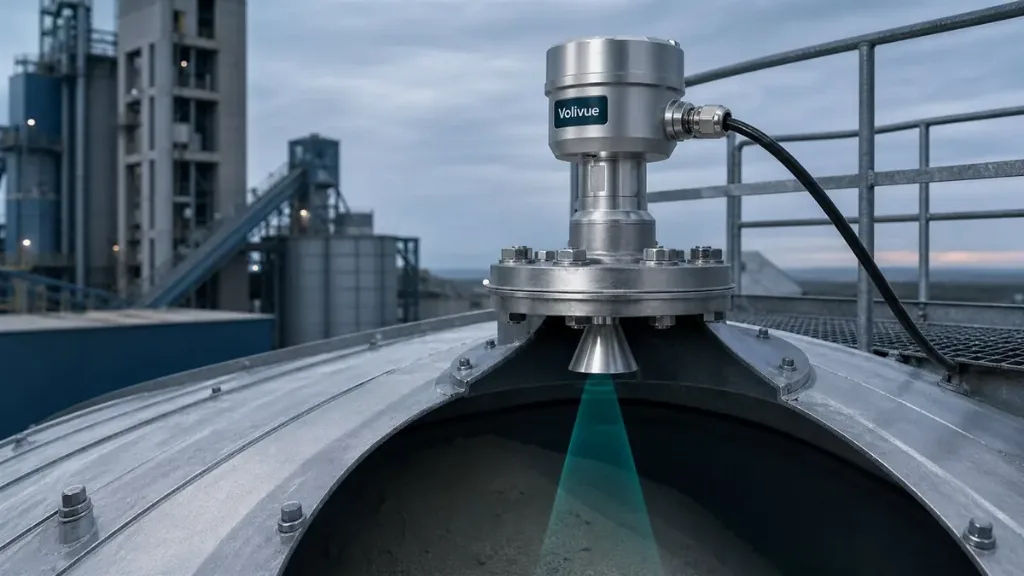
Non-contact ultrasonic sensing is one of the most cost-effective ways to measure liquid level, but it is not universal. Understanding ultrasonic level limitations before you specify hardware saves you from field calibration headaches, intermittent dropouts, and measurements that drift without warning. An ultrasonic sensor works by sending an acoustic pulse from a transducer to the liquid surface and timing the echo. That simple principle is also its weakness: anything that absorbs, scatters, or bends the sound wave between the transducer and the surface degrades the reading. This guide walks through the specific process conditions where ultrasonic measurement fails, explains why each one disrupts the acoustic signal, and shows where a frequency-modulated continuous-wave (FMCW) radar transmitter is the correct replacement.
Where Ultrasonic Sensing Works Well First
It helps to define the comfortable operating window before listing the exceptions. The Volivue Ultrasonic Liquid Level Sensor measures non-contact across a typical range of 0.3 to 15 meters with an accuracy of plus or minus 0.25 percent of full scale. Inside that envelope it is reliable, low-maintenance, and economical. The conditions it likes are clean liquids, atmospheric pressure, stable temperature, and a calm or only lightly disturbed surface. Water tanks, clean process buffers, wastewater wet wells, and open sumps are textbook applications.
The problems begin when the medium between the transducer and the surface stops behaving like still, clean air, or when the surface itself stops reflecting sound cleanly. Each of the sections below describes one of those failure modes. None of them are defects in the sensor; they are physical boundaries of the measurement principle.
Foam: The Acoustic Absorber
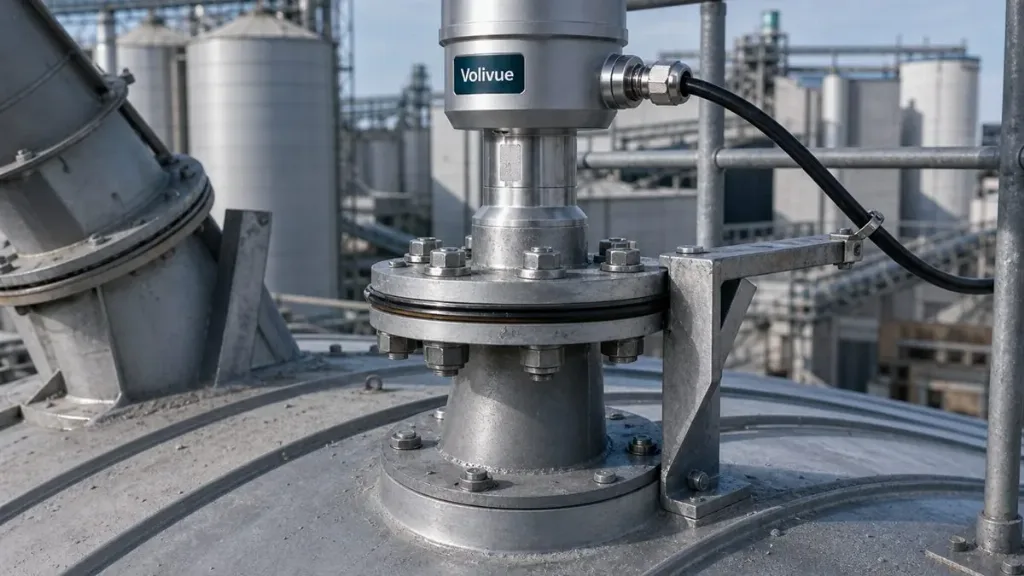
Foam is the most common reason ultrasonic level readings go wrong. A layer of bubbles on the liquid surface scatters and absorbs the incoming acoustic pulse instead of reflecting it back as a clean echo. Thin, transient foam may only cause occasional noise, but a stable, thick foam blanket can absorb the pulse almost entirely, leaving the sensor with no return to time. The result is lost echoes, readings that stick at the last valid value, or measurements that track the top of the foam rather than the true liquid level.
You see this in fermentation tanks, surfactant and detergent mixing, protein-rich wastewater, and any aerated or agitated vessel. If your process generates foam as a normal operating condition, ultrasonic sensing is the wrong starting point. FMCW radar penetrates most foam layers because microwave energy passes through low-density bubble structures that stop sound, so it can read the underlying liquid surface where ultrasonic cannot.
Vapor, Steam, and Volatile Off-Gassing
The speed of sound depends on the density and composition of the medium it travels through. Ultrasonic time-of-flight assumes a reasonably stable medium between transducer and surface. Heavy vapor, condensing steam, or volatile gas evolving off the liquid changes that medium continuously and unpredictably. As vapor concentration and density shift, the effective speed of sound shifts with it, so the timed echo no longer maps to a fixed distance. Dense steam can also scatter the pulse before it ever reaches the surface.
Hot condensate tanks, solvent storage, evaporators, and any vessel with active boiling or strong off-gassing fall into this category. The error is insidious because the sensor still returns a number; that number is simply wrong, and it drifts with process conditions. FMCW radar is largely immune because microwave propagation is not meaningfully affected by vapor density, which is why it is the standard replacement for steam-laden and volatile service.
Vacuum and Low-Pressure Service
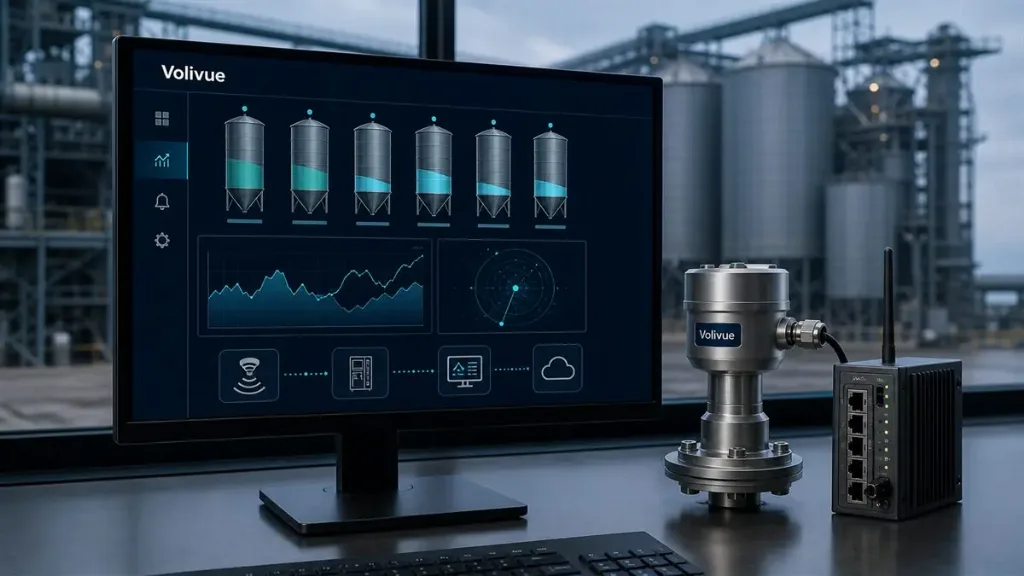
Sound needs a medium to travel through. The lower the gas pressure above the liquid, the fewer molecules are available to carry the acoustic pulse, and the more the signal attenuates. Under a strong vacuum the medium becomes too thin to propagate a usable echo at all, and the measurement simply fails. Even partial vacuum or low-pressure headspace weakens the return and erodes accuracy.
Vacuum distillation columns, degassing vessels, and any process that runs a sealed tank below atmospheric pressure are off-limits for ultrasonic measurement. Radar does not depend on a gas medium to carry its signal, so a radar transmitter works in vacuum and pressurized service where ultrasonic physically cannot.
Heavy Dust and Suspended Particulate
Although the focus here is liquids, the same transducer is sometimes considered for slurries or for liquids stored under heavy airborne particulate. Dense dust or mist between the transducer and the surface scatters the acoustic pulse, weakens the echo, and can build up on the transducer face over time. Strong particulate loading produces the same lost-echo and weak-return symptoms as foam and steam. If the headspace is rarely clean, ultrasonic measurement will be unreliable, and a radar or guided alternative is the better path.
Large Temperature Gradients and Stratified Air
Even in clean, dry air, ultrasonic accuracy depends on knowing the speed of sound, and that speed changes with temperature. A uniform, stable temperature is easy to compensate for. The trouble is a large temperature gradient: a column of air that is hot near a warm liquid surface and cooler near the transducer, or strong stratified layers in a tall tank. The acoustic pulse passes through zones with different sound velocities and can even bend, so a single compensation value cannot correct the path. Readings become inconsistent and direction-dependent on the thermal profile of the day.
Tall outdoor tanks in direct sun, heated vessels with cold ambient headspace, and processes with sharp thermal layering all expose this limitation. Radar timing is set by electromagnetic propagation, which is effectively unaffected by air temperature gradients, so it holds accuracy where ultrasonic drifts.
Hazardous Areas and the Certification Red Line
This is the hard constraint, not a performance trade-off. The Volivue ultrasonic liquid level sensor does not carry explosion-protection certification, so it must not be installed in classified hazardous areas where flammable gas, vapor, or dust may be present. No amount of careful installation changes this. If your tank holds solvents, fuels, or any medium that creates an explosive atmosphere, you need a level instrument with the appropriate hazardous-area approval for that zone.
For these applications, specify a radar level transmitter. The FMCW radar family penetrates vapor and foam, tolerates corrosive, high-temperature, and high-pressure service, and is offered in explosion-protected (Ex) variants suitable for classified zones. Where ultrasonic stops at the boundary of clean, atmospheric, non-hazardous service, radar is the technology built to cross it.
A Practical Decision Rule
Reach for ultrasonic when the liquid is clean, the headspace is at atmospheric pressure, the surface is calm or only lightly disturbed, temperature is stable, and the area is non-hazardous. Switch to FMCW radar the moment any of these are true: persistent foam, heavy vapor or steam, vacuum or sealed pressure, dense dust, strong temperature gradients, or a classified hazardous area. Choosing on physics rather than price up front avoids the far larger cost of a measurement you cannot trust.
If you are unsure which condition dominates your process, send us the medium, vessel geometry, pressure, temperature profile, and area classification, and our engineers will recommend the correct technology. Talk to our level-sensing team for an application-specific selection.
Related reading: for the full picture across measurement technologies and how to match each one to your process, see our Technical Insights selection overview.