 EN
EN 中文
中文 ES
ES RU
RU FR
FR PT
PT AR
AR DE
DE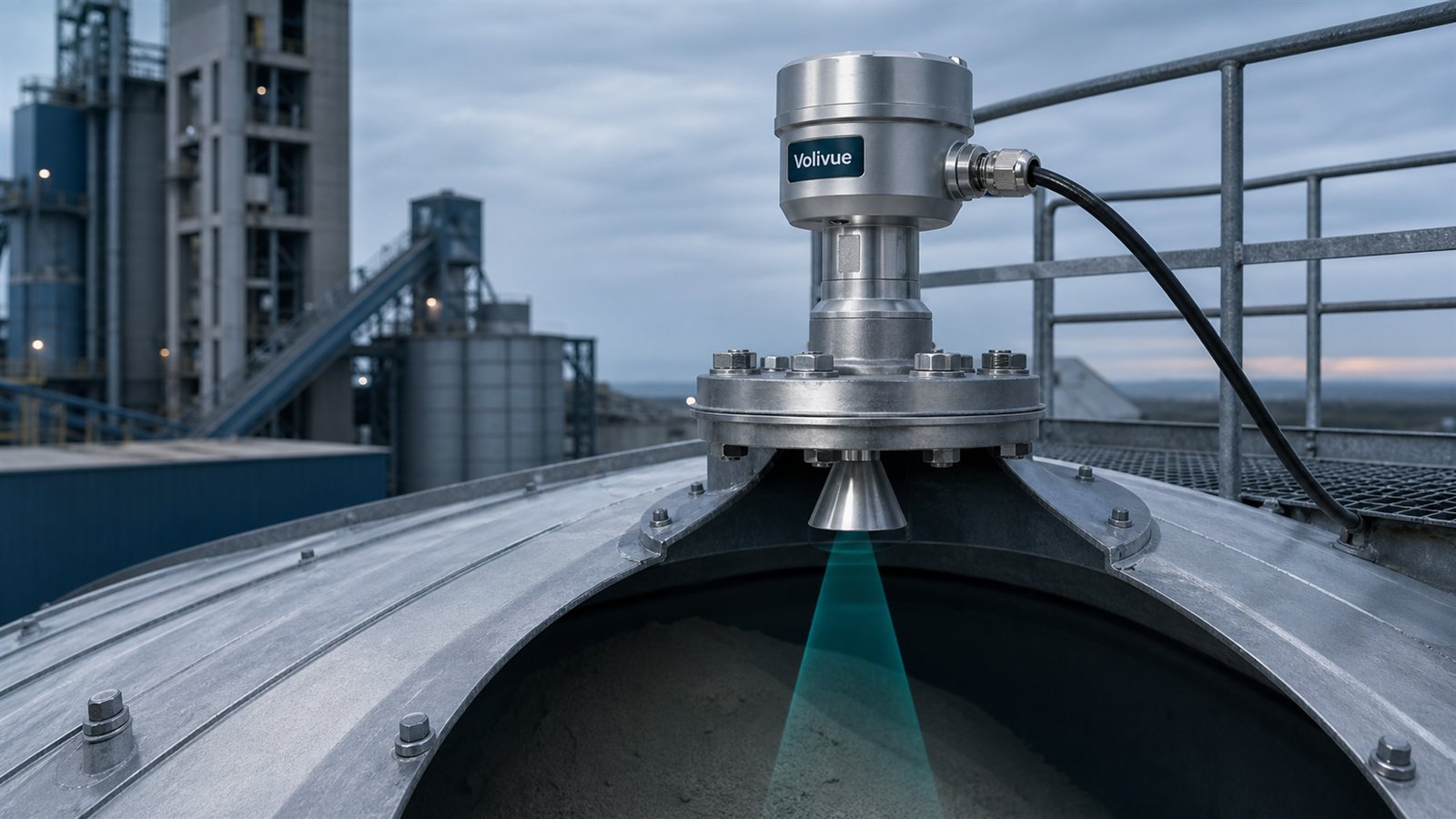
80-120GHz Radar Level System
Stable level through dust, distance, and harsh process.
Narrow-beam FMCW radar for closed silos, bins, hoppers, and tanks — engineered from nozzle to inventory dashboard.
Radar selection is a site application problem — not only a sensor purchase.
The 80-120GHz FMCW family covers both solids and liquids, but nozzle height, beam angle, false echo suppression, and antenna selection change with silo geometry, dust intensity, and integration requirements. Every Volivue delivery starts with an application review — so the transmitter that arrives on site is already configured for your process.
Engineered from nozzle to inventory dashboard.
Sees through filling dust.
Powder clouds and filling streams scatter weaker echoes — but rarely remove them for an 80GHz narrow beam. Signal filtering bridges short weak-echo phases so output trends smoothly through peak blow-in instead of jumping.
Commissioning includes a full fill cycle, so filter settings are proven on your real process — not a bench test.
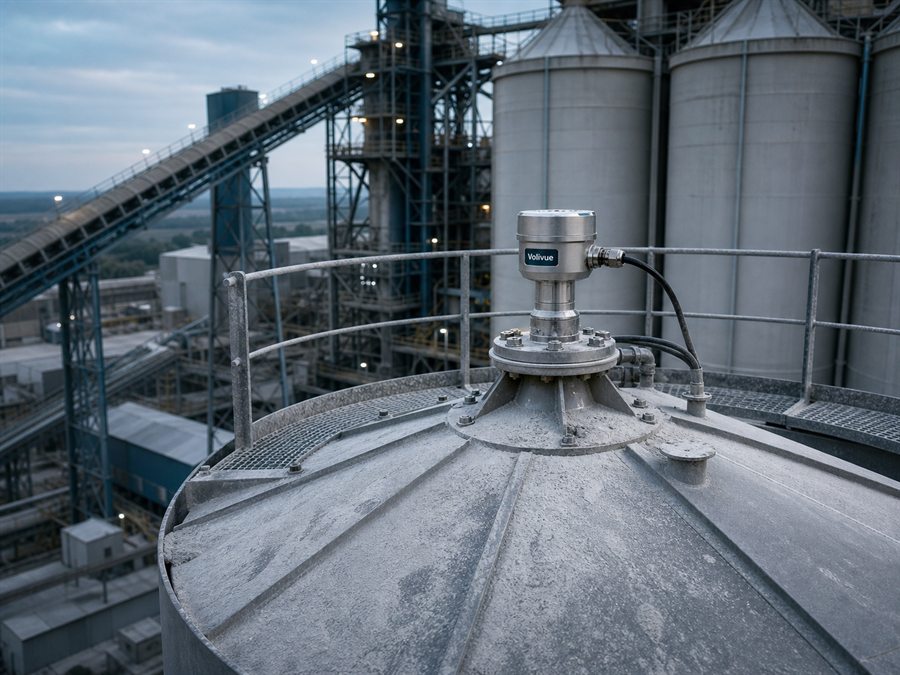
A beam that fits the silo, not the brochure.
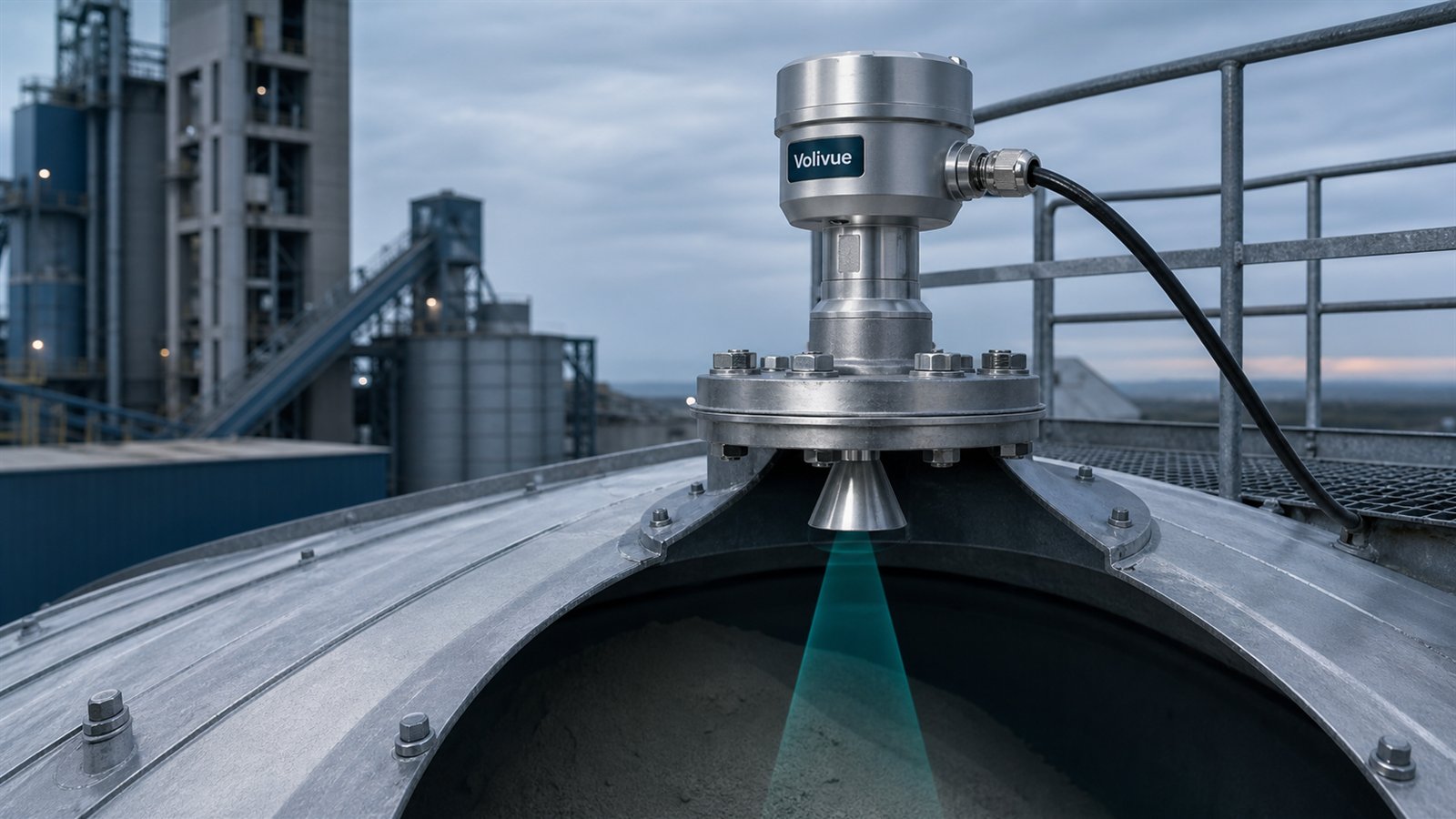
Beam angle is matched to silo diameter and height. A 3° lens antenna clears walls in tall, narrow silos; large-aperture lens options hold signal in heavy fly-ash dust; nozzle standoff is planned to escape the densest dust zone above the fill point.
False echo mapping handles fixed structures — inlets, ladders, beams — before they ever appear in your data.
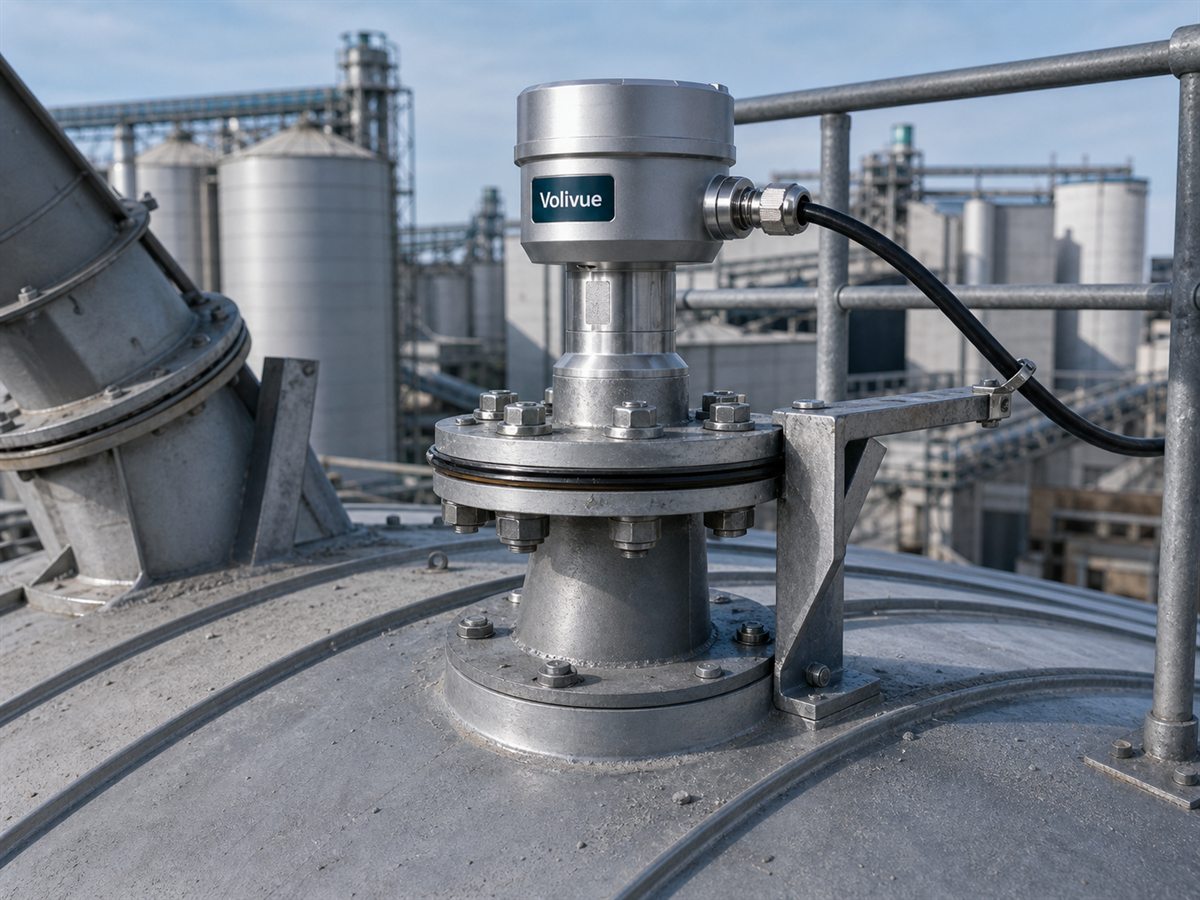
Commissioned from the ground, verified by echo curve.
Bluetooth commissioning means setup and diagnostics without climbing the silo a second time. Echo curve views show exactly what the radar sees, so weak echoes and false reflections are resolved at handover — not discovered in production.
Remote diagnostics stay available through the platform after commissioning.
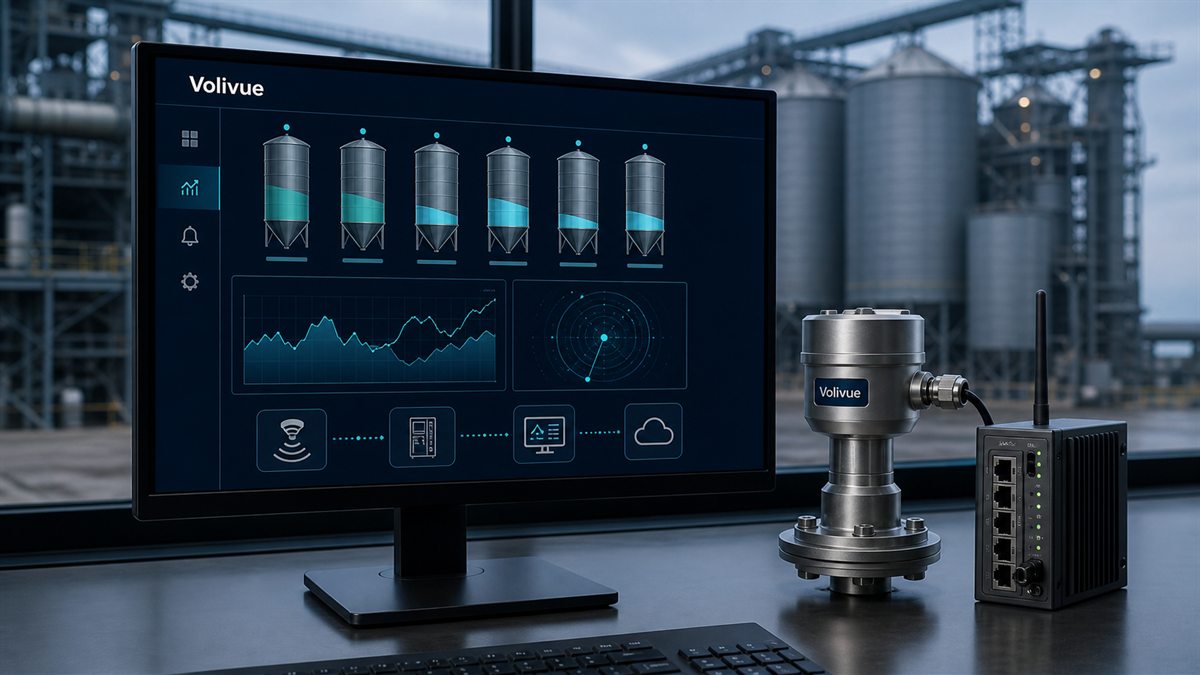
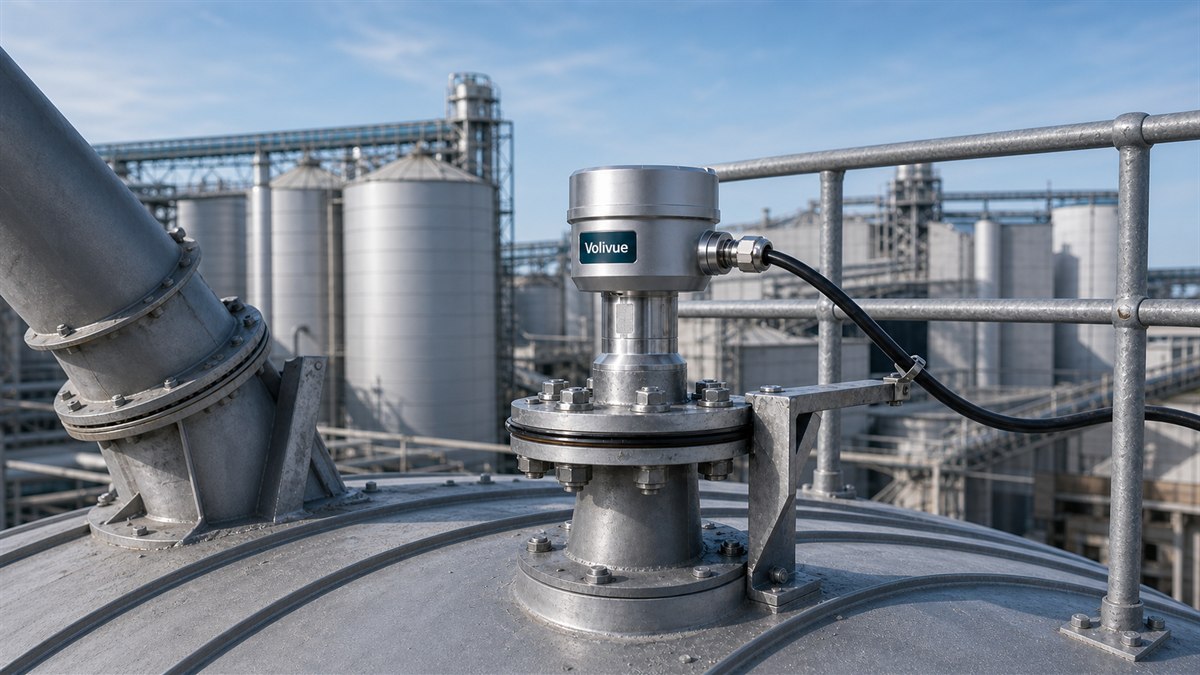
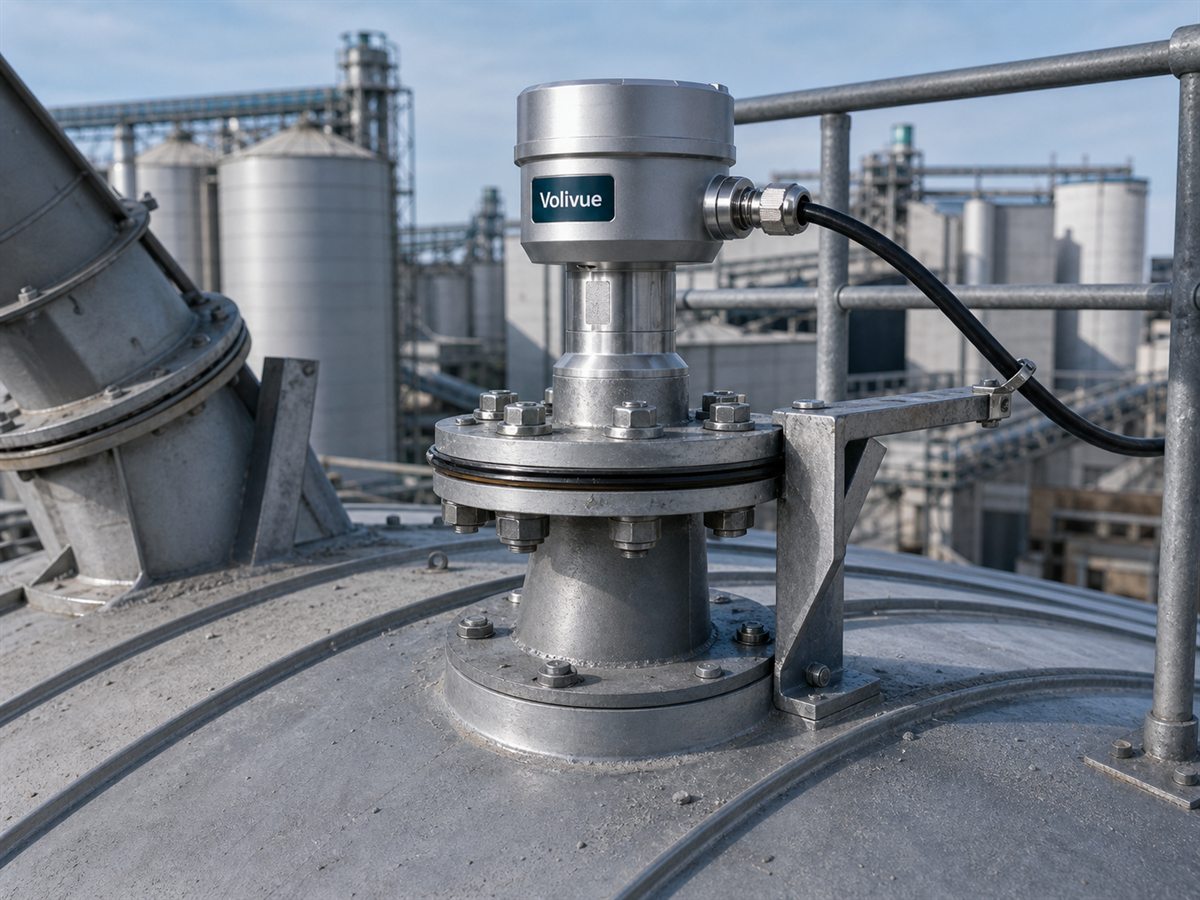
One roof nozzle. One morning. Continuous level from day one.
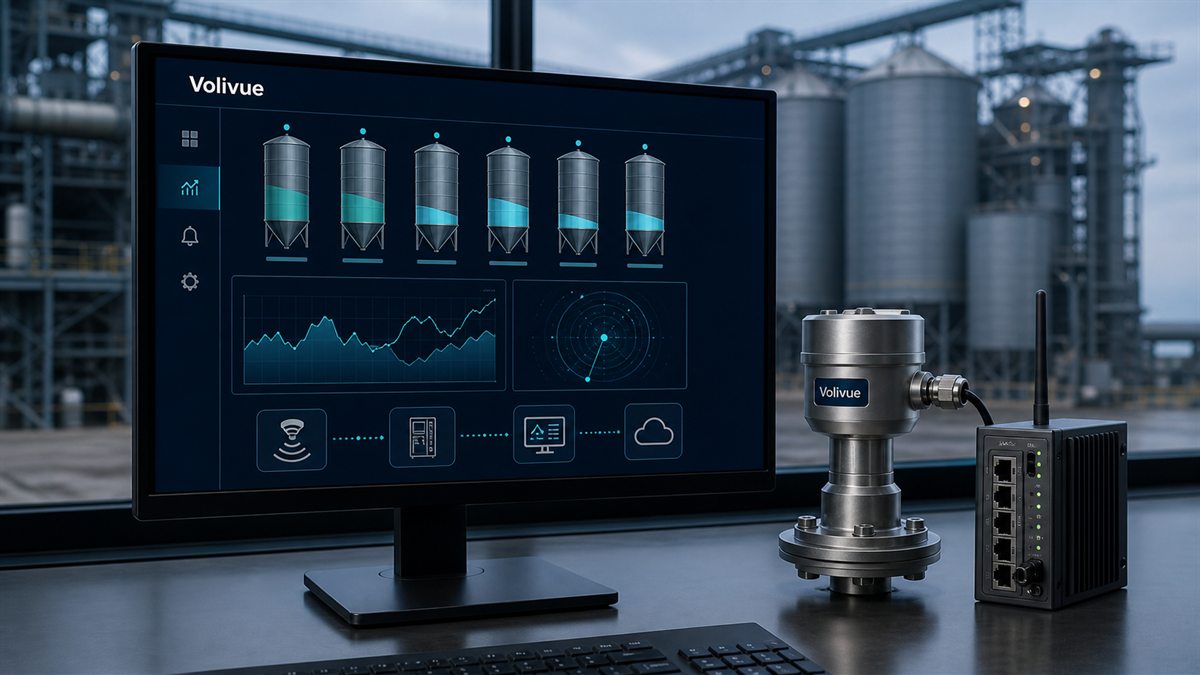
A typical installation — from flange to live dashboard.
Match your silo type to a proven package.
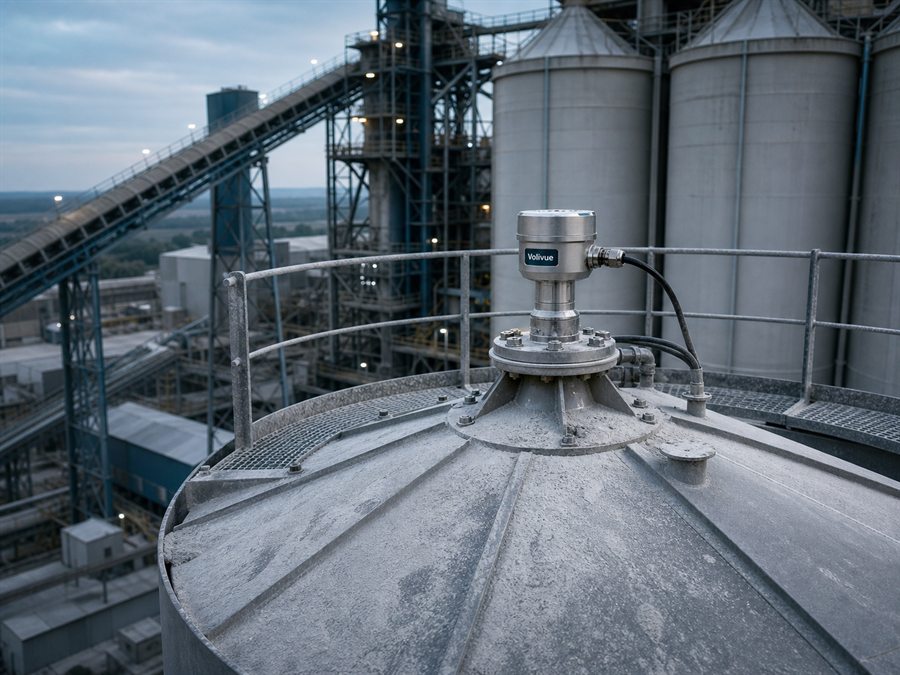
Cement & dry powder silos
Narrow beam with false echo suppression keeps level stable through filling peaks.
View application →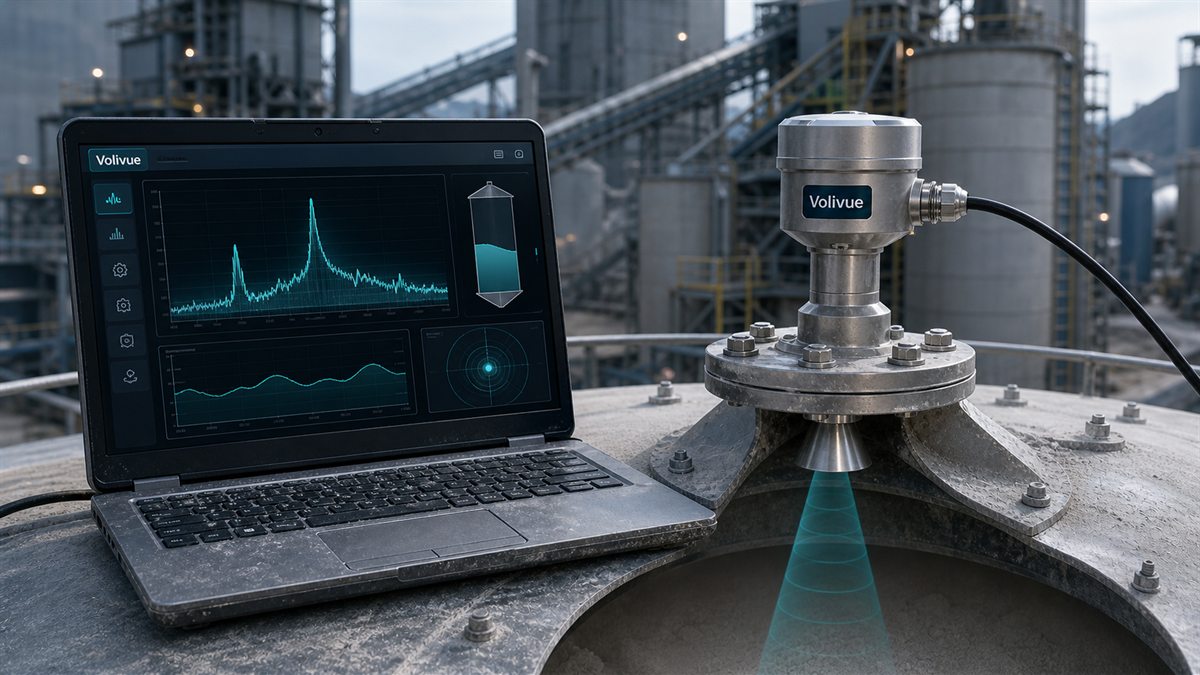
Fly ash & heavy-dust silos
Large lens antenna and nozzle standoff hold signal in low-dielectric dust.
View application →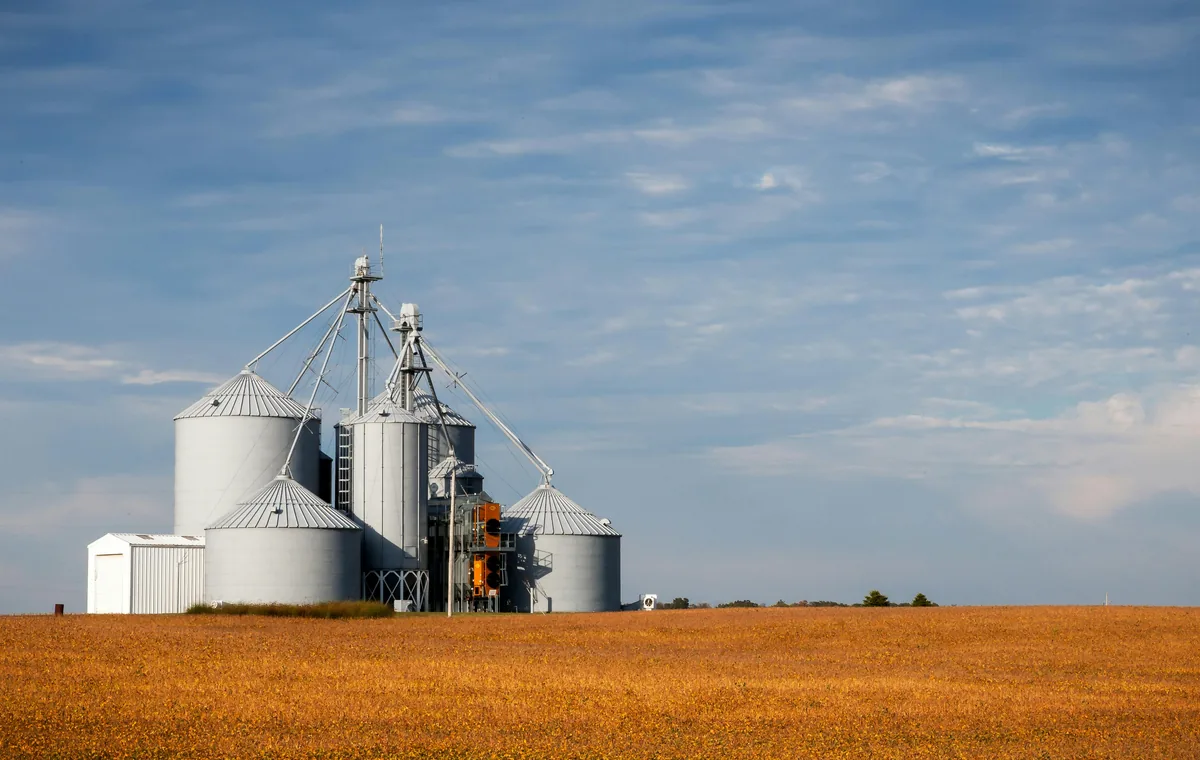
Plastic granule & pellet silos
Beam matched to silo diameter; echo verified from empty cone to full top.
View application →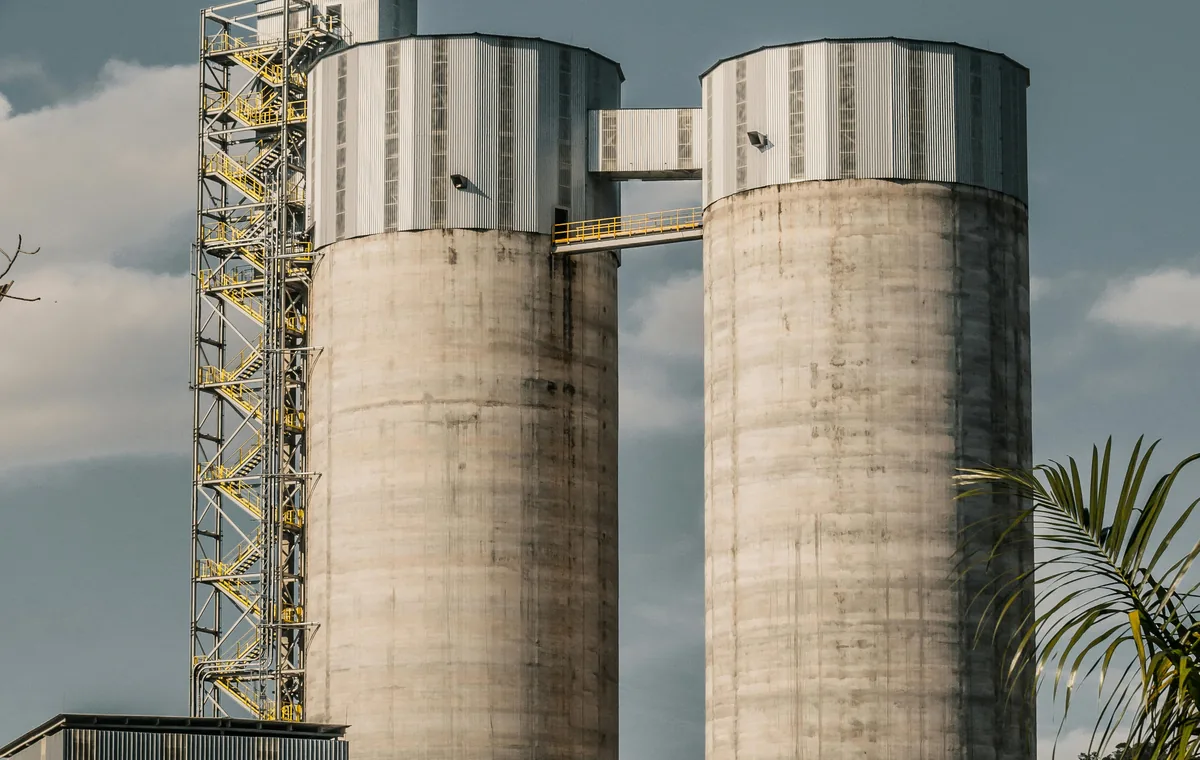
Tall, narrow & buildup silos
3° antenna reduces wall interference with adaptive false echo suppression.
View application →Twelve points to check before you buy any silo radar.
Put this page next to any competing quotation. The column on the right reflects generic radar packages as commonly quoted — verify the details with each vendor.
Hazardous-area variants, final range, and protection class are confirmed by model and project conditions.
Can 80–120GHz radar measure through heavy filling dust?
Dust attenuates the echo but rarely removes it for an 80–120GHz narrow-beam radar. Signal filtering bridges short weak-echo phases so the output trends smoothly instead of jumping. Commissioning includes at least one complete blow-in, so filter settings are proven on the real fill cycle.
Radar level or silo weighing — which should I choose?
If the silo has a usable roof nozzle and the plant needs a continuous level profile, 80–120GHz radar is the default. If the silo stands on steel legs and purchasing mainly needs tons on hand, the patch-mount weighing system is often the better fit. Some plants run both layers in parallel.
What measuring range can I plan for?
0.1 to 120 m depending on selected model and site conditions. The final range is confirmed by application review, together with antenna selection and nozzle planning.
My silo has internal ladders, beams, and inlets. Will they cause false echoes?
Fixed structures are handled by false echo mapping during commissioning, so they are suppressed before they ever appear in your data. Tall, narrow silos additionally use the 3° lens antenna with adaptive false echo suppression.
Does the same radar family work for liquids?
Yes — the 80–120GHz FMCW family covers solids and liquids. For pressurized, hot, corrosive, or foaming process tanks, compare the dedicated Radar Liquid Level line, which is configured for those conditions.
What outputs and protocols are supported?
Device level: 4–20 mA, HART, and RS485/Modbus. Through the Volivue platform: Modbus TCP, OPC UA, REST API, and MQTT for SCADA, PLC, ERP, and MES integration. Project-specific interfaces are quoted separately.
Is a hazardous-area (ATEX / IECEx) version available?
Hazardous-area variants are available and confirmed by model and project conditions. Equipment placement follows the site dust or gas zoning documentation reviewed during the project.
How is commissioning done?
Setup and diagnostics run over Bluetooth from the ground — no second climb. Echo curve views show exactly what the radar sees, so weak echoes and false reflections are resolved at handover. Remote diagnostics stay available through the platform.
Can the data feed our ERP or MES directly?
Yes. The platform converts level to volume or mass by silo geometry and density assumptions, tracks alarms and trends, and feeds ERP/MES so purchasing and production planning work from live inventory.
How do I get a price?
Volivue sells factory-direct with a configured quotation, not a generic price list. Send your silo geometry, material, process conditions, and target interface — engineers reply with a reviewed configuration, typically within one business day.
Can the hardware be customized for our project?
Antenna, process connection, communication options, and protection class are configured per application during project review. OEM and project-specific requirements can be quoted after a short technical exchange.
What information should I prepare for the application review?
Silo or tank geometry, material and its behavior, dust intensity, temperature and pressure, hazardous-area classification if any, current measurement method, and the target interface or system the data should reach.
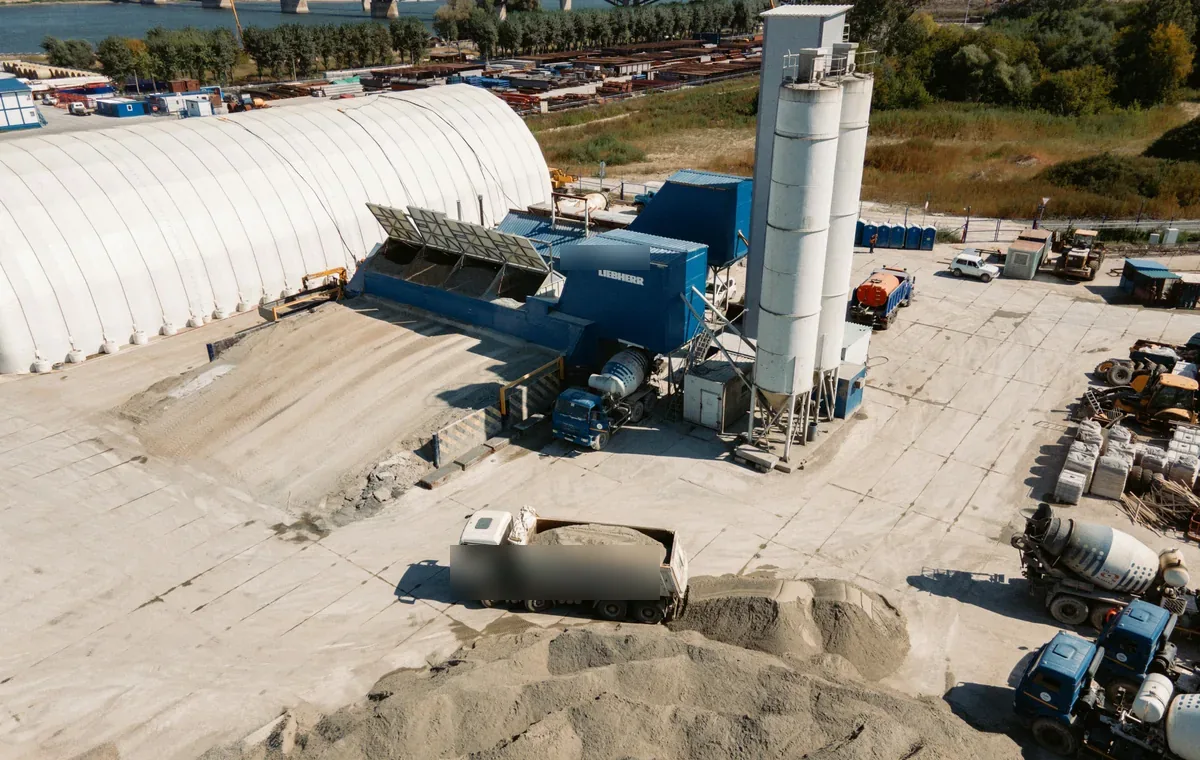
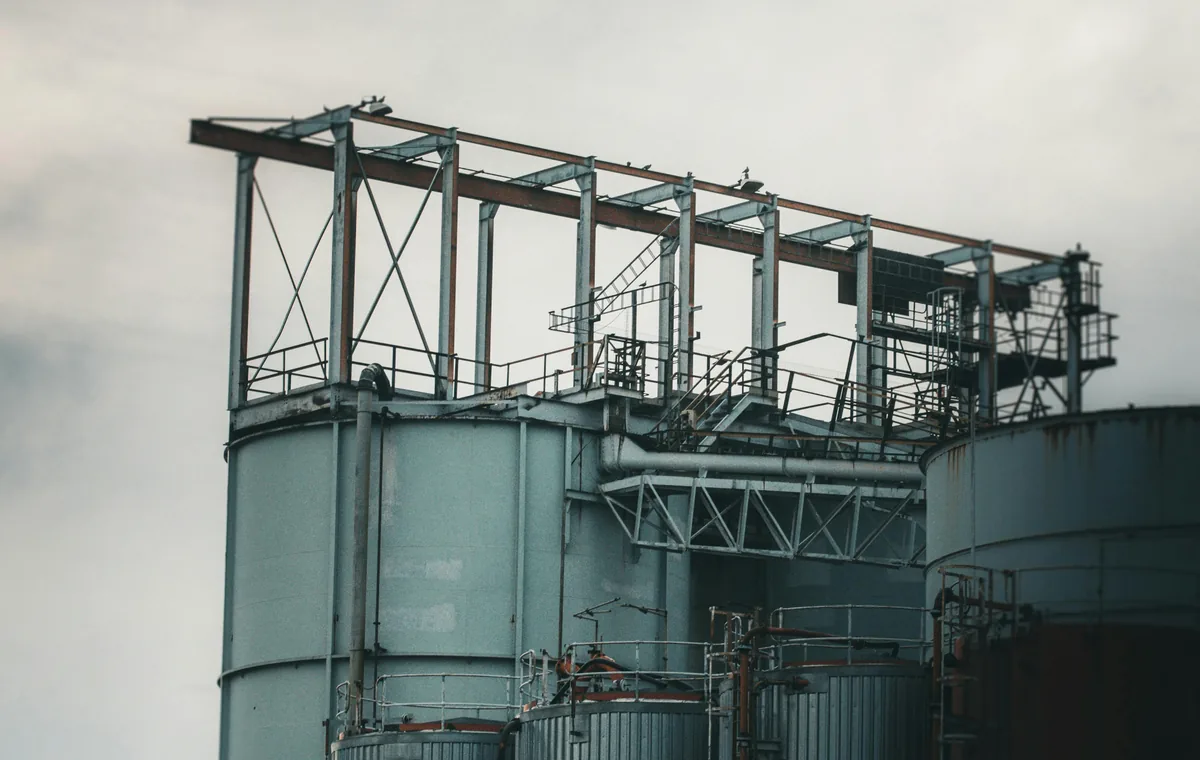
Real roofs, real legs, real yards.
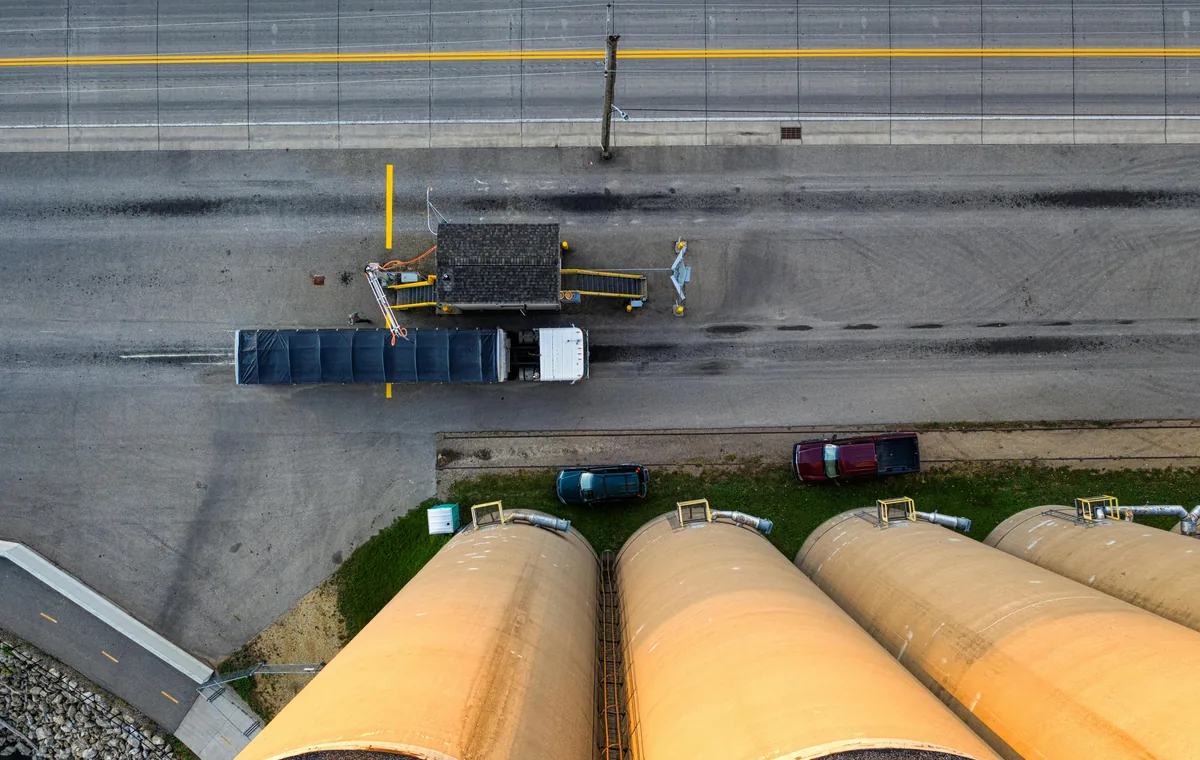
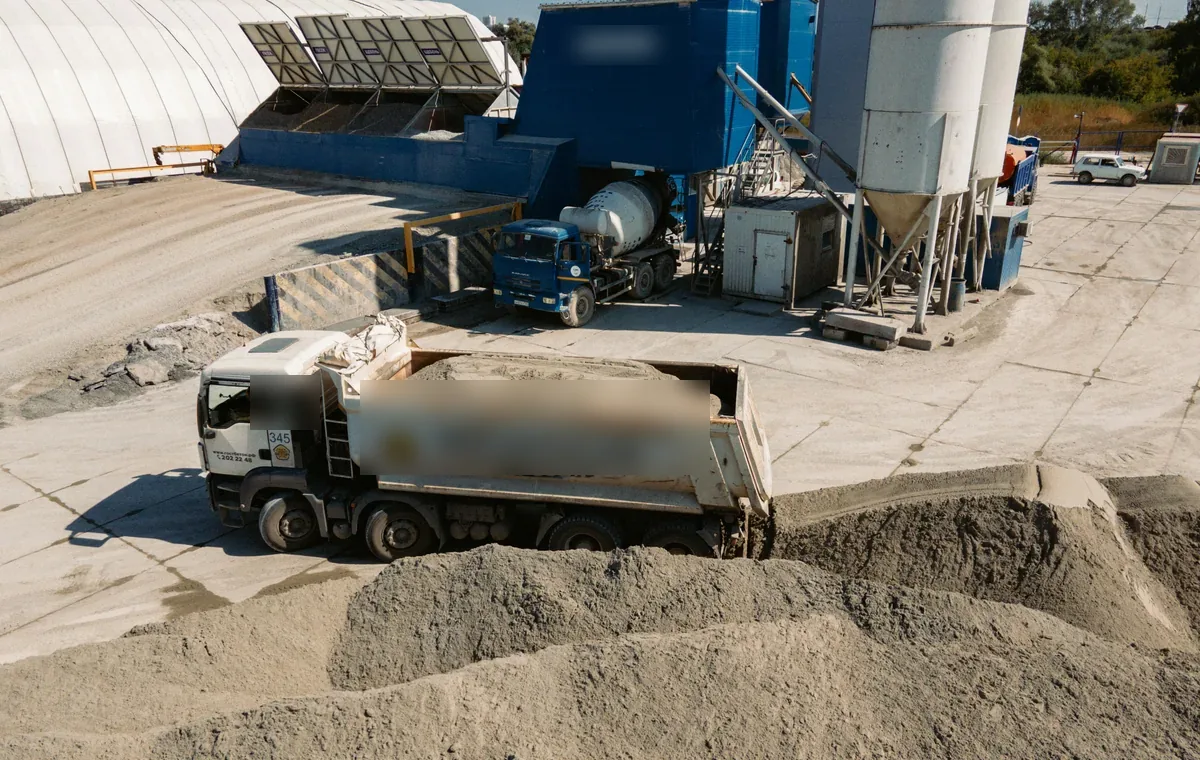
Field installations across cement plants, batching stations, tank farms, and stockyards.
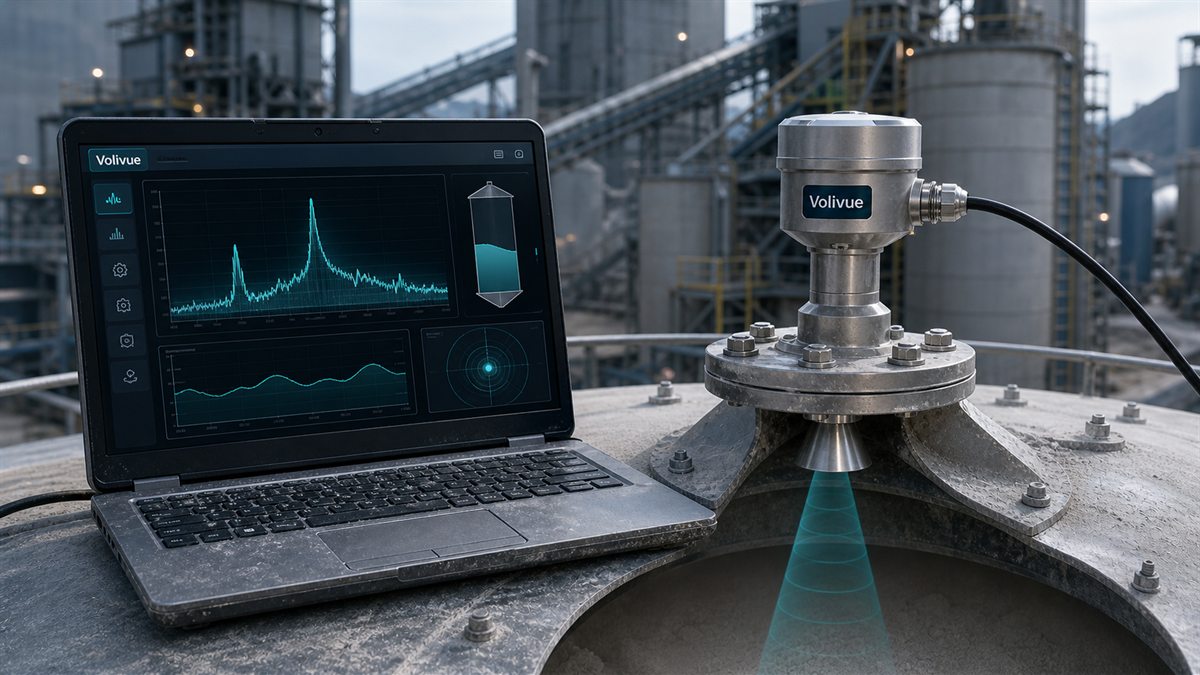
Send site photos, nozzle, medium, temperature, and output target.
Share tank or silo photos, medium, temperature, nozzle, dust or foam level, internal obstacles, output target, country or region, and drawings if available.
Related technical insights
Why Point Level Sensors Fail on Open Stockpiles
Why point level sensors struggle with stockpile volume measurement on open piles, and how 3D LiDAR area scanning closes the gap on irregular heaps.
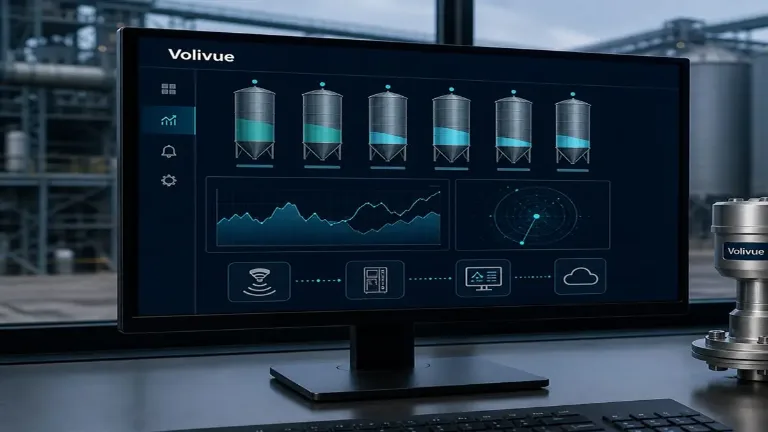
Ultrasonic Pump Control: A Beginner’s Guide to Relay-Based Level Switching
Beginner's guide to ultrasonic pump control: set high/low levels, wire the relay for start/stop, add hysteresis, and prevent overflow and dry-run.
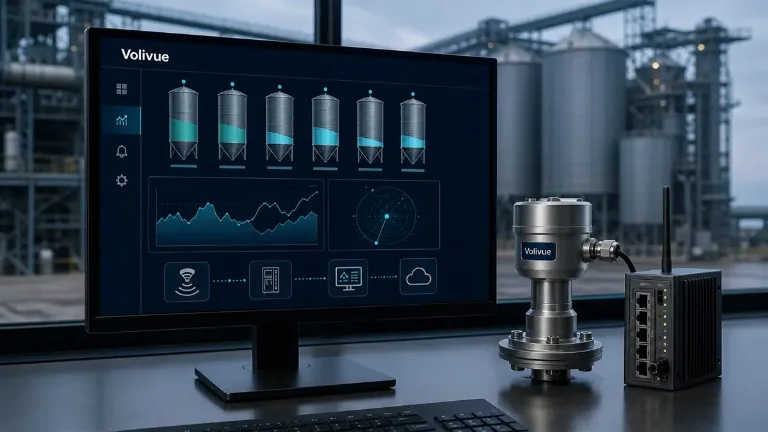
Radar Level SCADA Integration: 4–20 mA/HART, Modbus, and Relay Paths to PLC and DCS
A practical guide to radar level SCADA integration across 4–20 mA/HART, RS485 Modbus, and relay paths into PLC and DCS, with wiring and alarm logic.