 EN
EN 中文
中文 ES
ES RU
RU FR
FR PT
PT AR
AR DE
DEVolivue Ultrasonic Liquid Level Sensor for Clean, Non-Pressurized Tanks
A non-contact ultrasonic liquid level sensor for clean, vented, atmospheric tanks. Volivue measures the echo travel time from the sensor face to the liquid surface, then converts it into continuous level, percent fill or 4-20 mA without any part touching the medium. It is the cost-effective choice for water, wastewater and utility liquids; for heavy vapor, dense foam, pressurized or hazardous service you should choose a Volivue radar liquid level sensor instead.

Where an ultrasonic liquid level sensor is the right fit
Vented water break tanks, buffer tanks and utility liquid storage have a calm, clean surface with little vapor. A non-contact ultrasonic liquid level sensor reads the level from the top nozzle without wetted parts, so there is nothing to corrode or recalibrate.
Volivue Series 03B ultrasonicOpen wastewater basins, lift stations and sumps need continuous level for pump control. A non-contact ultrasonic liquid level sensor keeps the electronics above the dirty, abrasive water so there is no fouling on a wetted probe.
Volivue Series 03B ultrasonicIrrigation reservoirs and atmospheric water-treatment process tanks operate at ambient pressure with mostly clean liquid. Ultrasonic level gives a low-cost continuous reading for scheduling, dosing and overflow protection.
Volivue Series 03B ultrasonicAtmospheric tanks of clean, low-vapor chemicals can use a non-contact ultrasonic sensor when the surface is stable and the headspace is free of dense vapor or foam. For aggressive vapor, heavy foam, pressurized or hazardous service, switch to a Volivue radar liquid level sensor.
Volivue Series 03B ultrasonicWhat an ultrasonic liquid level sensor does, where it fits, and where you should switch to radar instead.
What it is
A non-contact ultrasonic liquid level sensor mounted on the top of a tank. It sends an ultrasonic pulse to the liquid surface, times the echo and converts the distance into continuous level, percent fill or a 4-20 mA / relay / RS485 signal. No part of the sensor touches the liquid.
When ultrasonic fits
Best for clean, vented, atmospheric tanks where cost matters: water, wastewater, utility liquids and clean chemicals with a stable surface and light vapor. It is an economical, low-maintenance way to add continuous level to existing tanks.
When to choose radar instead
Heavy steam or vapor, dense foam, pressurized or sealed vessels, strong condensation, aggressive corrosives or classified hazardous areas degrade ultrasonic echoes. In those conditions choose a Volivue radar liquid level sensor, which is unaffected by vapor and works under pressure.
What it does not do
The sensor measures level and distance to the surface, not weight. Volume or mass is derived from tank geometry and known liquid density, not sensed directly. It is not a weighing device and does not replace certified custody-transfer metering.
From ultrasonic echo to plant signal
Emit and time the echo
The sensor emits an ultrasonic pulse from the tank top and measures the round-trip travel time to the liquid surface and back.
Convert distance to level
Travel time becomes distance, then continuous level using the configured empty distance, blind zone and tank height.
Linearize to volume or percent
A tank profile maps level to percent fill or volume from geometry and known density, so operators read what they actually need.
Output to the plant
Level is published as 4-20 mA, relay thresholds or RS485 / Modbus into PLC, SCADA or the Volivue dashboard.
Why teams pick ultrasonic for clean, vented tanks
Ultrasonic is the cost-effective tier; we recommend radar openly when conditions demand it.
Cost-effective continuous level
A lower-cost route to continuous level on clean, atmospheric tanks compared with radar or load-cell systems.
No wetted parts
Non-contact measurement keeps electronics out of the liquid, so there is nothing inside the tank to foul or corrode.
Fast retrofit
Mounts on an existing top nozzle or a simple bracket, with no tank entry and minimal downtime.
Standard plant signals
4-20 mA, relay and RS485 / Modbus integrate directly with existing PLC and SCADA systems.
Honest technology fit
We confirm whether ultrasonic suits your medium and recommend radar when vapor, foam or pressure would compromise echoes.
Low lifecycle cost
Few moving parts and no wetted wear surfaces keep maintenance and recalibration effort low over the tank lifetime.
Get an ultrasonic level review for your tanks
Send your tank list, liquids and conditions. We confirm whether an ultrasonic liquid level sensor fits, recommend radar where vapor, foam or pressure demand it, and propose models, mounting and outputs.
Ultrasonic liquid level technical envelope
Final specifications are confirmed per model and project; hazardous-area suitability is reviewed case by case.
Where a non-contact ultrasonic level sensor earns its place on clean, vented liquid tanks.
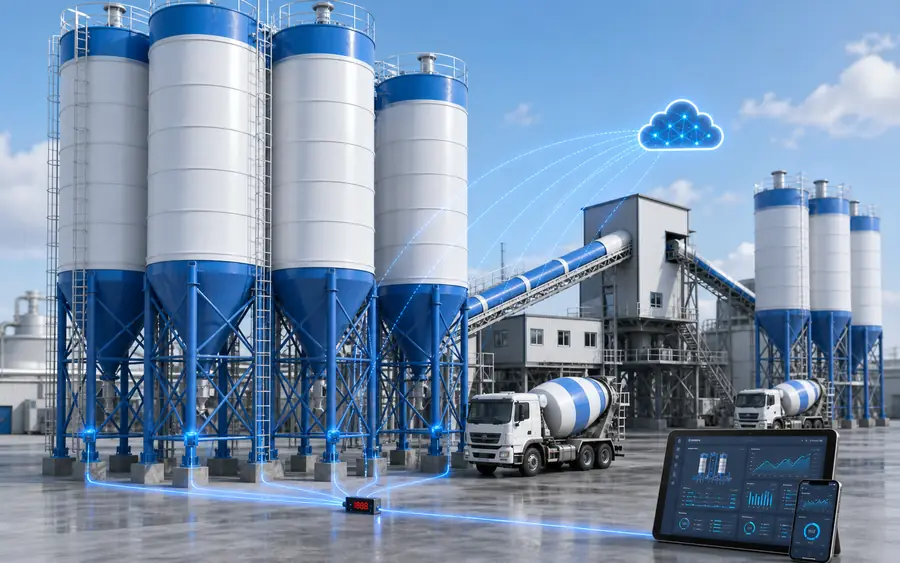
Water and utility tanks
Break tanks, buffer tanks and clean-water storage where continuous level drives pump and fill control.
Municipal wastewater
Lift stations, sumps and open basins needing non-contact level above gritty, abrasive water.
Irrigation and water treatment
Reservoirs and atmospheric process tanks where percent fill feeds dosing, scheduling and overflow alarms.
Clean atmospheric chemicals
Vented tanks of clean, low-vapor chemicals with a stable surface and no pressure rating required.
Tank scenes, sensor views and panel readouts support the page while every specification stays editable HTML.

Connect the ultrasonic level sensor to control, alarm and dashboard layers.
- Continuous and threshold signals: One device delivers continuous 4-20 mA level plus relay thresholds for high / low alarms.
- Digital bus integration: RS485 / Modbus carries level, distance and diagnostics to PLC and SCADA without extra wiring runs.
- Tank linearization: Per-tank profiles convert level to percent fill or volume from geometry and known density.
- Volivue dashboard: Optional dashboard trends level, flags alarms and exports history for reporting and audits.
- Open data access: Standard protocols and optional API let existing plant systems read level without proprietary lock-in.
Five checks that decide the ultrasonic model, mounting, configuration and output scope.
Application review
We review medium, tank, vapor and foam to confirm ultrasonic fits or recommend radar.
Model and mounting selection
We size range, blind zone, output and nozzle or bracket mounting for your tank.
Configuration and tank profile
We set empty distance, blind zone and linearization so readings match real fill.
Commissioning support
We support installation, signal verification and PLC / SCADA integration on site or remotely.
Lifecycle support
We provide spares, documentation and guidance for expansions and technology changes.
Common clean-liquid tank situations used to qualify model, mounting and output scope.
Water utility break tanks
Continuous level on vented break tanks replaced manual dipping and stuck float switches, cutting routine checks.
Wastewater lift stations
Non-contact level above gritty basins reduced probe fouling and stabilized pump-control sequencing.
Irrigation reservoirs
Percent-fill readings fed SCADA dosing and overflow alarms across atmospheric water-treatment tanks.
Selection questions for engineers, procurement teams and site maintenance.
What is an ultrasonic liquid level sensor?
It is a non-contact sensor that emits an ultrasonic pulse from the top of a tank, times the echo from the liquid surface and converts that distance into continuous level, percent fill or a 4-20 mA / relay / RS485 signal, with no part touching the liquid.
When should I choose radar instead of ultrasonic?
Choose a Volivue radar liquid level sensor when the headspace has heavy steam or vapor, dense foam, condensation, the vessel is pressurized or sealed, or the area is classified hazardous. Radar is unaffected by vapor and works under pressure, where ultrasonic echoes weaken.
What liquids and tanks suit ultrasonic level?
Clean, vented, atmospheric tanks: water, wastewater, utility liquids and clean low-vapor chemicals with a stable surface. It is the cost-effective choice when pressure rating and vapor immunity are not required.
Does it measure volume or weight?
It measures level and distance to the surface. Volume or percent fill is derived from tank geometry and known density. It does not sense weight and is not a weighing instrument.
What is the blind zone?
The blind zone is a minimum distance below the sensor face where measurement is not reliable. The sensor must be mounted so the highest liquid level stays below this zone; the exact value is model-specific.
What outputs and protocols are available?
Standard outputs are 4-20 mA, relay thresholds and RS485 / Modbus, integrating directly with PLC, SCADA and the optional Volivue dashboard. An API can expose data to other plant systems.
Can it be used in hazardous areas?
Hazardous-area suitability is reviewed per project. Classified zones often require a different protection concept or a radar instrument; we confirm requirements before quoting and do not assume an approval that has not been verified.
Request an ultrasonic liquid level review
Tell us about your tanks, liquids and signal needs. We review the application, confirm whether ultrasonic suits the medium and return models, mounting and outputs – or recommend a radar liquid level sensor when conditions require it.
Related technical insights
Why Point Level Sensors Fail on Open Stockpiles
Why point level sensors struggle with stockpile volume measurement on open piles, and how 3D LiDAR area scanning closes the gap on irregular heaps.
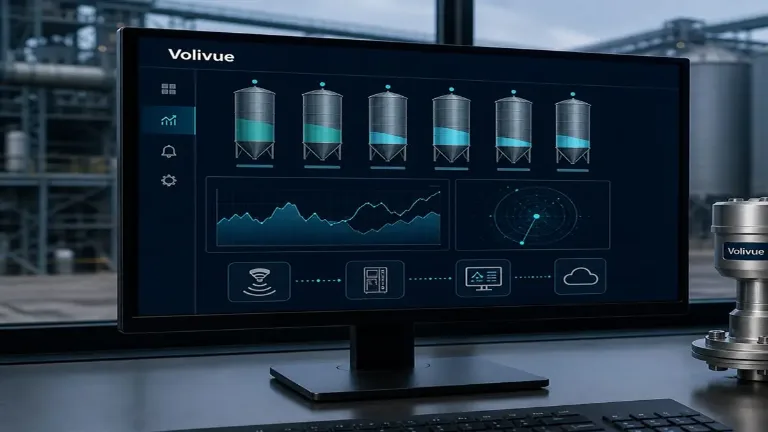
Ultrasonic Pump Control: A Beginner’s Guide to Relay-Based Level Switching
Beginner's guide to ultrasonic pump control: set high/low levels, wire the relay for start/stop, add hysteresis, and prevent overflow and dry-run.
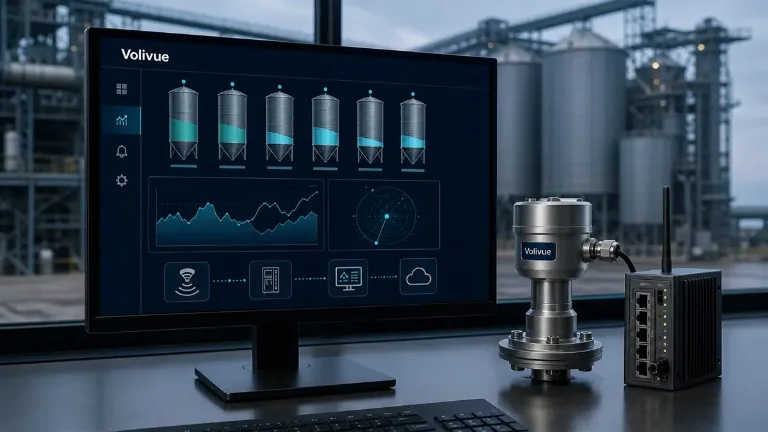
Radar Level SCADA Integration: 4–20 mA/HART, Modbus, and Relay Paths to PLC and DCS
A practical guide to radar level SCADA integration across 4–20 mA/HART, RS485 Modbus, and relay paths into PLC and DCS, with wiring and alarm logic.