 EN
EN 中文
中文 ES
ES RU
RU FR
FR PT
PT AR
AR DE
DEChoose the right inventory monitoring architecture by storage geometry.
The decision helper maps common industrial storage problems to the right sensing method, integration scope, and project documentation path. Final selection should be confirmed by drawings, material behavior, site requirements, and operating conditions.
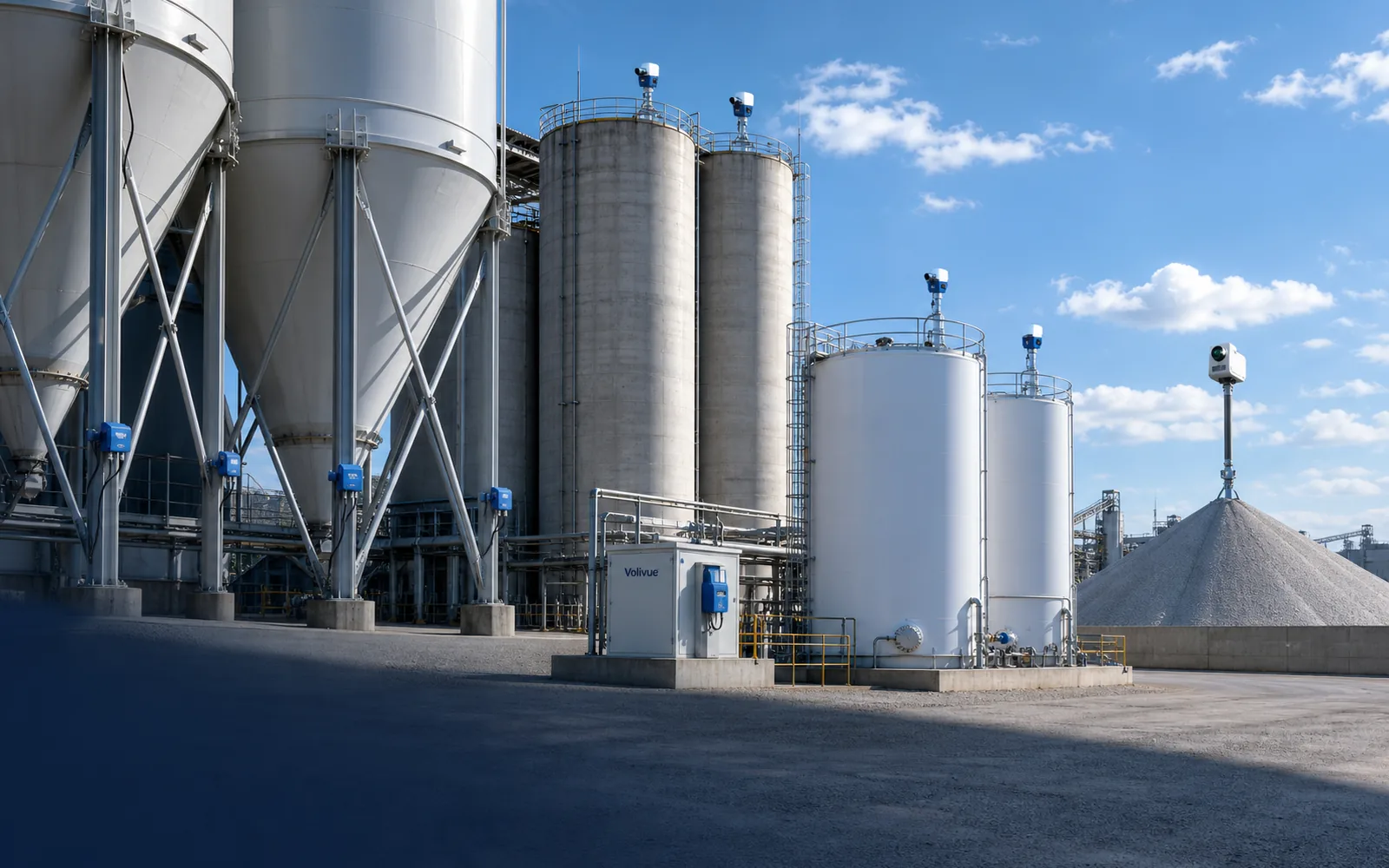
Fast selection guide for procurement and engineering teams
Start with the storage shape and risk profile. Then confirm measurement accuracy, installation limits, site requirements, and data interface requirements.
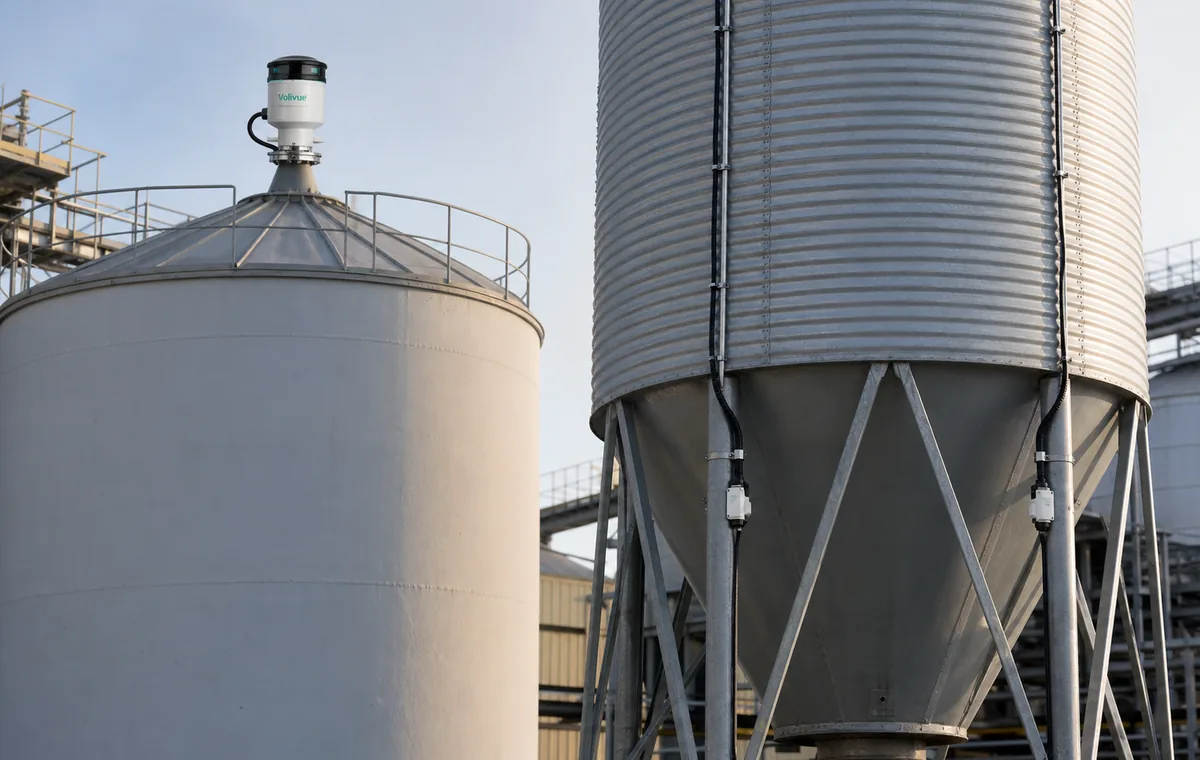
Legged powder silo
Need retrofit inventory without cutting roof openings, especially when height access is risky or production stoppage is expensive.
Patch-mount weighing system
Closed solid silo or bunker
Need non-contact distance measurement in dust, powder, pellets, or granular solids with narrow beam planning.
80GHz radar level system
Liquid tank or process vessel
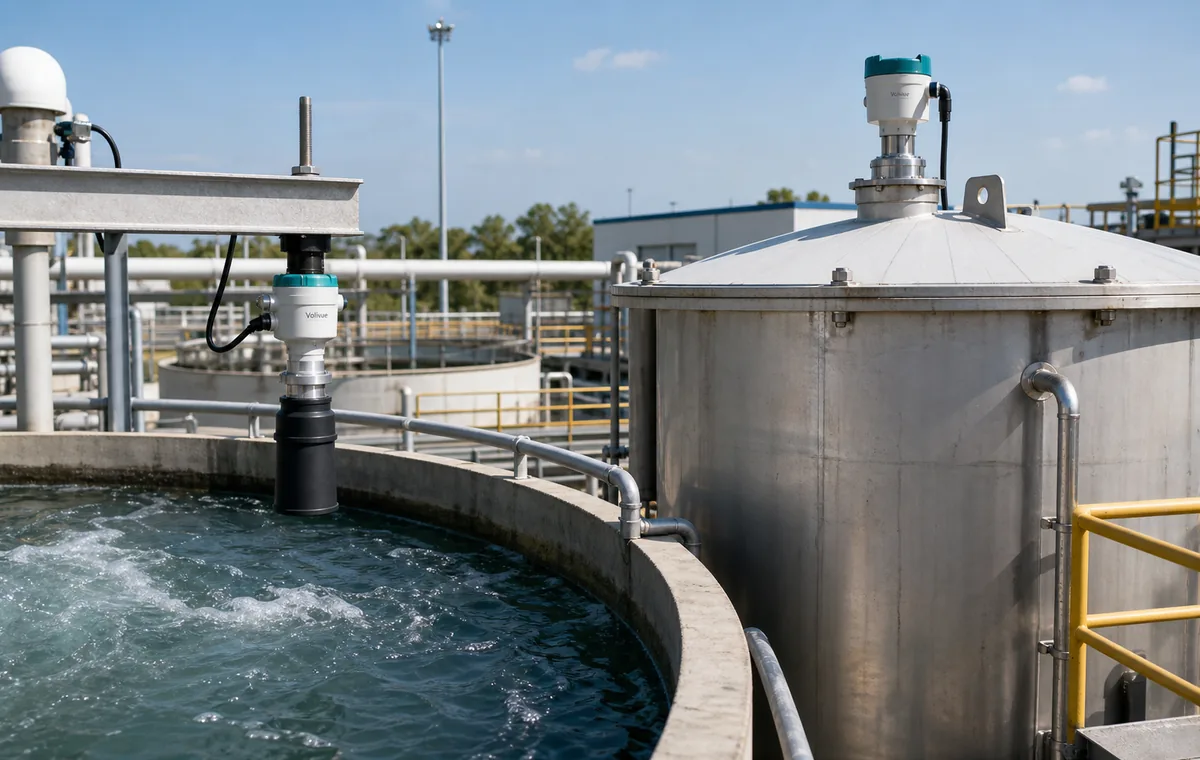
Need level, alarm, or interface monitoring for water, wastewater, chemicals, oils, or process liquids.
Ultrasonic / radar liquid level
Radar level for demanding liquids
Choose radar when steam, foam, corrosion, high temperature, pressure, or hazardous-area conditions make ultrasonic level unreliable.
Radar liquid level transmitter
Ultrasonic level for clean tanks
Choose ultrasonic for clean, non-pressurized, cost-sensitive water and wastewater tanks where conditions are simple.
Ultrasonic liquid level sensor
Open stockpile or warehouse
Need 3D surface mapping, volume calculation, pile change tracking, and safer inventory reconciliation.
3D LiDAR stockpile inventory
Multi-site operation
Need one inventory view across plants, material yards, and warehouses with alarms and reporting.
Unified monitoring platform
Unclear or mixed storage
Send drawings, photos, material data, and interface requirements. Volivue will recommend a practical system architecture.
Request application reviewPowder, pellet, and granular inventory
- Use 80GHz radar when a top-mounted non-contact measurement is practical.
- Use patch-mount weighing when roof access, nozzles, or internal obstructions make top-mounted instruments difficult.
- Combine sensor data with reorder thresholds, delivery reconciliation, and low-stock alarms.
Level, alarm, and process visibility
- Use ultrasonic level for simple water and wastewater applications with suitable vapor, foam, and range conditions.
- Use radar level for demanding liquids, vapor, temperature, pressure, or condensation challenges.
- Confirm material compatibility, mounting position, dead zone, and communication output before quotation.
3D scanning for open yards and enclosed warehouses
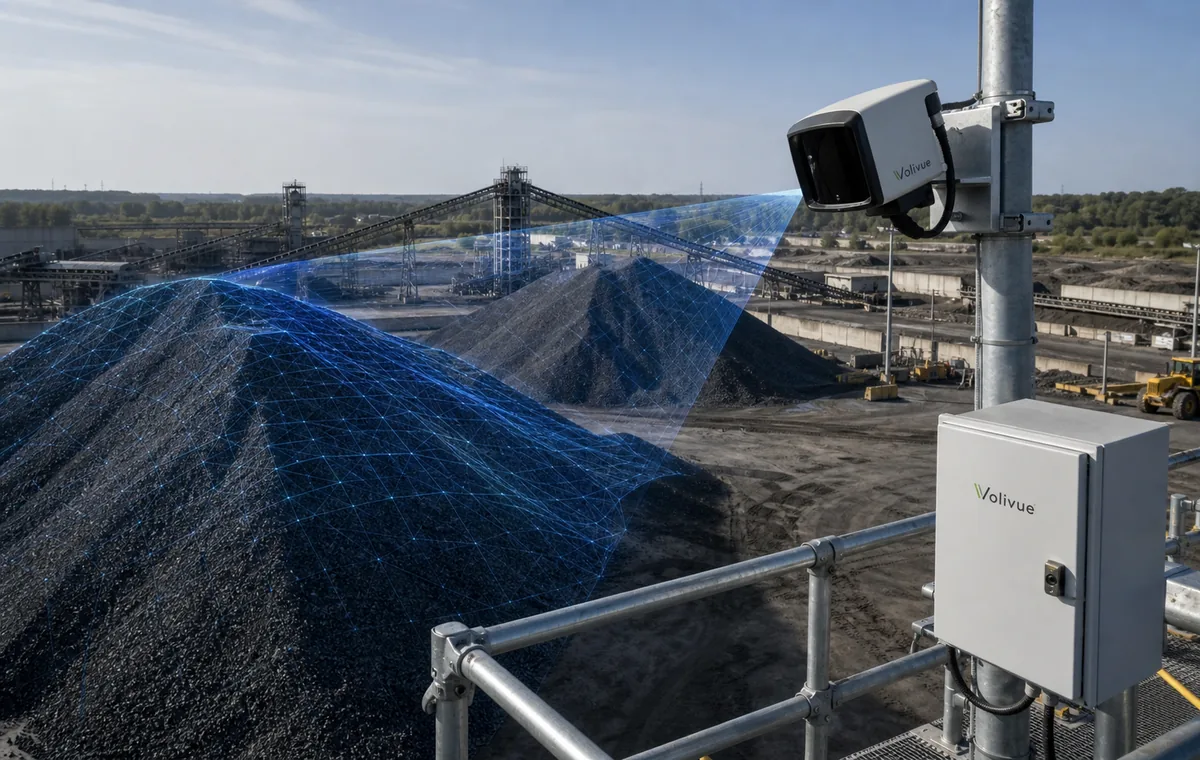
For coal, ore, aggregate, biomass, clinker, and other irregular piles, 3D LiDAR provides surface topology and volume calculation that a single point sensor cannot provide.
- 01
Safer inventory checks
Reduce manual climbing, drone-only dependency, and repeated field measurement in dusty or moving-equipment areas.
- 02
Better reconciliation
Compare stockpile change with belt scale, truck dispatch, and ERP inventory records.
- 03
Operational visibility
Track pile growth, reclaim zones, abnormal movement, and stock aging from one dashboard.
Turn storage uncertainty into a clear measurement architecture.
Share storage drawings, target accuracy, material behavior, country, and integration requirements. The engineering review will map the right sensor family and data path.
Request solution review