 EN
EN 中文
中文 ES
ES RU
RU FR
FR PT
PT AR
AR DE
DERadar liquid level transmitter for demanding liquid tanks
The Volivue radar liquid level transmitter uses non-contact FMCW microwave radar to measure level in liquid storage and process tanks where vapor, foam, condensation, corrosion, temperature swings, pressure, or hazardous areas make other methods unreliable. For clean, vented, low-cost tanks, ultrasonic measurement is often more economical and is reviewed separately.
Choose the liquid scenario first: vapor, foam, corrosion, and hazardous areas decide the radar package.
The radar family stays the same, but antenna, process seal, wetted material, and documentation change with vapor, foam, turbulence, corrosion, temperature, pressure, and hazardous-area conditions.
Hot liquids, boiler feed, and condensate tanks generate vapor and surface condensation that scatter ultrasonic echoes and fog optical sensors, while the level still has to be tracked continuously.
Volivue R30A sealed-antenna radar transmitterAeration, mixing, filling streams, and chemical reactions create foam layers and turbulent surfaces that move the apparent level and break weak echo signals.
Volivue R30A focused-beam radar transmitterAcids, solvents, and aggressive additives attack standard wetted parts, so the transmitter must keep level accuracy without metal contact degrading over time.
Volivue R30A chemical-grade radar transmitterPressurized vessels, hot process liquids, and classified areas demand a transmitter that holds the seal under temperature and pressure while documentation is reviewed for the site.
Volivue R30A-HT high-temperature radar transmitterWhat a radar liquid level transmitter does, when radar fits, when ultrasonic is enough, and what it does not do.
What it is
A non-contact FMCW radar liquid level transmitter that sends a microwave beam from the tank top, measures echo distance to the liquid surface, and converts it to level, volume, percent fill, and alarm states for automation and remote monitoring.
When radar fits
Radar is the right choice for vapor, foam, condensation, turbulence, corrosive media, temperature swings, pressure, hazardous areas, long ranges, and closed or pressurized tanks where high reliability is required.
Where ultrasonic is enough
For clean, vented, low-cost tanks such as many water and utility reservoirs without heavy vapor or foam, ultrasonic measurement is often more economical and is reviewed separately to avoid over-specifying radar.
What it does not do
The transmitter measures liquid level, not weight. Volume or mass needs tank geometry, a strapping table or dimensions, and documented density assumptions; it makes no certification claim without verified documentation.
From microwave echo to usable PLC, SCADA, and dashboard data.
Application review
Check medium, tank geometry, nozzle, vapor, foam, turbulence, corrosion, temperature, pressure, hazardous area, and required range to size the radar package.
Radar setup
Match empty/full references, tank height, dead zone, false echo suppression, filtering, and the strapping table or geometry so level converts to volume and percent fill.
Commissioning
Use the local display, software, or Bluetooth commissioning to review echo quality, scaling, alarm points, and communication settings without opening panels repeatedly.
Data output
Send level, volume, or percent fill to PLC/SCADA by 4-20mA, HART, optional RS485/Modbus, relay, gateway, dashboard, or project API.
Reliable level in demanding liquids, without hiding the engineering review.
Volivue positions the page around project qualification: medium, vapor or foam behavior, temperature, pressure, nozzle, hazardous area, output target, and integration route are reviewed before the radar model and antenna are selected.
Stable in vapor and foam
The microwave beam passes through vapor and condensation and can be filtered against foam and turbulence, keeping level continuous where ultrasonic echoes drop out.
Overflow and dry-run protection
High-high, low-low, and abnormal drawdown alarms help reduce spillage, pump damage, process interruption, and environmental reporting risk.
Volume and percent fill
Tank geometry or a strapping table converts level into volume and percent fill, so operators see usable inventory instead of a raw distance.
Automation-ready signals
4-20mA, HART, optional RS485/Modbus, relay, and Bluetooth commissioning support PLC, SCADA, pump control, gateway, dashboard, and project integration.
Factory-direct review
Volivue asks for tank drawings, medium, temperature, pressure, nozzle, and vapor or foam condition so selection starts from real site conditions.
Transparent inventory boundary
Level, volume, percent fill, and any mass estimate are separated clearly, with geometry and density assumptions documented during project review.
Send the details that actually decide the radar antenna and package.
The right radar liquid level package is selected from medium, tank geometry, vapor or foam behavior, temperature, pressure, nozzle, hazardous area, and signal requirements. This checklist turns the inquiry into an engineering review instead of a generic price request.
HTML technical parameters for quotation and model review.
Values below are conservative planning ranges that follow the current Volivue page target. Final model, antenna, range, wetted material, accuracy, process seal, temperature, pressure, and hazardous-area documentation must be confirmed by project review.
Built for liquid level measurement where vapor, foam, corrosion, and pressure rule out simpler sensors.
Fuel, lubricant, and additive tanks
Storage and process tanks where overflow, dry-run, and inventory visibility matter, including closed and pressurized vessels.
Chemical, solvent, and corrosive media
Acids, solvents, and aggressive additives where compatible wetted materials and non-contact measurement protect long-term accuracy.
High-temperature and pressurized vessels
Boiler feed, condensate, and process vessels with temperature swings, condensation, or pressure that demand a sealed radar package.
PLC, SCADA, and dashboard integration
Projects that need level, volume, alarms, trend history, and remote dashboards across distributed liquid tanks.
Product views, tank scenes, alarm screens, and integration visuals support the page while key specifications remain editable HTML.
Connect the radar liquid level transmitter to control, pump logic, and dashboard layers.
- Output mapping for 4-20mA, HART, relay, optional RS485/Modbus, gateway, PLC, or dashboard scope.
- Alarm strategy for high-high, low-low, sensor fault, and abnormal drawdown to protect tanks and pumps.
- Tank conversion for level, volume, and percent fill from geometry or a strapping table.
- Optional dashboard layer for refill planning, trend history, and multi-tank comparison.
- API or MQTT gateway for remote tank farms and enterprise inventory systems by scope.
Five checks that decide antenna, mounting, conversion, and output scope for the radar.
Collect tank drawings and geometry
Confirm tank height, diameter, shape, nozzle size, mounting position, dead zone, and internal obstacles before any range claim.
Review medium and process conditions
Medium name, vapor, foam, turbulence, corrosion, temperature, pressure, and hazardous area decide antenna, seal, and wetted material.
Select radar model and package
Choose range, antenna, wetted material, process connection, seal, protection class, and accessories from the reviewed conditions.
Map usable outputs
Define 4-20mA, HART, relay, optional RS485/Modbus, PLC, dashboard, alarm, trend, or volume fields so the signal is useful after installation.
Commission and validate
Check scaling, empty/full references, false echo suppression, tank conversion, alarm points, and trend behavior with site data.
Common tank situations used to qualify antenna, mounting, output, and alarm scope.
Closed condensate or boiler-feed tank
Review temperature, vapor, condensation, and nozzle to select a sealed-antenna radar that stays stable through vapor.
Corrosive chemical storage tank
Use tank drawings, medium, concentration, and vapor data to decide wetted material and process seal for long-term accuracy.
Remote tank farm with alarms
Dashboard, alarm logic, and protocol mapping can centralize level, volume, and refill planning across distributed liquid tanks.
Selection questions for engineers, procurement teams, and site maintenance.
When should I choose radar instead of ultrasonic?
Choose radar when vapor, foam, condensation, temperature swings, pressure, corrosion, long range, or high reliability requirements make ultrasonic echo unstable. For clean, vented, low-cost tanks, ultrasonic stays a good and more economical fit.
Does the transmitter measure weight?
No. It measures liquid level. Volume or percent fill is calculated from tank geometry or a strapping table; mass needs documented density assumptions.
Can radar handle foam and vapor?
The microwave beam passes through vapor and condensation, and echo filtering or a stilling well can stabilize foaming or turbulent surfaces. Severe foam is reviewed per application to confirm the antenna and mounting.
What media can it handle?
Fuel, lubricants, solvents, acids, chemicals, additives, condensate, and food-grade liquids, with antenna, seal, and wetted material confirmed by review.
Can it connect to PLC or SCADA?
Yes, the project scope can include 4-20mA, HART, relay, optional RS485/Modbus, gateway, dashboard, or API integration, with Bluetooth available for commissioning.
Do you support hazardous area or pressurized tank projects?
We can review hazardous-area, temperature, and pressure requirements, but no ATEX, IECEx, SIL, or local compliance claim is made without verified product data and documentation.
What information should we send first?
Send the tank drawing, medium name, height, nozzle details, temperature, pressure, vapor or foam condition, required outputs, and site conditions.
Send tank drawings, medium, temperature, pressure, and output target.
Share tank drawings, medium name, height, nozzle details, temperature, pressure, vapor or foam condition, output target, country or region, and hazardous-area need if any.
Related technical insights
Why Point Level Sensors Fail on Open Stockpiles
Why point level sensors struggle with stockpile volume measurement on open piles, and how 3D LiDAR area scanning closes the gap on irregular heaps.
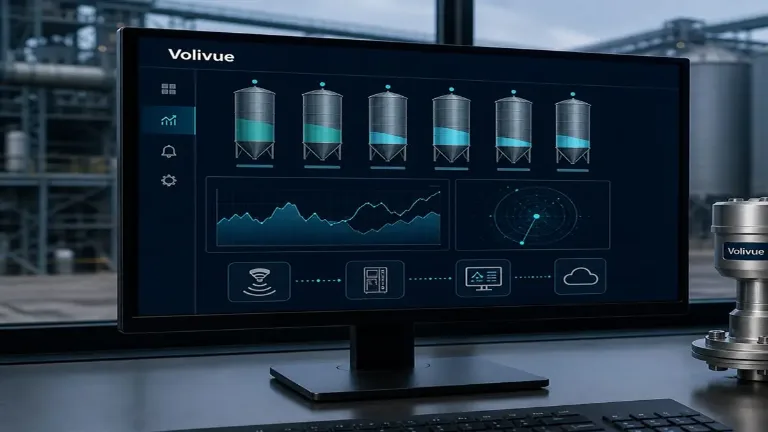
Ultrasonic Pump Control: A Beginner’s Guide to Relay-Based Level Switching
Beginner's guide to ultrasonic pump control: set high/low levels, wire the relay for start/stop, add hysteresis, and prevent overflow and dry-run.
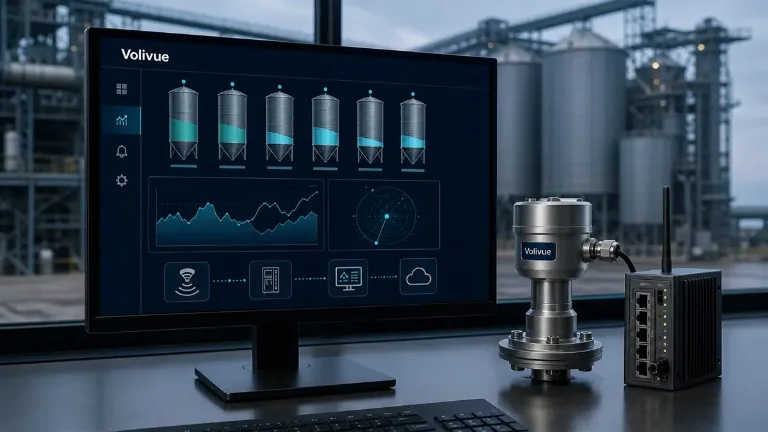
Radar Level SCADA Integration: 4–20 mA/HART, Modbus, and Relay Paths to PLC and DCS
A practical guide to radar level SCADA integration across 4–20 mA/HART, RS485 Modbus, and relay paths into PLC and DCS, with wiring and alarm logic.