 EN
EN 中文
中文 ES
ES RU
RU FR
FR PT
PT AR
AR DE
DEUltrasonic vs Radar for Liquid Level: A Selection Decision Tree
Sound liquid level technology selection starts with one honest question: how clean and calm is the surface you are trying to measure? Ultrasonic and radar are both proven non-contact methods, and both live inside the same combined ultrasonic and radar liquid level system—but they earn their place under very different conditions. Ultrasonic is the economical, dependable choice for clean, vented tanks at ambient pressure. Radar holds its accuracy where vapor, foam, condensation, corrosion, high temperature, or pressure would otherwise weaken a sound-based reading. This guide walks the two technologies through the dimensions that actually decide the fit—media properties, range, mounting, and cost—and ends with a structured decision tree so you can match the principle to the tank rather than forcing the tank to suit the principle.
There is no universally “better” technology here. There is only the right fit for a specific vessel, fluid, and duty cycle. The sections below explain the physics, then turn it into a repeatable selection logic.
How Each Technology Measures Liquid Level
Ultrasonic sensors emit a high-frequency sound pulse from the top of the tank and time the echo reflected from the liquid surface. Level is the vessel height minus the measured distance, derived from the speed of sound through the headspace gas. Because the method depends on a sound wave traveling through that gas, anything that disturbs the medium—heavy vapor, temperature gradients, foam, or vacuum—changes how the wave propagates and can scatter or attenuate the return. A single-point ultrasonic level sensor is attractive precisely because it is simple: low power draw, modest electronics, and a clear echo-timing principle. Typical measuring spans run on the order of 0.3 to 15 m with accuracy on the order of ±0.25% of full scale, both model-dependent.
Radar sensors send a continuous frequency-modulated microwave signal (FMCW) and derive level from the frequency shift of the reflected wave. Microwaves are largely indifferent to the gas in the headspace—vapor, condensation, and pressure changes do not slow them the way they affect sound. Typical liquid spans extend to roughly 0.1 to 30 m with accuracy from about ±2 mm to ±3% depending on the model and antenna. That immunity to the headspace environment is the defining strength of the radar level transmitter branch in demanding service.
The core distinction is the carrier: ultrasonic rides a sound wave that needs a cooperative medium, while radar rides a microwave that does not.
Media Properties: The First Branch in the Decision Tree
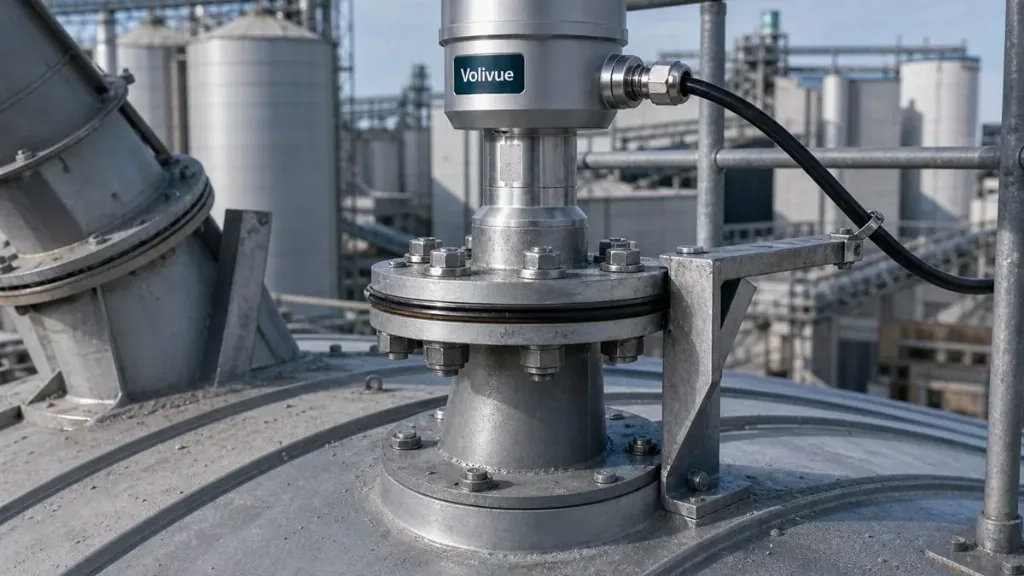
For liquids, the fluid and its headspace usually decide the technology before range or budget enters the conversation.
Clean, calm, low-foam liquids at ambient pressure are ultrasonic’s home ground: water, clarified effluent, non-volatile chemicals, and most ambient storage. The surface reflects sound well, the headspace is quiet, and the simpler sensor delivers reliable data at lower cost.
Vapor, foam, condensation, corrosive, high-temperature, or pressurized service pushes the selection toward radar. Dense vapor and foam scatter a sound pulse and can stall an ultrasonic reading until the headspace settles; condensation on an ultrasonic transducer face can dampen it further. Radar passes through typical vapor with little loss and is far less troubled by a fouled or condensing headspace, so it keeps measuring through conditions that would blind a sound-based sensor. Foam remains a genuine challenge for any non-contact method, and very low-reflectivity or heavily foaming surfaces stay model- and antenna-dependent—but radar generally tolerates a wider envelope of difficult headspace conditions than ultrasonic.
So the first branch is simple: if the surface and headspace are clean and calm, ultrasonic is a candidate; the moment vapor, foam, aggressive chemistry, heat, or pressure enters the picture, radar moves to the front.
Range, Geometry, and Mounting
| Dimension | Radar (FMCW) | Ultrasonic |
|---|---|---|
| Measuring principle | FMCW microwave (non-contact) | Sound-wave echo (non-contact) |
| Typical range (liquids) | ~0.1–30 m (model-dependent) | ~0.3–15 m (model-dependent) |
| Typical accuracy | ±2 mm to ±3% (model-dependent) | ±0.25% FS (model-dependent) |
| Vapor / foam tolerance | Higher; vapor has little effect | Limited; degraded by vapor and foam |
| Vacuum / pressure | Tolerant (model-dependent) | Sound needs gas; vacuum impairs it |
| High temperature / corrosive | Workable with rated variant | Better suited to mild conditions |
| Relative cost & power | Higher | Lower, low power draw |
| Best-fit duty | Vapor, foam, corrosive, hot, pressurized, long range | Clean, calm, low-foam, ambient pressure |
Mounting discipline matters for both. Each needs a clear, vertical line of sight to the surface and adequate clearance from the inlet stream, agitator wash, and tank walls; both have a near-surface blanking (dead) zone that sets the highest measurable level. Tall vessels favor radar because its longer span and focused beam reach the bottom without losing signal, and a narrow microwave beam is less likely to catch internal structures than a wider ultrasonic cone. For shallow, wide, uncluttered tanks in clean service, ultrasonic’s range and beam pattern are entirely adequate. Both branches share the same electrical interfaces—4–20 mA, HART, RS485 Modbus, and relay outputs—and IP67/IP68 enclosure protection, so wiring into existing control and telemetry is consistent regardless of which sensing principle you choose. Hazardous-area duty is served by model-specific variants and must be confirmed against the certified model for your zone.
Cost, Power, and Total Practicality
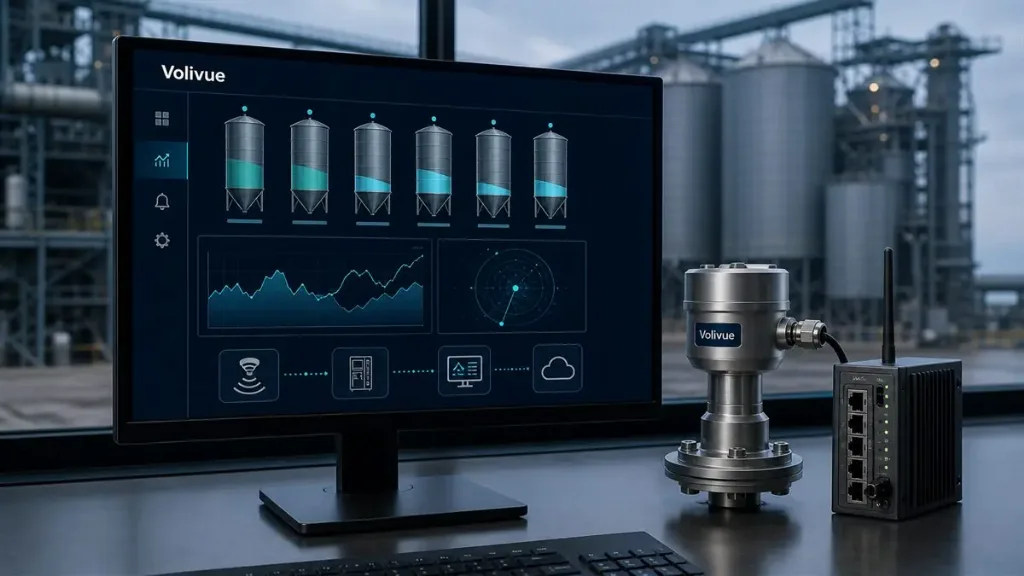
On a relative basis, ultrasonic is the more economical and lower-power option. Its simpler electronics make it attractive where conditions are benign and budgets are tight—clean water tanks, dosing reservoirs, indoor process vessels, and ambient chemical storage. For battery or solar-powered remote sites, its modest power draw is a real advantage.
Radar carries a higher relative cost, justified when the process would defeat ultrasonic. Paying for radar on a clean, vented ambient tank is over-specifying; specifying ultrasonic on a hot, foaming, or pressurized vessel is a false economy that resurfaces as nuisance dropouts, manual gauging, and inventory uncertainty. The right lens is cost of reliable data over the instrument’s life, not the line-item price of the sensor. Because both branches live in one product family and share outputs, protection ratings, and integration, the decision is purely about matching the sensing principle to the duty—not about reworking the rest of the loop.
The Selection Decision Tree
Match the technology to the toughest condition the tank sees, not the average. Walk the branches in order:
- Is the headspace heavy with vapor, foam, or condensation? If yes, choose radar. If no, continue.
- Is the fluid corrosive, hot, or is the tank under vacuum or pressure? If yes, choose radar with the rated variant. If no, continue.
- Do you need a long span (beyond roughly 15 m) or tight millimeter-class accuracy? If yes, lean radar. If no, continue.
- Is the tank clean, calm, low-foam, near ambient pressure, with short-to-moderate range, and is cost or power the binding constraint? If yes, ultrasonic is the efficient, dependable fit.
- Still in the gray zone—mixed media, intermittent foam, or variable duty? Default to radar for headroom, or commission a short application review before committing.
The principle behind the tree is consistency: ask what happens during the worst few minutes of a fill or reaction cycle. If the headspace fouls with vapor or the surface churns into foam, lean radar. If the air above the liquid stays clear and the surface stays calm, ultrasonic will serve well at a lower cost. Because both technologies share the same engineering pedigree and the same loop interfaces, the aim is fit, not loyalty to one principle—a well-matched ultrasonic sensor in easy service is just as correct as radar in a punishing tank. When the application genuinely straddles the line, talk to our measurement engineers with your tank geometry, fluid, headspace conditions, range, and accuracy target, and we will recommend the branch and model that fit.
Related Reading
For the broader framework behind these trade-offs—how to read a datasheet, weigh process conditions, and avoid common mistakes across level technologies—see our level sensing selection guides in Technical Insights.