 EN
EN 中文
中文 ES
ES RU
RU FR
FR PT
PT AR
AR DE
DEHow Ultrasonic Level Measurement Works (and Where It Stops Working)
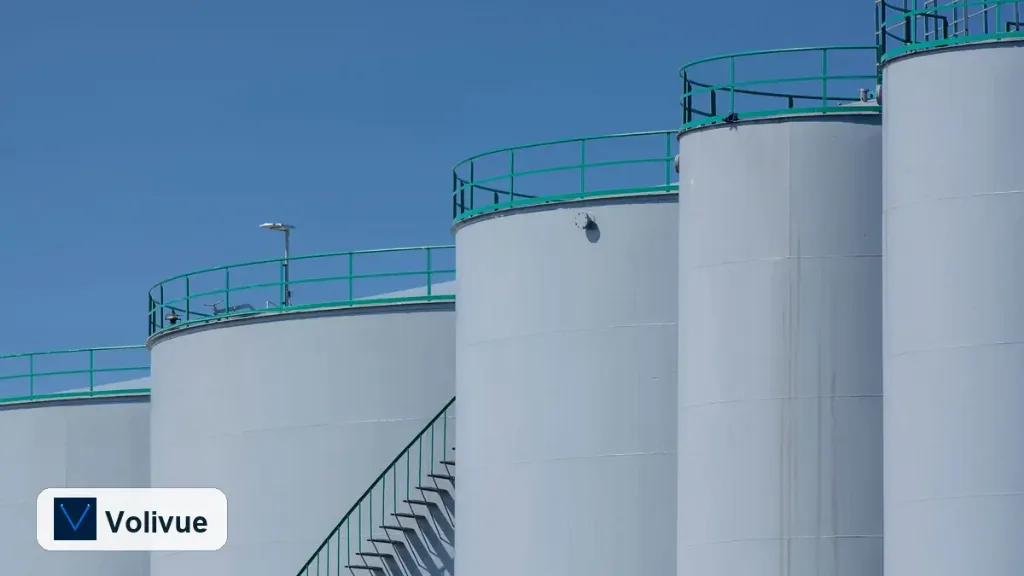
An ultrasonic level sensor is one of the most widely used non-contact instruments for measuring liquid level, and for good reason: it is inexpensive, draws little power, and never touches the liquid. Mounted at the top of a tank or sump, it works by sending a short burst of sound into the air above the liquid and listening for the echo that bounces back from the surface. The cleaner and calmer that surface is, the more reliable the reading. Understanding the physics behind that simple idea is the fastest way to know when the technique will serve you well and when it will quietly let you down.
This article walks through the measurement principle step by step, explains why temperature matters more than most people expect, and lays out the boundaries that decide whether ultrasonic is the right tool for your vessel.
The core principle: timing an echo
Ultrasonic level measurement is a form of time-of-flight ranging. The sensor contains a transducer that converts an electrical pulse into a high-frequency sound wave, well above the range of human hearing. That pulse travels down through the air (or other gas) in the vessel, strikes the liquid surface, and reflects back up to the same transducer, which now acts as a microphone and converts the returning sound back into an electrical signal.
The instrument measures one thing precisely: the elapsed time between transmitting the pulse and receiving its echo. Because the pulse makes a round trip, the distance from the sensor face to the surface is half the total travelled distance. The electronics then subtract that distance from the known empty-vessel height to report the level, or convert it into volume if a tank profile has been entered.
In plain terms, the measurement is a stopwatch and a yardstick. The stopwatch is the echo timing; the yardstick is the speed of sound. If either drifts, the reported level drifts with it. That dependence on the speed of sound is the most important thing to understand about the technology, and it is the subject of the next section.
Speed of sound and temperature compensation
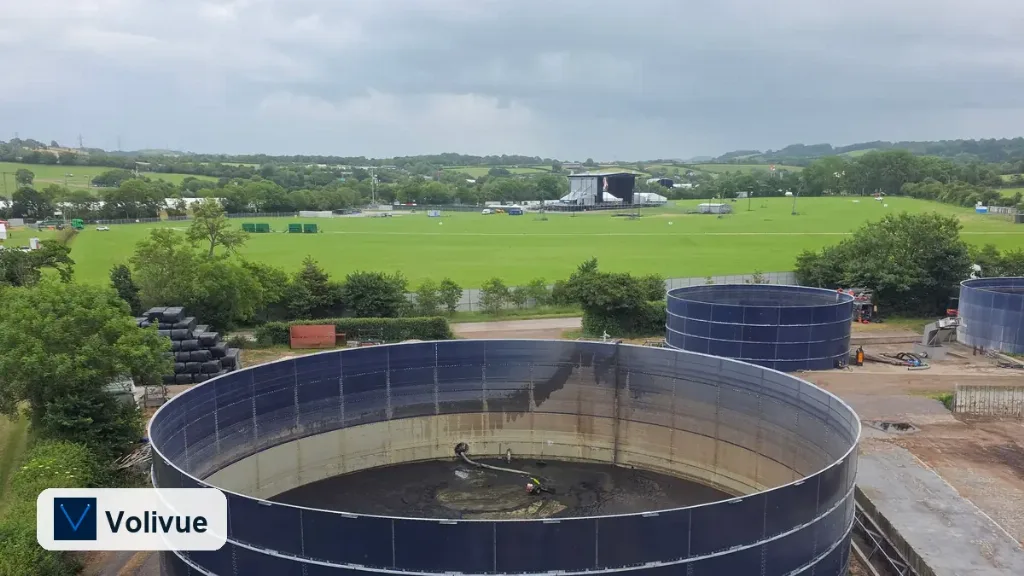
To turn a flight time into a distance, the sensor must know how fast sound is travelling through the gas above the liquid. Sound in air moves at roughly 343 metres per second at 20 degrees Celsius, but that figure is not a constant. The speed of sound rises and falls with temperature, and to a smaller degree with humidity and gas composition. As a rule of thumb, the speed changes by about 0.6 metres per second for every degree Celsius.
That sensitivity is not trivial. A vessel that heats up over a day, or a sensor mounted in direct sun above a cool liquid, can see the air temperature swing by tens of degrees, and left uncorrected a 20-degree shift introduces an error of several percent. To handle this, every serious ultrasonic level sensor includes a built-in temperature element and applies continuous temperature compensation, recalculating the speed of sound in real time before converting flight time to distance.
Temperature compensation is what makes the technology usable, but it has limits. The sensor measures temperature at one point, near its own face, and assumes the gas column is uniform. When strong thermal gradients exist between the sensor and the surface, or when vapours and gases change the composition of the air, the assumed speed of sound no longer matches reality and accuracy degrades. This is the first hint of where ultrasonic sensing runs into physical walls.
Typical performance you can expect
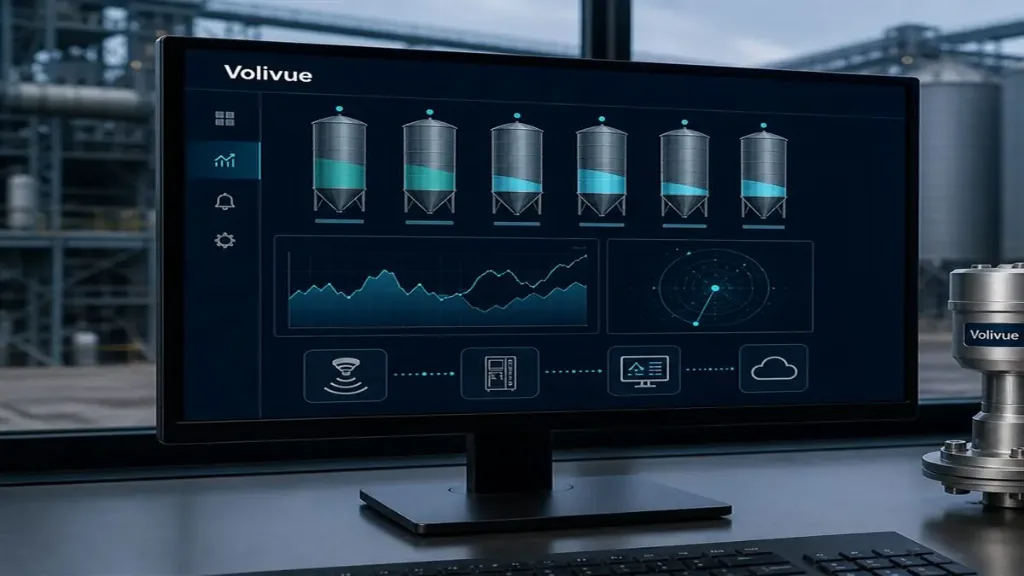
Within its comfort zone, an ultrasonic level sensor delivers solid, repeatable performance for general-purpose liquid measurement. Measuring ranges typically span from about 0.3 metres up to 15 metres depending on the model, with the lower bound set by a near-field blanking zone where the transducer is still ringing and cannot yet listen for echoes. Accuracy is typically on the order of plus or minus 0.25 percent of full scale, again varying by model and conditions.
On the output side, these sensors are easy to integrate. A 4 to 20 milliamp current loop covers most analogue control and PLC connections, while RS485 with Modbus opens the door to digital networks and multi-drop installations. Many models also offer a relay output for simple high- or low-level alarms and pump control. For ingress protection, ratings of IP67 or IP68 are common, allowing outdoor and washdown use as well as installation in wet sumps and pits.
For a closer look at ranges, outputs, and mounting options, see the Volivue ultrasonic liquid level sensor. The figures above are conservative and model-dependent; always confirm the exact specification for the variant you intend to use, because near-field blanking, beam angle, and maximum range differ by model.
The reason these instruments work so well in the right setting is the same reason they fail in the wrong one. Everything depends on a clean, well-defined echo, and the next section explains what can destroy that echo.
Where ultrasonic measurement reaches its limits
Because the measurement relies on sound travelling cleanly through gas and reflecting cleanly off a flat liquid surface, anything that absorbs, scatters, or distorts the sound wave will undermine it. Several common process conditions do exactly that, and they define the hard boundaries of the technology.
- Foam. A layer of foam on the surface absorbs and scatters the ultrasonic pulse rather than reflecting it. The echo comes back weak, late, or not at all, and the sensor may read the top of the foam, the liquid beneath, or nothing usable.
- Vapour and steam. Heavy vapour or steam in the gas column attenuates the sound and changes the local speed of sound unpredictably, breaking the temperature-compensation assumption and weakening the echo.
- Vacuum or low pressure. Sound needs a medium to travel through. As pressure drops toward a vacuum, the gas becomes too thin to carry the pulse, and the measurement simply stops working.
- Heavy dust. Dense airborne dust scatters and absorbs the sound wave, so ultrasonic sensing is poorly suited to dusty environments and tends to fit clean liquids rather than dusty solids.
There is also a safety boundary that has nothing to do with physics. The standard ultrasonic liquid level sensor carries no explosion-proof certification and must not be installed in classified hazardous areas. Where flammable atmospheres are a concern, a properly certified instrument is required, and ultrasonic is not the right choice on its own.
Choosing the right tool: ultrasonic versus radar
The honest way to position ultrasonic level measurement is as an excellent fit for a well-defined set of conditions rather than a universal solution. It shines on clean water, wastewater and sewage, and low-pressure vented tanks where the surface is reasonably calm, foam is minimal, and the air above the liquid is ordinary atmosphere at near-ambient temperature. In those applications it offers a low-cost, low-power, non-contact reading that is hard to beat on value.
When the process moves outside that envelope, the better choice is usually radar. Where foam, heavy vapour or steam, corrosive atmospheres, or high temperature and high pressure are present, a radar level transmitter measures through conditions that defeat ultrasonic, because microwaves do not depend on a gas medium and are far less affected by vapour, temperature gradients, or pressure. Radar is the natural step up when the vessel conditions are harsh, sealed, or variable.
The selection logic comes down to a few questions. Is the surface clean and reasonably calm? Is the tank vented and near atmospheric pressure? Is the area non-hazardous? If the answer to all three is yes, an ultrasonic level sensor is likely the most cost-effective instrument for the job. If any answer is no, evaluate radar before committing.
If you are weighing these options for a specific vessel, our engineers can review your process conditions and recommend a sensing approach that matches them. Talk to the Volivue team about your application and we will help you avoid specifying a sensor that the physics will fight.
Summary
Ultrasonic level measurement is, at heart, a sound-based stopwatch: transmit a pulse, time its echo, halve the distance, and compensate for the temperature-driven speed of sound. That simplicity makes it affordable and reliable on clean, vented liquids, but the same dependence on a clean echo through ordinary gas limits it around foam, vapour, vacuum, and dust, and rules it out of hazardous areas. Match the sensor to the conditions, step up to radar when the process is harsh, and the instrument will earn its place.
—
Related reading: Explore more on level-sensing selection and instrument fundamentals in our technical insights library.