 EN
EN 中文
中文 ES
ES RU
RU FR
FR PT
PT AR
AR DE
DESilo Weighing vs Radar Level: Which Gives True Inventory Accuracy?
“How much material is in the silo?” sounds simple, but height and mass are not the same question. The right answer depends on the shape of the material surface and what you actually need for procurement and production.
Radar measures height, not mass
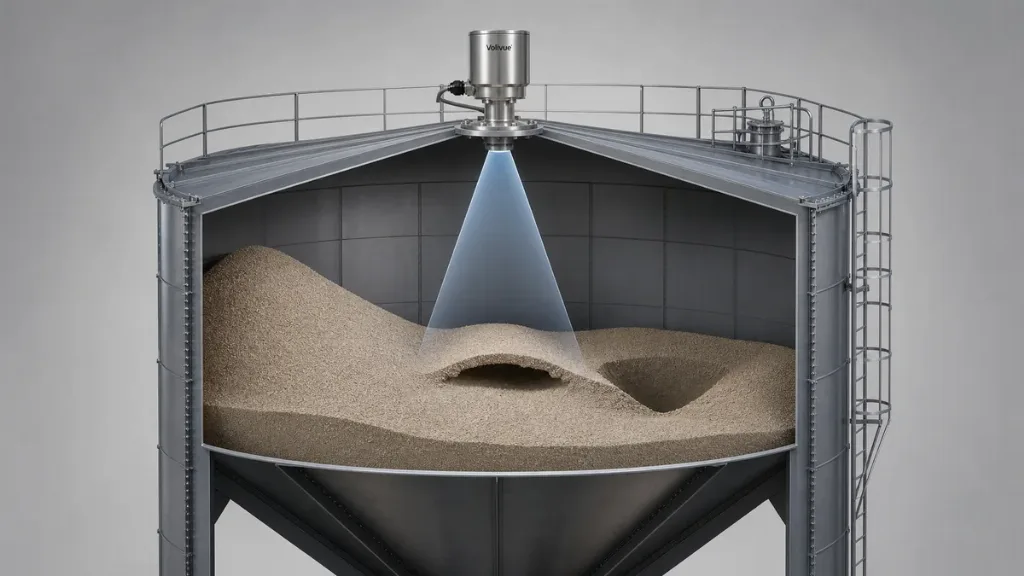
A level sensor reports the distance to the surface. To turn that into tonnage you assume a flat surface and a known bulk density. Both assumptions break with a cone after filling, a crater after discharge, or bridging. 80 GHz radar gives an excellent, repeatable height that is ideal for high/low control and trend, but volume from a single point carries the shape error.
Patch-mount weighing measures mass directly
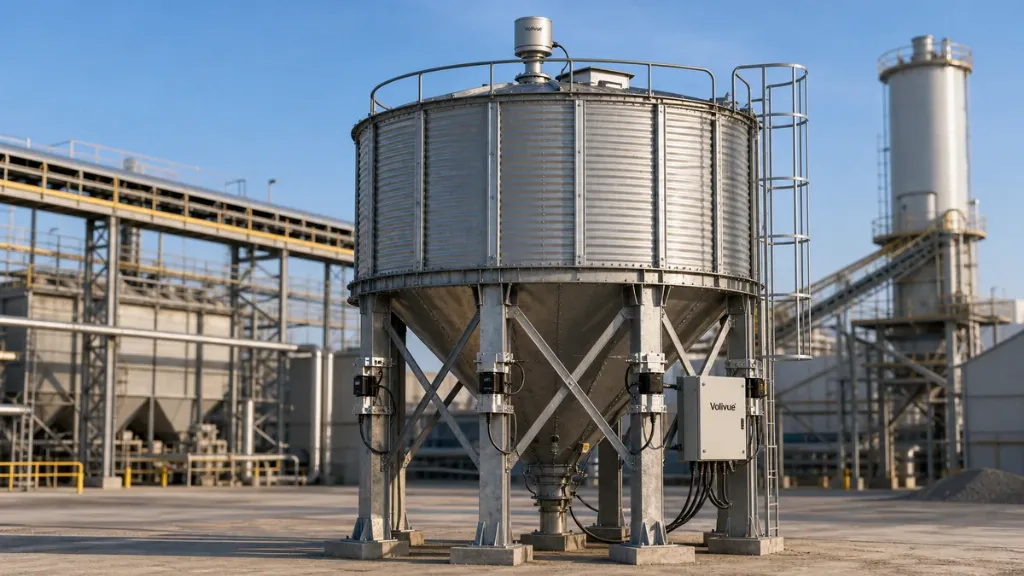
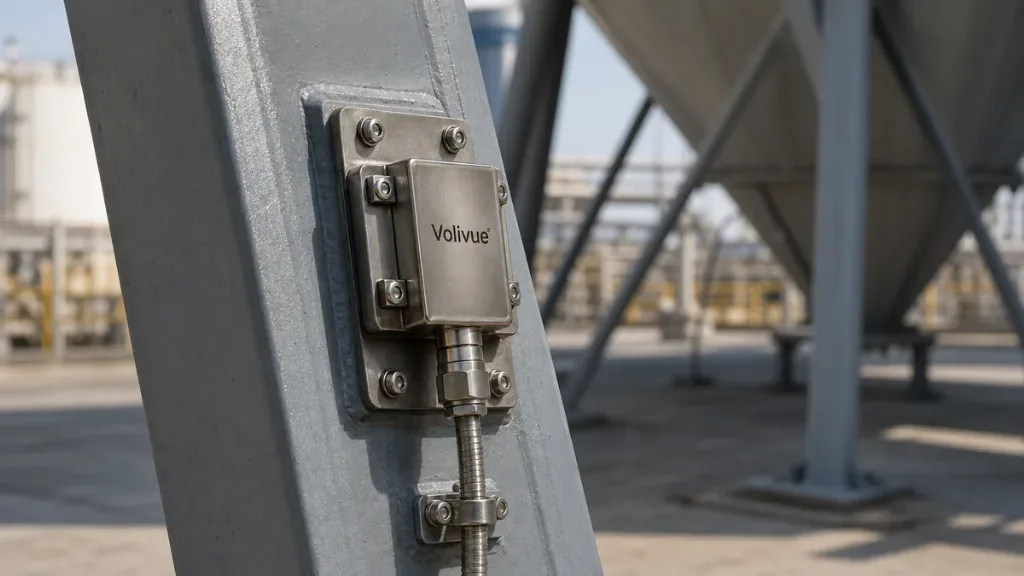
Patch-mount silo weighing reads load at the support structure, so it reports mass regardless of how lumpy or coned the surface is, and it does not care about density changes. For reconciliation, billing, and recipe batching, mass is the number you want.
Choosing by material and goal
- Need a fast, non-contact height for control? Radar.
- Need accountable tonnage for procurement or billing? Weighing.
- Want both confidence and a cross-check? Run both and reconcile.
For the wider picture across radar, ultrasonic and LiDAR, see our Technical Insights selection guide, or tell us your accuracy target and we will size the right approach.