 EN
EN 中文
中文 ES
ES RU
RU FR
FR PT
PT AR
AR DE
DEWater Tank Level Sensor Selection for Low-Cost Municipal Water Monitoring
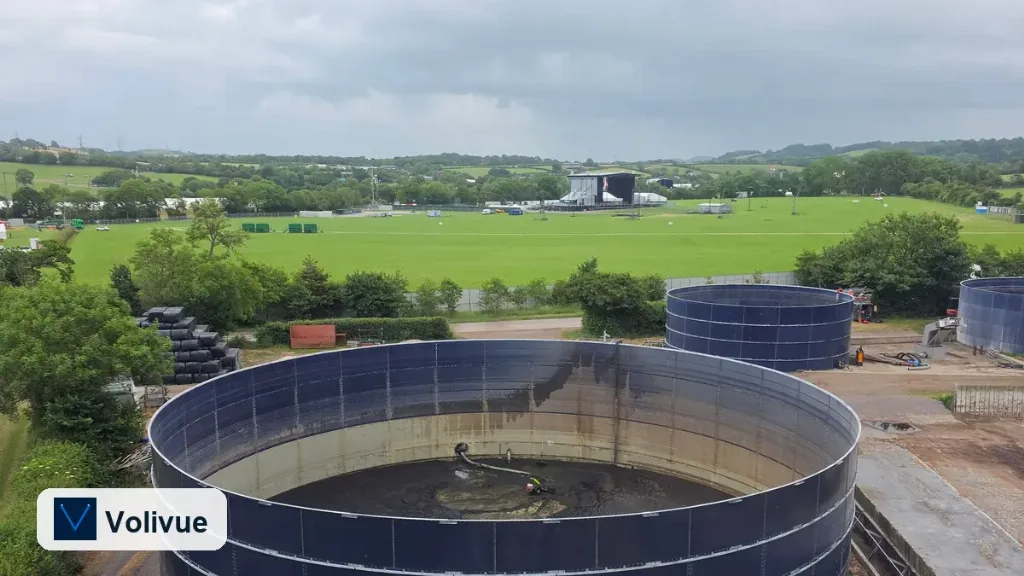
Choosing a water tank level sensor for municipal supply and building or industrial water storage usually comes down to one question: how do you get reliable level data without overspending on hardware you do not need? For clean-water service tanks, elevated reservoirs, and make-up basins, a non-contact ultrasonic measurement approach answers that question well. It keeps the sensing element out of the water, draws little power, and delivers continuous level readings that feed straight into alarms and remote monitoring. This guide explains where ultrasonic fits in clean-water applications, walks through typical municipal and building use cases, and covers what matters during installation.
Why ultrasonic suits clean-water, low-cost monitoring
Municipal and building water storage shares a useful property: the medium is clean, the tanks are vented to atmosphere, and the surface is generally calm. That environment plays to the strengths of non-contact ultrasonic sensing.
An ultrasonic level sensor mounts above the liquid and measures the time it takes an emitted sound pulse to reflect off the water surface and return. Because nothing touches the water, there is no electrode, float, or probe to foul, corrode, or scale up over time. For potable and treated water that translates into low maintenance and no contamination risk from intrusive hardware.
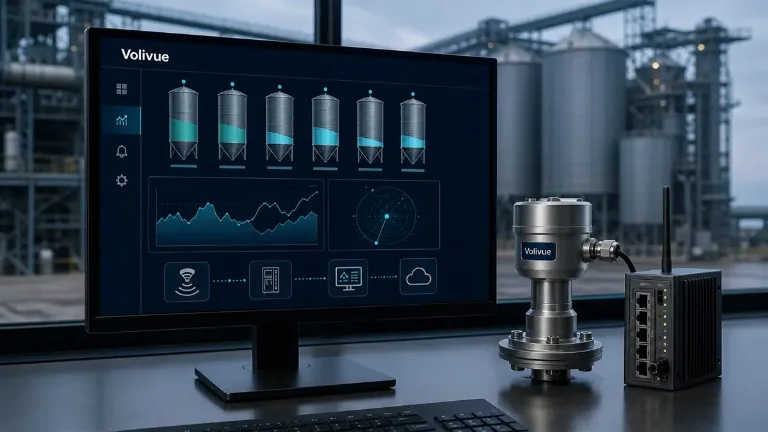
The cost and power profile also fits decentralized water infrastructure. The Volivue Ultrasonic Liquid Level Sensor is designed as a low-cost, low-power device, which matters when a utility instruments dozens of distribution tanks, or when a remote site runs on solar or battery backup. You can learn more about the measurement principle and output options on the Volivue Ultrasonic Liquid Level Sensor product page.
Performance is well matched to the task rather than overspecified. Measuring range is typically 0.3–15 m depending on model, which covers most ground-level service tanks, break tanks, and small reservoirs, as well as many elevated tank shafts. Accuracy is on the order of ±0.25% of full scale by model, which is sufficient for volume estimation, pump control thresholds, and trend monitoring in clean-water service.
Typical municipal and building applications
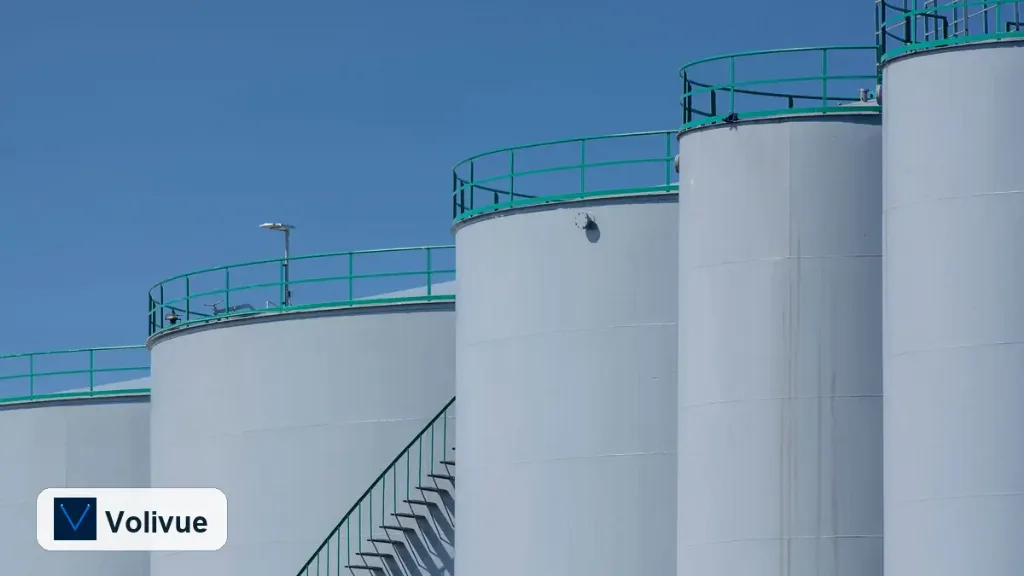
The same sensing approach maps onto several common storage roles in a water network. The differences are mostly in tank geometry and how the level reading is used downstream.
Elevated and rooftop tanks. High-level tanks provide gravity pressure for distribution zones or building risers. A non-contact sensor measures the column above the water surface without anything entering the tank, so it does not interfere with the outlet or overflow. Continuous level data lets operators see whether the tank is cycling normally or drifting toward empty.
Clearwells and treated-water reservoirs. After filtration and disinfection, treated water is held in clearwells and ground reservoirs before distribution. Ultrasonic measurement keeps the hardware out of the disinfected water and provides the continuous level signal needed to balance inflow from treatment against outflow to the network.
Make-up and break tanks. Make-up basins that top up cooling, irrigation, or process loops, and break tanks that isolate a building supply from the municipal main, both need a dependable refill trigger. A level sensor wired to a pump or solenoid keeps the basin within its working band and signals when refill is failing.
In each case the tank holds clean, atmospheric-pressure water, which is exactly the application class the ultrasonic device is intended for. Pressurized vessels, foaming surfaces, or heavily contaminated media fall outside this scope and are better served by other technologies.
The value of remote monitoring and level alarms
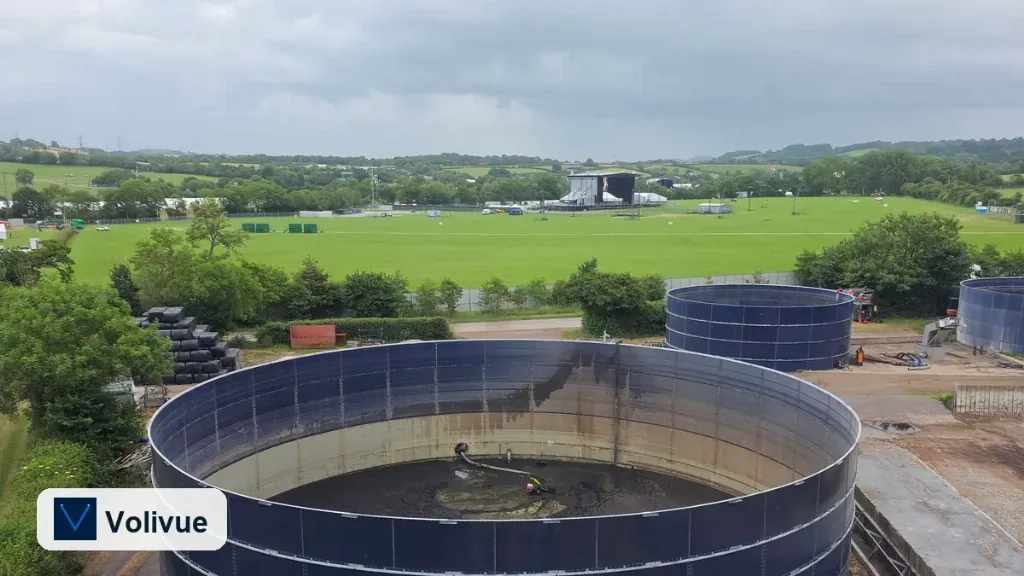
A level sensor is only as useful as the data it delivers and the actions that data triggers. For distributed water assets, the payoff is in remote visibility and timely alarms.
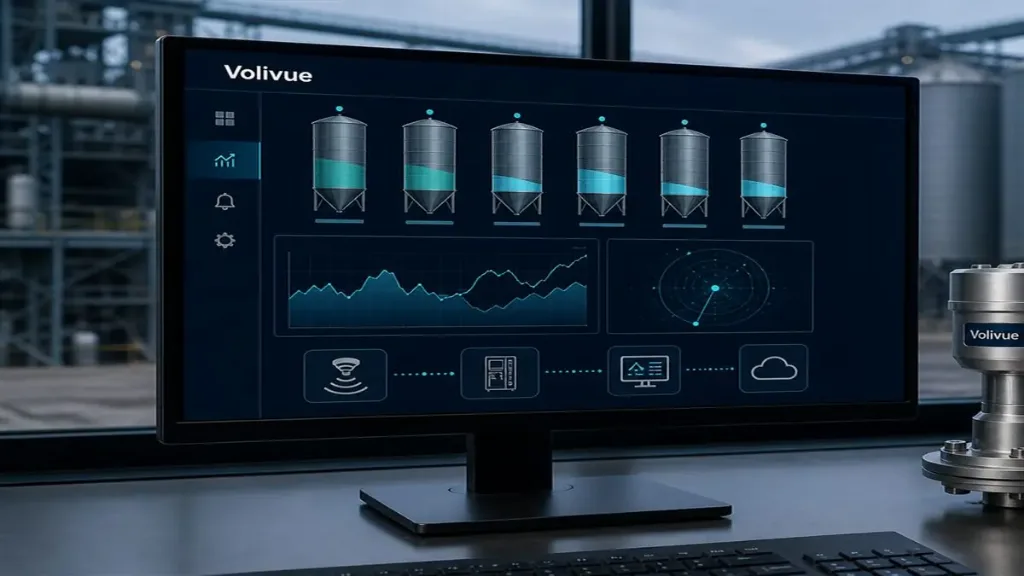
Continuous level readings let operators watch tanks they cannot easily visit. Instead of dispatching a technician to dip a tank or read a gauge, the level value streams back to a SCADA system, controller, or telemetry unit. That turns scattered storage points into a monitored network where draw-down rates, refill cycles, and abnormal trends are all visible from one place.
Level alarms convert that visibility into protection. A high-level alarm warns of an overflow risk before treated water is wasted or a tank room is flooded. A low-level alarm flags a supply interruption, a stuck pump, or unexpected demand before customers lose pressure. Tying alarm thresholds to the continuous reading means the same single sensor handles both routine monitoring and exception alerting.
The output options make this integration straightforward. The sensor provides a 4–20 mA analog signal for direct connection to PLCs and analog telemetry, RS485 Modbus for digital polling across multiple devices on one bus, and a relay output for standalone pump control or local alarm contacts, depending on model. That range lets the same device drop into a legacy analog loop or a modern Modbus network without changing the field hardware.
Installation notes and field considerations
Ultrasonic measurement is forgiving in clean-water tanks, but a few installation details determine whether readings stay stable over the long term.
Mounting and dead band. Mount the sensor so its face looks straight down at the water surface, clear of inlet streams, ladders, and tank fittings that could throw false echoes. Respect the minimum measuring distance: because range starts at roughly 0.3 m by model, the sensor must sit far enough above the maximum fill level so a full tank does not enter the close-in dead band.
Geometry and obstructions. In narrow elevated-tank shafts, keep the beam path free of brackets and pipework, since a side reflection can be misread as the surface. In wide reservoirs, a stable, fairly flat surface is ideal; the calm conditions of stored municipal water generally suit this well.
Environmental protection. Tank tops and reservoir chambers are damp and can be exposed. An IP67 or IP68 rating by model lets the sensor tolerate condensation, washdown, and incidental submersion at the mounting point. Confirm the specific rating for the model you select and route cabling to avoid standing water at the gland.
When to step up to radar. Ultrasonic is the low-cost choice for clean, vented, calm-surface water. If an application later involves heavy vapor, strong turbulence, foam, or a sealed pressurized tank, a non-contact radar level transmitter is the more robust path, since radar is largely unaffected by vapor and surface conditions that can attenuate an ultrasonic pulse. Matching the technology to the medium and tank type up front avoids rework later.
Matching the sensor to your water storage
For most municipal supply and building or industrial water storage, the selection logic is straightforward. If the tank holds clean water, is open to atmosphere, and has a reasonably calm surface within a roughly 0.3–15 m range by model, a non-contact ultrasonic water tank level sensor delivers continuous level, alarm capability, and flexible output at a low installed cost. Reserve radar for the harsher, pressurized, or vapor-heavy cases that fall outside that envelope.
If you are scoping sensors across several tanks and want help mapping outputs, ranges, and mounting to your sites, talk to the Volivue team with your tank dimensions and control requirements, and we can confirm the right model configuration for each storage point.
—
Related reading: explore more selection and application guides in Volivue Technical Insights.