 EN
EN 中文
中文 ES
ES RU
RU FR
FR PT
PT AR
AR DE
DERadar Level Measurement for Corrosive Chemical Tanks: Why Non-Contact Wins on Acids, Caustics, and Solvents
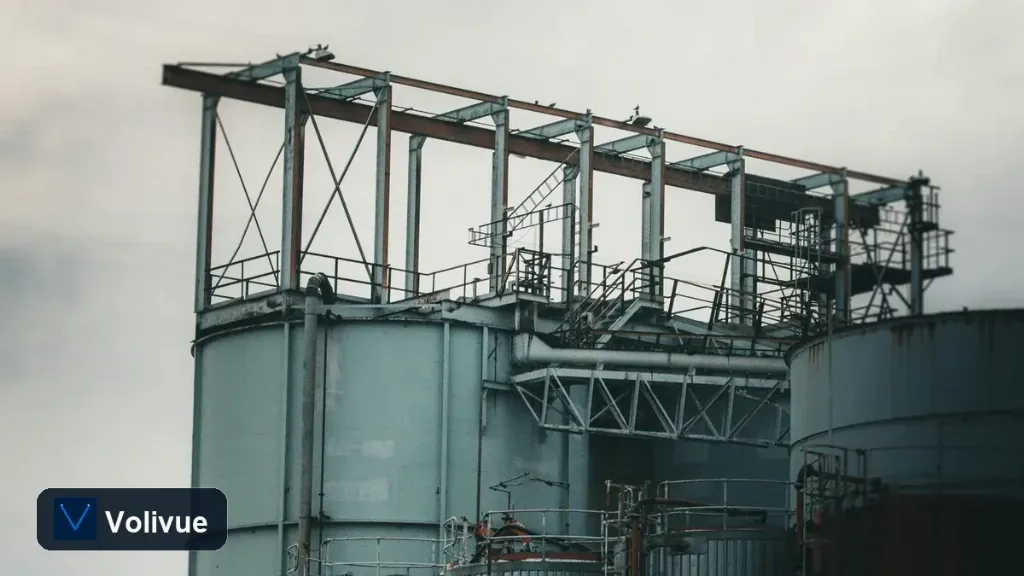
Measuring corrosive chemical level reliably is one of the most unforgiving tasks in process instrumentation, because the medium itself attacks the very instrument sent to measure it. Storage and process tanks holding strong acids, concentrated caustics, and aggressive solvents will degrade most immersed components over time — floats seize, capacitance probes lose calibration as coatings build, and metal parts thin and pit until the reading drifts or the device fails outright. Non-contact FMCW radar takes a different path: it measures the surface from above through microwaves, so the only parts exposed to the chemical are a sealed antenna face and the process seal. This article explains why that architecture resists corrosion, how to select wetted materials such as PTFE, PVDF, and 316L, how to specify process connections and sealing, and what to watch for in hazardous and aggressive-vapor service.
Why Non-Contact Architecture Resists Corrosion
The core reason radar holds up where other technologies fail is mechanical, not just electronic. A frequency-modulated continuous-wave (FMCW) radar transmitter sweeps a microwave signal across a frequency band and compares the returning echo against the outgoing sweep; the frequency difference encodes the distance to the liquid surface. Crucially, the microwave travels through the vapor space and reflects off the surface from above — nothing has to be submerged in the chemical to take the measurement.
This matters because corrosion is fundamentally a contact problem. Where a guided-wave probe, float, or capacitance rod sits inside the liquid, every wetted surface is under continuous attack, and the failure modes accumulate: pitting, stress cracking, polymer swelling, and coating buildup that shifts calibration. A non-contact radar removes the immersed element entirely. The signal path is open vapor space, so:
- No immersed parts to corrode. There is no rod, cable, or float in the liquid to thin, embrittle, or seize.
- No moving parts to bind. Mechanical level devices fail when crystallized or polymerized residue jams them; radar has no moving element in the medium.
- Tolerance to coating and condensation. Aggressive media often leave residue or condense on internal surfaces. A non-contact instrument measures across the vapor and can ride through moderate fouling far better than a contact probe whose calibration depends on a clean wetted surface.
Even so, “non-contact” does not mean “nothing is exposed.” The antenna face and the process seal still see the chemical and its vapor, which is why wetted-material selection — covered next — remains the decisive specification step.
Selecting Wetted Materials: PTFE, PVDF, and 316L
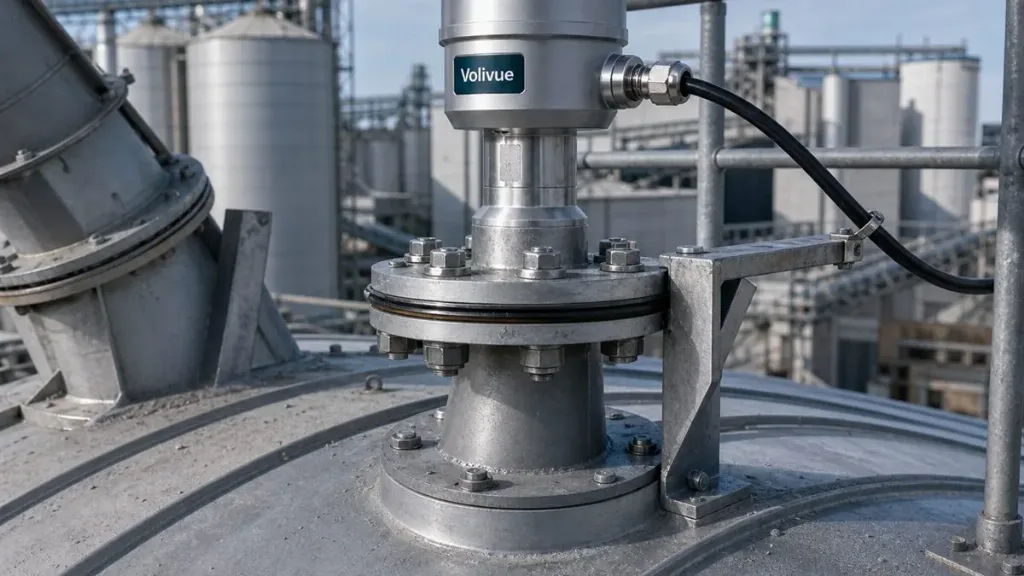
For corrosive service, the wetted material is the antenna or its protective face plus any sealing surface in contact with the process. The Volivue radar liquid level transmitter offers a sealed antenna with wetted materials selectable as 316L stainless steel, PTFE, or PVDF, so the instrument can be matched to the chemistry rather than forced onto a single default. The right choice depends on the medium, its concentration, and its temperature.
- PTFE (polytetrafluoroethylene). Broadly inert and resistant to a very wide range of aggressive chemistries, including many strong acids and solvents. It is a common default for a sealed or fully encapsulated antenna face because it pairs chemical resistance with a low-fouling, non-stick surface that discourages buildup.
- PVDF (polyvinylidene fluoride). Strong resistance to many acids and oxidizers, and mechanically tougher and more rigid than PTFE. It suits applications where the wetted face benefits from added structural strength while still facing aggressive media.
- 316L stainless steel. Robust and compatible with many chemistries, but not universally corrosion-proof — certain acids, chlorides, and oxidizers will attack stainless. It is a sound choice where the medium is compatible, and is often combined with a fluoropolymer-faced antenna so the microwave-transmitting surface is the resistant element.
There is no single “corrosion-proof” material; selection is always chemistry-specific. Medium, concentration, operating temperature, and vapor-phase exposure should all be checked against a material-compatibility reference for the exact process before the variant is fixed. When in doubt, a sealed fluoropolymer-faced antenna is the conservative starting point for strong acids, caustics, and solvents.
Process Connection and Sealing for Aggressive Media
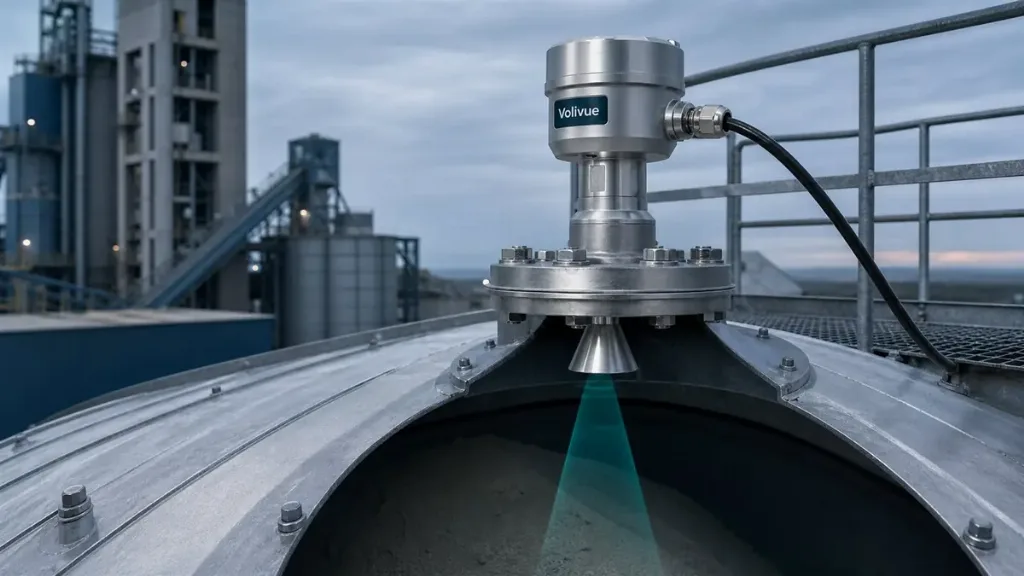
The antenna material solves half the problem; the process connection and seal solve the other half. A correctly specified wetted face still leaks or corrodes if the connection that holds the instrument to the tank is not matched to the chemistry and the duty.
- Sealing material. The gasket or seal at the process connection is wetted by both the liquid and its vapor. It must be selected from a chemically compatible elastomer or fluoropolymer; a seal that suits water service can fail quickly against a concentrated acid or solvent vapor.
- Connection type. Flanged and threaded connections are both available depending on the model; flanged connections are common on larger chemical tanks and pair naturally with fluoropolymer-lined or fully encapsulated wetted faces for the most aggressive duties.
- Vapor-phase exposure. In a sealed chemical tank, the headspace vapor can be as aggressive as the liquid — sometimes more so for volatile acids and solvents. Every wetted surface, including the seal and the antenna face, must be rated for vapor-phase as well as liquid-phase exposure.
- Ingress protection. The transmitter housing carries an IP67 or IP68 rating depending on the model, which protects the electronics against external washdown, condensation, and humid plant environments. Ingress protection guards the enclosure; it is separate from, and does not replace, correct wetted-material selection for the chemistry inside the tank.
Because a non-contact radar exposes only the antenna face and the seal, getting these two surfaces right is the entire wetted-side specification — there is no long immersed assembly to harmonize, which simplifies the corrosion review compared with contact technologies.
Hazardous Areas and Aggressive-Vapor Service
Many corrosive chemicals are also flammable or generate explosive vapor, so corrosion resistance and area classification frequently have to be solved together. Solvents in particular often place a tank inside a classified hazardous zone, and the level instrument must suit both the chemistry and the area rating.
The Volivue radar liquid level transmitter is available in explosion-protected variants depending on the model and the zone classification of the installation. The suitability of a given variant for a specific zone must be confirmed against the installation’s area classification and the project’s electrical-safety requirements; the right configuration is selected per model rather than assumed. Alongside the area rating, several points are worth checking in aggressive-vapor service:
- Vapor compatibility of every exposed surface. Confirm the antenna face, seal, and any exposed connection hardware tolerate the vapor phase, not only the liquid. Volatile acids and solvents can attack surfaces well above the liquid line.
- Condensation management. Aggressive vapor that condenses on the antenna can, over time, challenge marginal materials and leave deposits. A low-fouling fluoropolymer face helps shed condensate and resist buildup.
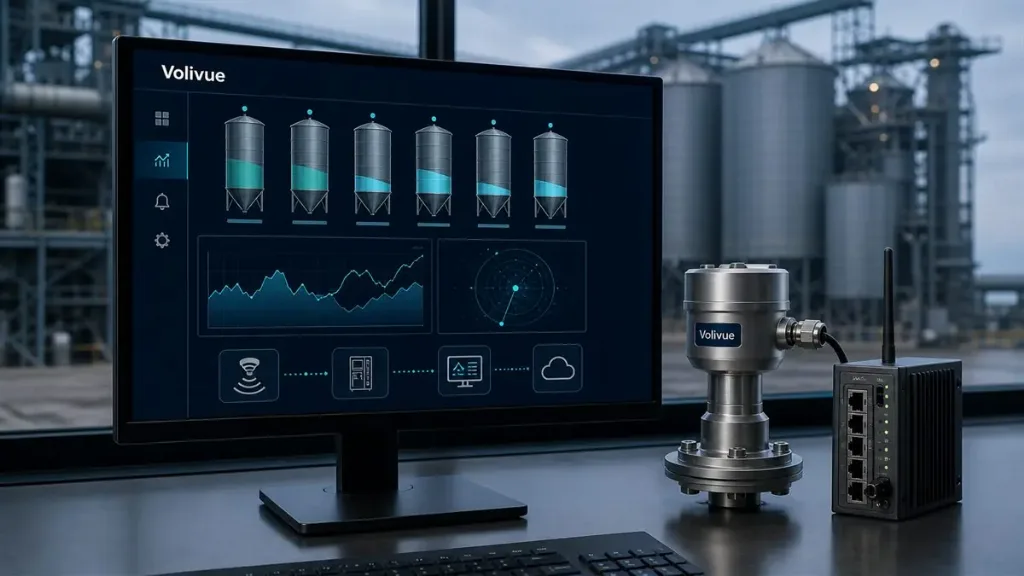
- Output and integration. The transmitter provides 4–20 mA, HART, RS485 Modbus, or relay outputs depending on the model, so the level signal integrates into the plant control system, supports high- and low-level alarming, and feeds overfill-prevention logic — useful where a corrosive or flammable spill carries serious safety and environmental consequences.
Specifying the instrument for the hazardous area at the same time as the wetted materials avoids a common pitfall: a device that resists the chemical but is wrong for the zone, or one rated for the zone but built from materials the medium will attack.
Putting It Together: A Practical Selection Sequence
Specifying a radar transmitter for a corrosive tank is most reliable as an ordered sequence rather than a single catalog pick. Working through these steps keeps the chemistry, the mechanics, and the area rating aligned.
- Define the medium fully. Capture the chemical name, concentration, operating and maximum temperature, and whether the vapor phase is aggressive — a partial description is not enough, because concentration and temperature change material compatibility.
- Select the wetted material against that chemistry. Match a sealed PTFE, PVDF, or 316L wetted face to the medium and its vapor using a compatibility reference; default to a fluoropolymer face for strong acids, caustics, and solvents when uncertain.
- Match the connection and seal. Choose a flanged or threaded connection and a chemically compatible seal rated for the worst-case temperature, pressure, and vapor exposure.
- Confirm the area classification. If the tank sits in a classified zone, select an explosion-protected variant suited to that zone and verify it against the electrical-safety requirements.
- Set the range and output. With a typical span of 0.1 to 30 m and model-dependent accuracy (down to approximately ±2 mm on higher-resolution models), confirm the device covers the tank geometry and select the 4–20 mA, HART, RS485 Modbus, or relay output the control system expects.
Followed in order, this sequence yields a measurement that resists the medium for the life of the installation: the chemical never touches an immersed assembly, only a sealed antenna face and a compatible seal chosen for the duty. That is the central advantage of radar in corrosive service — the measurement reaches the surface from above, so corrosion has far less to attack.
To match a radar liquid level transmitter to a specific acid, caustic, or solvent tank — including wetted material, sealing, range, and any hazardous-area requirement — talk to our engineers with your medium, concentration, temperature, and tank details.
—
Related reading: more technical insights on level measurement