 EN
EN 中文
中文 ES
ES RU
RU FR
FR PT
PT AR
AR DE
DECement and Fly Ash Silo Level Measurement: Beating Dust, Buildup and Noise
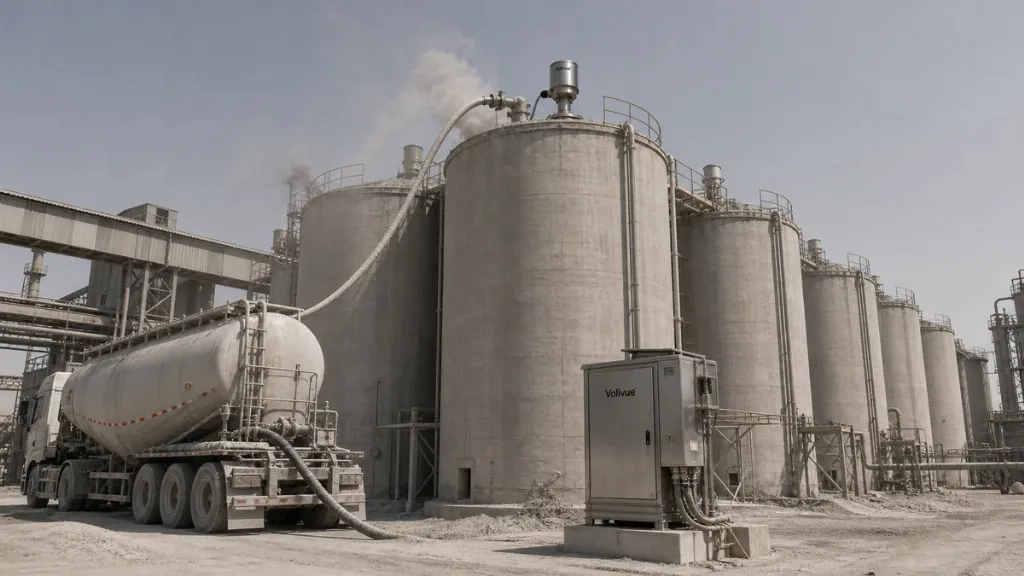
Cement and fly ash silos are the harshest job in solids level measurement. Filling throws up a dense dust cloud, material cakes on the walls and the sensor face, and a tall narrow silo produces false echoes. Sensors that pass a factory demo on grain often fail here within weeks.
Why dust and buildup defeat older sensors
Ultrasonic and capacitance sensors lose signal in heavy dust and drift as buildup forms on the probe. Mechanical plumb-bobs jam and wear. The result is frozen readings, false highs, and operators who stop trusting the number and climb the silo to check by hand.
How 80 GHz radar sees through the dust
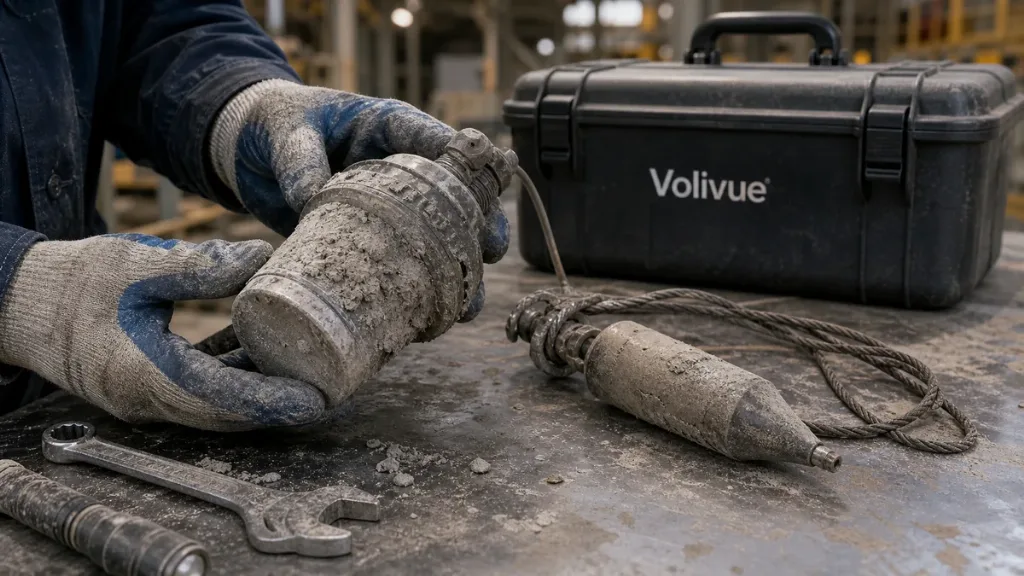
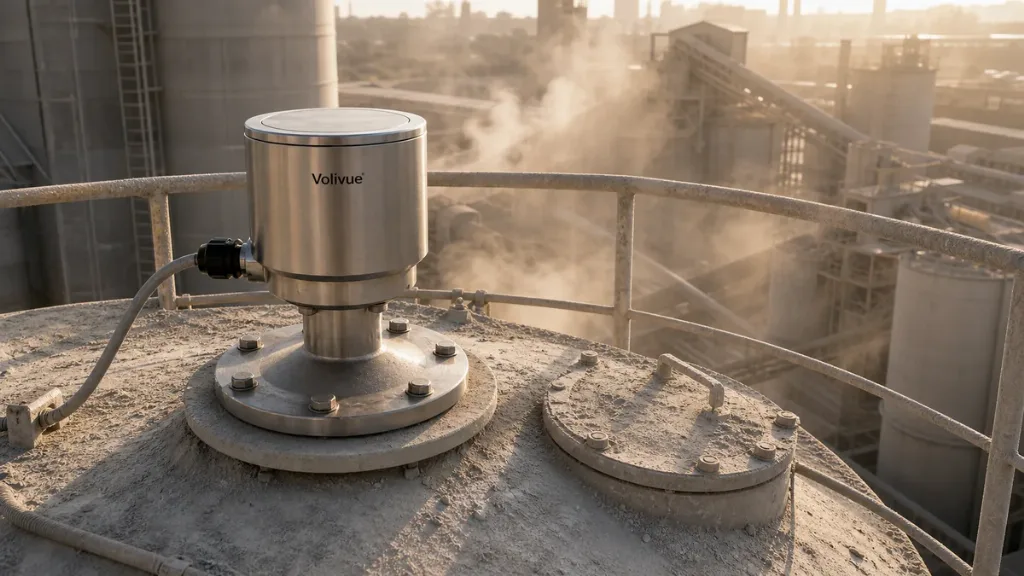
The short 80 GHz wavelength produces a tightly focused beam that passes through dust and ignores wall caking, while strong signal processing rejects the false echoes a tall silo creates. It is non-contact, so nothing cakes on a moving part. For cement, fly ash, raw meal and clinker dust, the 80 GHz radar level system is the default choice.
When patch-mount weighing is the safer bet
If the silo has no clean top mounting point, or you need true mass rather than a surface height on an uneven cement cone, patch-mount silo weighing reads load from the support legs and is completely immune to dust and buildup. Many plants run radar and weighing together to cross-check.
For a full side-by-side of radar, ultrasonic and LiDAR, see the selection guide in our Technical Insights. Have a difficult silo? Send us the dimensions and material for a free recommendation.