 EN
EN 中文
中文 ES
ES RU
RU FR
FR PT
PT AR
AR DE
DE80GHz-Radar-Füllstand für hohe, schmale Silos mit Wandanhaftung
Hohe und schmale Silos für feine Pulver oder Granulate neigen zu Materialanhaftung an den Waenden, Einlassablagerungen und schwierigen Echobedingungen, weil der Strahl eine lange Strecke in einem engen Raum zurücklegen muss.
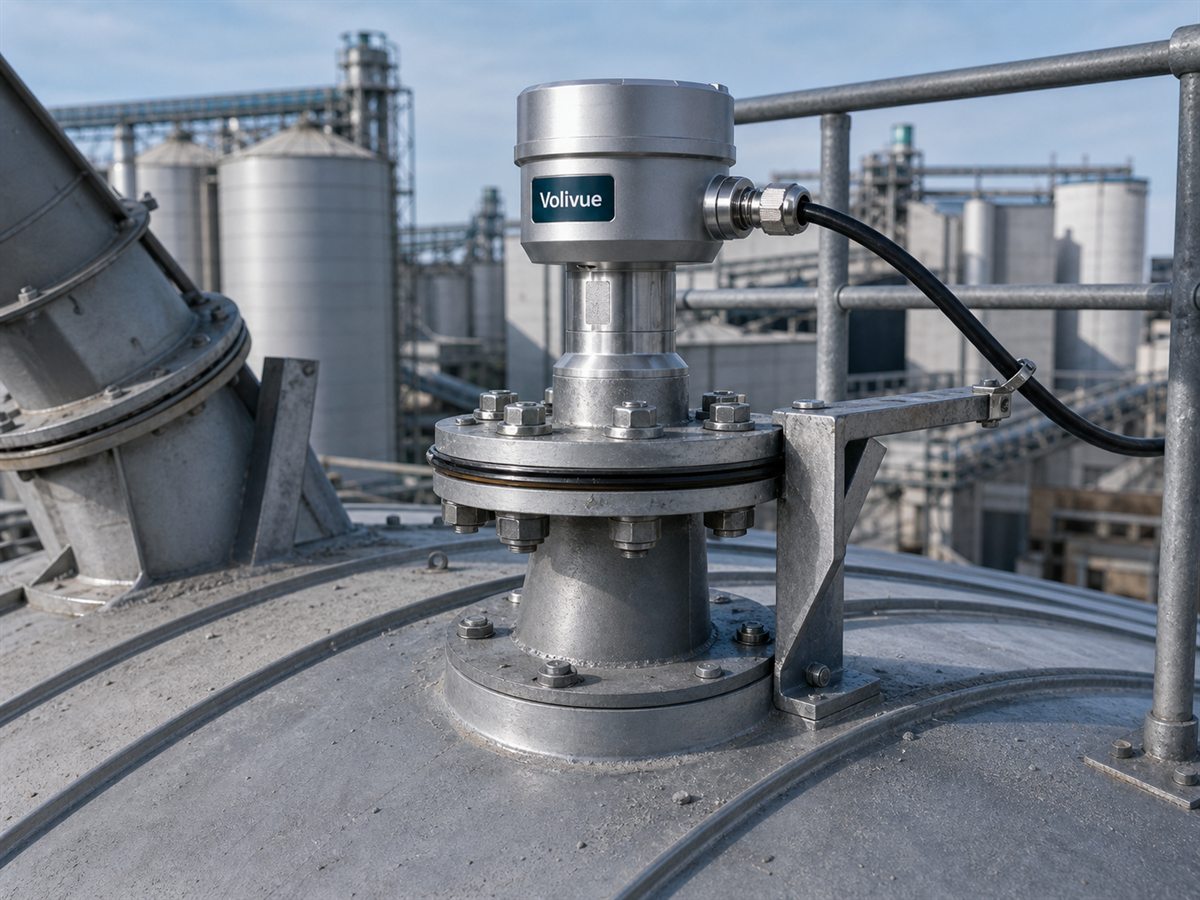
Prüfen Sie Standortproblem, Volivue-Ansatz und erwarteten betrieblichen Nutzen vor der finalen Auswahl.
An den Silowänden haftendes Material erzeugt Störecho-Quellen, die sich mit der Zeit verschieben, und hohe Silos mit kleinem Durchmesser begrenzen die Montagemoeglichkeiten und erhöhen das Risiko, dass der Strahlweg die Wandanhaftung oder Auslauftrichter schneidet.
Verwenden Sie ein Volivue-80GHz-Radar mit einer schmalen 3-Grad-Linsenantenne, um Wandstörungen zu reduzieren, zentrieren Sie die Montage auf der Silooberseite, wenden Sie adaptive Störechounterdrückung an und bestätigen Sie, dass der minimale und maximale Messbereich die gesamte aktive Silohöhe abdeckt.
Die Füllstandmessung bleibt trotz Wandanhaftung und enger Geometrie stabil, reduziert Störalarme und liefert dem Betrieb über eine ganze Produktionsschicht ein zuverlässiges Füllstandsignal.
Long beam paths, close walls, and buildup that keeps moving
Tall, narrow silos force the radar beam to travel a long distance inside a tight cylinder, so even a small beam angle puts energy near the walls at depth. Fine powders make it worse: wall buildup grows, sheds, and regrows, creating false echo sources that change position over weeks, which means a static suppression curve recorded once will slowly stop matching reality.
The Volivue package for this geometry is the 3-degree narrow-beam lens antenna mounted at the silo top center, paired with adaptive false echo suppression that follows slow buildup changes. If no center position can be made available, or internal obstructions dominate the cross-section, a leg-supported silo can switch to the Volivue patch-mount weighing system, where wall buildup simply does not affect the measurement.
Center mounting, blind zone margin, and adaptive suppression
The mounting plan starts with the center: a top-center nozzle keeps the 3-degree beam clear of both walls along the full height. The blind zone below the antenna must stay above the maximum fill line, which on a tall silo usually costs little capacity but must be confirmed against the real fill stop level rather than the drawing.
Adaptive false echo suppression is tuned over the first few fill and discharge cycles so the algorithm learns which reflections belong to the structure and which track product. The output side is conventional, with 4-20mA plus HART or Modbus into PLC and SCADA, and alarm limits are set after the first complete cycles, once the trend has shown the true working range of the silo.
Four checks for tall and narrow silo projects
- Inner diameter and total height measured, with the height-to-diameter ratio checked against the 3-degree beam footprint at the cone.
- Nozzle position assessed for distance from the geometric center, with offsets documented in photos for a beam-path review.
- Buildup history recorded: where deposits form, how thick they get, and how often the silo is cleaned.
- Range and blind zone confirmed so the maximum fill level keeps a safe margin below the antenna reference plane.
Our only available nozzle is off-center, close to the wall. Is the project still feasible?
Often yes, but it needs a review rather than an assumption. With the drawing and the offset distance, the beam path can be checked against wall clearance over the full height; options include a small aiming adjustment, mapping the wall reflection, or fabricating a center nozzle. Tall silos are exactly where guessing is most expensive.
Buildup thickness changes through the year. Will someone need to re-record the false echo map?
Adaptive suppression is designed to track slow changes such as growing or shedding buildup without manual re-mapping. A manual re-map is only worth scheduling after structural changes: new internals, a relocated fill pipe, or a major cleaning that removes thick deposits the algorithm had learned around.
Fünf Prüfungen bestimmen Modell, Montage, Inbetriebnahme und Ausgänge.
Fotos und Geometrie sammeln
Höhe, Durchmesser, Zugang, Stutzen, Winkel, Totzone und interne Hindernisse bestätigen.
Medium und Prozess prüfen
Flüssig/fest, Dielektrikum, Staub, Schaum, Dampf, Korrosion, Turbulenz, Rührwerk, Temperatur und Druck bestimmen das Echo.
Radar-Paket wählen
Messbereich, Antenne oder Linse, Anschluss, Dichtung, Schutzart, Kabel und Zubehör wählen.
Nutzbare Ausgänge abbilden
4-20mA + HART, RS485/Modbus, PLC, Dashboard, Alarme, Trend oder Bestand definieren.
Inbetriebnehmen und validieren
Skalierung, Störechos, Leer-/Vollreferenzen, Alarme, Bluetooth und Trend mit Standortdaten prüfen.
Übergabe und Remote-Support
Dokumentation, Bedienerschulung, Ersatzteile und einen Remote-Support-Weg bestätigen, um Skalierung, Echo-Einstellungen und Integration nach der Inbetriebnahme zu pflegen.
Fragen gegen falsche Auswahl und falsche SEO-Erwartungen.
Geeignet für Flüssigkeiten und Schüttgüter?
Ja, für Tanks, Silos, Trichter und Behälter nach Anwendungsprüfung.
Misst es Gewicht direkt?
Nein. Es misst Distanz oder Füllstand; Volumen oder Masse benötigen Geometrie und Dichte.
Staub, Schaum, Dampf, Korrosion und hohe Temperatur?
Diese Bedingungen können geprüft werden; Eignung hängt von Medium, Temperatur, Druck, Anschluss, Echo und Modell ab.
Wozu Bluetooth?
Zur Prüfung von Parametern, Echo, Skalierung und Diagnose bei Inbetriebnahme oder Wartung.
PLC oder SCADA?
Ja, mit 4-20mA + HART, optional RS485/Modbus, Gateway, Dashboard oder API je nach Projekt.
Ex-Bereiche?
Anforderungen können geprüft werden, aber keine ATEX-, IECEx-, SIL- oder lokale Zusage ohne Dokumente.
Was zuerst senden?
Fotos, Stutzen, Medium, Temperatur, Druck, gewünschter Ausgang, aktuelle Methode und Zeichnungen.
Wie sind typische Lieferzeit und After-Sales-Support?
Die Lieferzeit hängt von Modell, Antenne, Prozessanschluss und Menge ab und wird nach der Anwendungsprüfung bestätigt. Der After-Sales-Support umfasst Dokumentation, Inbetriebnahmehilfe, Ersatzteile und Remote-Unterstützung.
Senden Sie Fotos, Stutzen, Medium, Temperatur und Zielausgang.
Teilen Sie Fotos, Medium, Temperatur, Stutzen, Staub oder Schaum, Hindernisse, Ausgang, Land und Zeichnungen.