 EN
EN 中文
中文 ES
ES RU
RU FR
FR PT
PT AR
AR DE
DE80GHz-Radar-Füllstand für Kunststoffgranulat- und Pelletsilos
Kunststoffgranulat und Polymerpellets haben im Nahbereich glatte, reflektierende Oberflächen, können aber bei größeren Entfernungen Radarenergie absorbieren oder streuen, und die Silogeometrie umfasst oft Konusböden, Leitern oder innere Verstrebungen.
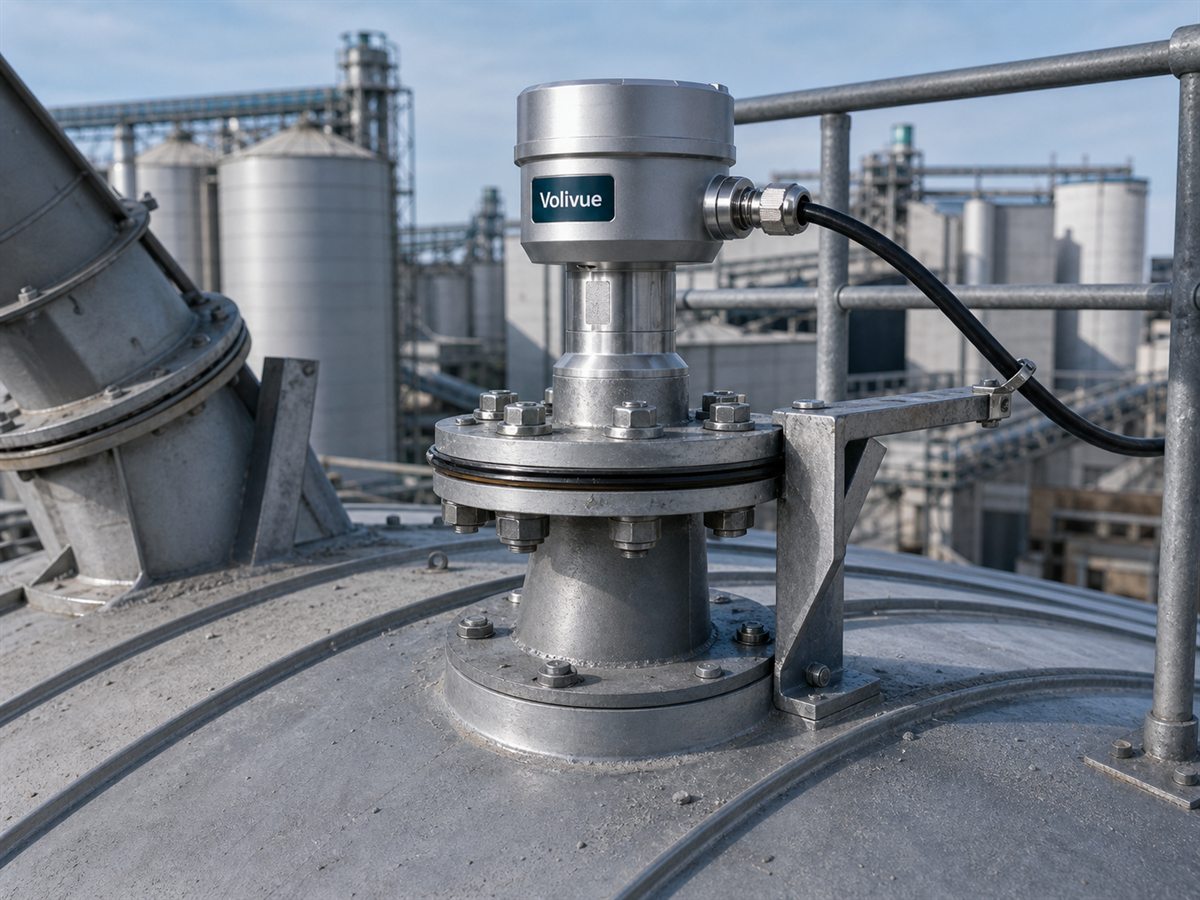
Prüfen Sie Standortproblem, Volivue-Ansatz und erwarteten betrieblichen Nutzen vor der finalen Auswahl.
Glatte Pelletoberflächen und moderate Dielektrizitätskonstanten können Doppelechos oder winkelabhängigen Reflexionsverlust erzeugen, während feste innere Hindernisse wie Leitern und Einlassrohre wiederkehrende Störechos verursachen, die die Füllstandverfolgung stoeren.
Wählen Sie ein Volivue-80GHz-Radar mit passendem Strahlwinkel für den Silodurchmesser, wenden Sie Störecho-Mapping für feste innere Strukturen an und prüfen Sie die Echostabilität über den gesamten Füllstandbereich vom leeren Konus bis zur vollen Silooberseite.
Kontinuierliche und vertrauenswürdige Silofüllstanddaten werden an das Produktionsplanungs- und Bestandssystem geliefert, was den Bedarf an manuellen Bestandsprüfungen verringert und automatische Schwellenwertalarme für das Nachfüllen ermöglicht.
Smooth pellets, internal steelwork, and echoes that need mapping
Plastic granules sit between easy and difficult: the surface reflects well at short range, but moderate dielectric constants and smooth, angled pellet slopes can bend energy away from the antenna at distance. The bigger practical problem is usually the silo itself, where ladders, fill pipes, and bracing produce repeatable false echoes that a level algorithm will lock onto if they are not mapped out.
An 80GHz radar with a beam angle matched to the silo diameter handles pellet silos well once fixed structures are mapped. The boundary case is the leg-supported pellet silo whose data consumer is ERP or production planning rather than a local level display; there the Volivue patch-mount weighing system feeds mass directly into planning software and is indifferent to pellet dielectric behaviour.
False echo mapping and a bus that scales across the silo farm
Installation aims the beam down a clear corridor: pick the nozzle farthest from ladders and fill pipes, then record a false echo map with the silo at low level so every fixed reflector is captured in one pass. Echo stability is verified across the full range, from the empty cone to the top of the highest fill, before the output is trusted.
For one or two silos a 4-20mA + HART loop into the existing PLC is simplest; for a pellet farm, RS485 Modbus lets many transmitters share a single cable run into one gateway. From there, level data can move on to MES or production planning so refill thresholds and stock alerts run on live numbers instead of shift-walk estimates.
Four checks before instrumenting a pellet silo
- Internal structures listed from the drawing: ladders, fill pipes, temperature lances, and bracing, each checked against the planned beam path.
- Beam footprint calculated at maximum distance and compared with the silo diameter and cone geometry.
- Full level range confirmed, from the cone outlet at empty to the maximum fill line, including the blind-zone margin.
- Output topology chosen: per-silo 4-20mA + HART loops, or a shared RS485 Modbus bus with addressing planned silo by silo.
Do smooth pellet surfaces really cause double echoes, and how do we see them?
They can, especially when the surface slopes toward a smooth wall: part of the energy bounces wall-to-surface and back, arriving late as a second echo. The echo curve in the setup tool shows this clearly, and correct mapping plus a beam angle suited to the silo diameter normally removes the ambiguity.
Can several pellet silos share one Modbus cable run to the control room?
Yes. RS485 Modbus is designed for that: each transmitter gets a unique address on a daisy-chained bus polled by one PLC or gateway. Plan the cable route, termination, and address list before installation so silo identities in the control system match physical silos from the first day.
Fünf Prüfungen bestimmen Modell, Montage, Inbetriebnahme und Ausgänge.
Fotos und Geometrie sammeln
Höhe, Durchmesser, Zugang, Stutzen, Winkel, Totzone und interne Hindernisse bestätigen.
Medium und Prozess prüfen
Flüssig/fest, Dielektrikum, Staub, Schaum, Dampf, Korrosion, Turbulenz, Rührwerk, Temperatur und Druck bestimmen das Echo.
Radar-Paket wählen
Messbereich, Antenne oder Linse, Anschluss, Dichtung, Schutzart, Kabel und Zubehör wählen.
Nutzbare Ausgänge abbilden
4-20mA + HART, RS485/Modbus, PLC, Dashboard, Alarme, Trend oder Bestand definieren.
Inbetriebnehmen und validieren
Skalierung, Störechos, Leer-/Vollreferenzen, Alarme, Bluetooth und Trend mit Standortdaten prüfen.
Übergabe und Remote-Support
Dokumentation, Bedienerschulung, Ersatzteile und einen Remote-Support-Weg bestätigen, um Skalierung, Echo-Einstellungen und Integration nach der Inbetriebnahme zu pflegen.
Fragen gegen falsche Auswahl und falsche SEO-Erwartungen.
Geeignet für Flüssigkeiten und Schüttgüter?
Ja, für Tanks, Silos, Trichter und Behälter nach Anwendungsprüfung.
Misst es Gewicht direkt?
Nein. Es misst Distanz oder Füllstand; Volumen oder Masse benötigen Geometrie und Dichte.
Staub, Schaum, Dampf, Korrosion und hohe Temperatur?
Diese Bedingungen können geprüft werden; Eignung hängt von Medium, Temperatur, Druck, Anschluss, Echo und Modell ab.
Wozu Bluetooth?
Zur Prüfung von Parametern, Echo, Skalierung und Diagnose bei Inbetriebnahme oder Wartung.
PLC oder SCADA?
Ja, mit 4-20mA + HART, optional RS485/Modbus, Gateway, Dashboard oder API je nach Projekt.
Ex-Bereiche?
Anforderungen können geprüft werden, aber keine ATEX-, IECEx-, SIL- oder lokale Zusage ohne Dokumente.
Was zuerst senden?
Fotos, Stutzen, Medium, Temperatur, Druck, gewünschter Ausgang, aktuelle Methode und Zeichnungen.
Wie sind typische Lieferzeit und After-Sales-Support?
Die Lieferzeit hängt von Modell, Antenne, Prozessanschluss und Menge ab und wird nach der Anwendungsprüfung bestätigt. Der After-Sales-Support umfasst Dokumentation, Inbetriebnahmehilfe, Ersatzteile und Remote-Unterstützung.
Senden Sie Fotos, Stutzen, Medium, Temperatur und Zielausgang.
Teilen Sie Fotos, Medium, Temperatur, Stutzen, Staub oder Schaum, Hindernisse, Ausgang, Land und Zeichnungen.