 EN
EN 中文
中文 ES
ES RU
RU FR
FR PT
PT AR
AR DE
DENível por radar de 80GHz para silos altos, estreitos e com incrustacao nas paredes
Os silos altos e estreitos para pós finos ou granulos são propensos a acúmulo de material nas paredes, depósitos na entrada e condições de eco difíceis porque o feixe precisa percorrer uma longa distância em um espaco confinado.
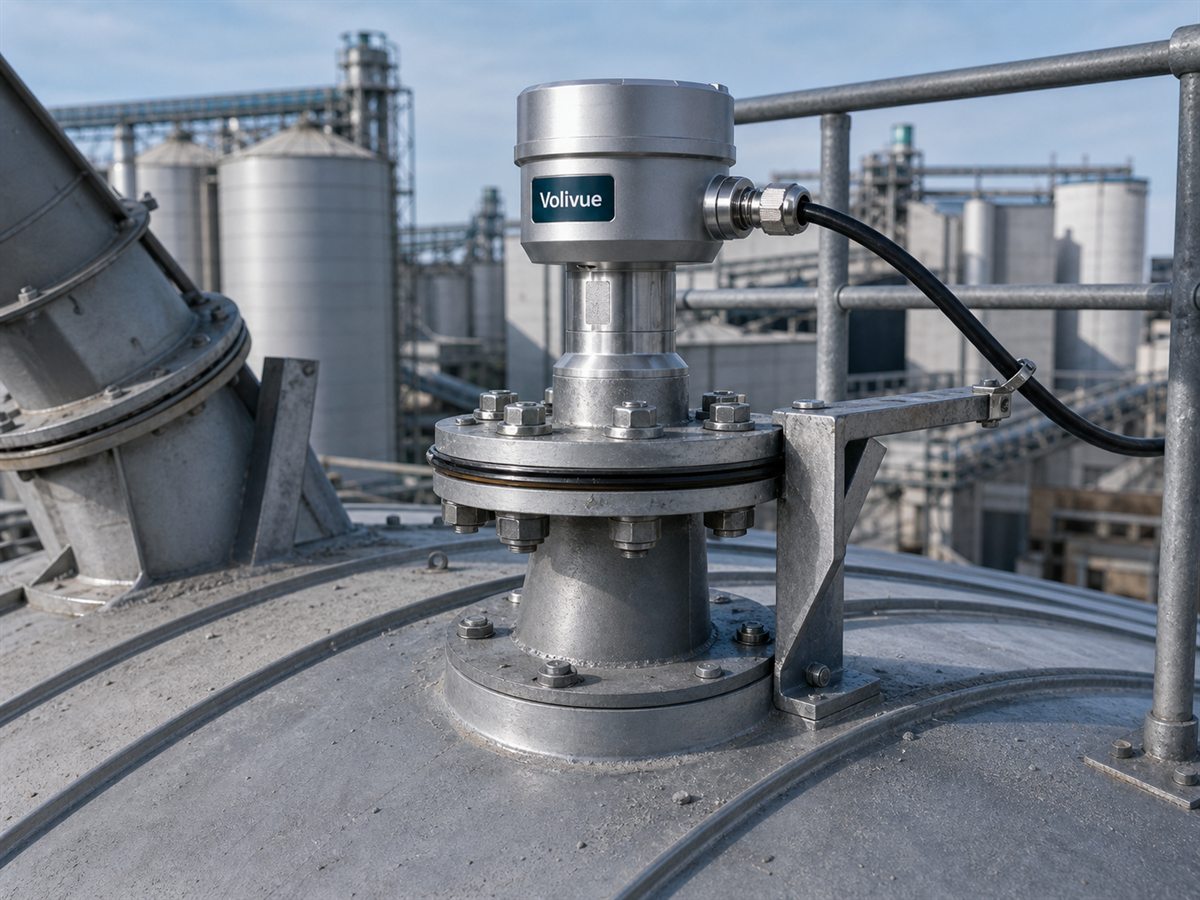
Confirme o problema do local, a abordagem da Volivue e o benefício operacional esperado antes da seleção final.
O material aderido as paredes do silo cria fontes de ecos falsos que mudam de posição com o tempo, e os silos altos de pequeno diâmetro limitam as opções de montagem e aumentam o risco de a trajetória do feixe interceptar a incrustacao na parede ou os funis de saída.
Use um radar de 80GHz da Volivue com uma antena de lente estreita de 3 graus para reduzir a interferência das paredes, centralize a montagem no topo do silo, aplique supressão adaptativa de ecos falsos e confirme que a faixa de medição mínima e máxima cobre toda a altura ativa do silo.
A medição de nível permanece estável apesar da aderência nas paredes e da geometria confinada, reduzindo alarmes incômodos e dando a operação um sinal de nível confiável ao longo de todo um turno de produção.
Long beam paths, close walls, and buildup that keeps moving
Tall, narrow silos force the radar beam to travel a long distance inside a tight cylinder, so even a small beam angle puts energy near the walls at depth. Fine powders make it worse: wall buildup grows, sheds, and regrows, creating false echo sources that change position over weeks, which means a static suppression curve recorded once will slowly stop matching reality.
The Volivue package for this geometry is the 3-degree narrow-beam lens antenna mounted at the silo top center, paired with adaptive false echo suppression that follows slow buildup changes. If no center position can be made available, or internal obstructions dominate the cross-section, a leg-supported silo can switch to the Volivue patch-mount weighing system, where wall buildup simply does not affect the measurement.
Center mounting, blind zone margin, and adaptive suppression
The mounting plan starts with the center: a top-center nozzle keeps the 3-degree beam clear of both walls along the full height. The blind zone below the antenna must stay above the maximum fill line, which on a tall silo usually costs little capacity but must be confirmed against the real fill stop level rather than the drawing.
Adaptive false echo suppression is tuned over the first few fill and discharge cycles so the algorithm learns which reflections belong to the structure and which track product. The output side is conventional, with 4-20mA plus HART or Modbus into PLC and SCADA, and alarm limits are set after the first complete cycles, once the trend has shown the true working range of the silo.
Four checks for tall and narrow silo projects
- Inner diameter and total height measured, with the height-to-diameter ratio checked against the 3-degree beam footprint at the cone.
- Nozzle position assessed for distance from the geometric center, with offsets documented in photos for a beam-path review.
- Buildup history recorded: where deposits form, how thick they get, and how often the silo is cleaned.
- Range and blind zone confirmed so the maximum fill level keeps a safe margin below the antenna reference plane.
Our only available nozzle is off-center, close to the wall. Is the project still feasible?
Often yes, but it needs a review rather than an assumption. With the drawing and the offset distance, the beam path can be checked against wall clearance over the full height; options include a small aiming adjustment, mapping the wall reflection, or fabricating a center nozzle. Tall silos are exactly where guessing is most expensive.
Buildup thickness changes through the year. Will someone need to re-record the false echo map?
Adaptive suppression is designed to track slow changes such as growing or shedding buildup without manual re-mapping. A manual re-map is only worth scheduling after structural changes: new internals, a relocated fill pipe, or a major cleaning that removes thick deposits the algorithm had learned around.
Cinco verificações que definem modelo, montagem, comissionamento e saídas.
Coletar fotos e geometria
Confirmar altura, diâmetro, acesso, bocal, ângulo, zona cega e obstáculos internos.
Revisar meio e processo
Estado líquido ou sólido, dielétrico, poeira, espuma, vapor, corrosão, turbulência, agitador, temperatura e pressão determinam o eco.
Selecionar pacote radar
Escolher alcance, antena ou lente, conexão, vedação, proteção, cabos e acessórios.
Mapear saídas úteis
Definir 4-20mA + HART, RS485/Modbus, PLC, painel, alarmes, tendência ou inventário.
Comissionar e validar
Verificar escala, ecos falsos, referências vazio/cheio, alarmes, Bluetooth e tendência com dados do local.
Entrega e suporte remoto
Confirmar documentação, treinamento do operador, peças de reposição e um canal de suporte remoto para manter escala, ecos e integração após o comissionamento.
Perguntas que evitam seleção errada e expectativas SEO incorretas.
Serve para líquidos e sólidos?
Sim, para tanques, silos, tremonhas e vasos após revisão de aplicação.
Mede peso diretamente?
Não. Mede distância ou nível; volume ou massa requer geometria e densidade.
Lida com poeira, espuma, vapor, corrosão e alta temperatura?
Essas condições podem ser revisadas; a adequação depende do meio, temperatura, pressão, conexão, eco e modelo.
Para que serve Bluetooth?
Para revisar parâmetros, eco, escala e diagnóstico durante comissionamento ou manutenção.
Conecta a PLC ou SCADA?
Sim, com 4-20mA + HART, RS485/Modbus opcional, gateway, painel ou API conforme projeto.
Áreas classificadas?
Podemos revisar requisitos, mas sem declaração ATEX, IECEx, SIL ou local sem documentos verificados.
O que enviar primeiro?
Fotos, bocal, meio, temperatura, pressão, saída esperada, método atual e desenhos.
Quais são o prazo de entrega e o suporte pós-venda típicos?
O prazo depende do modelo, antena, conexão ao processo e quantidade, e é confirmado após a revisão da aplicação. O suporte pós-venda inclui documentação, orientação de comissionamento, peças de reposição e ajuda remota.
Envie fotos, bocal, meio, temperatura e saída esperada.
Compartilhe fotos, meio, temperatura, bocal, poeira ou espuma, obstáculos, saída, país e desenhos disponíveis.