 EN
EN 中文
中文 ES
ES RU
RU FR
FR PT
PT AR
AR DE
DENível por radar de 80GHz para silos de cimento e pó seco
Cimento, calcário, pó mineral e sólidos secos finos semelhantes criam correntes de enchimento, densas nuvens de poeira e acúmulo de material nas paredes do silo que desafiam os sensores de nível sem contato convencionais.
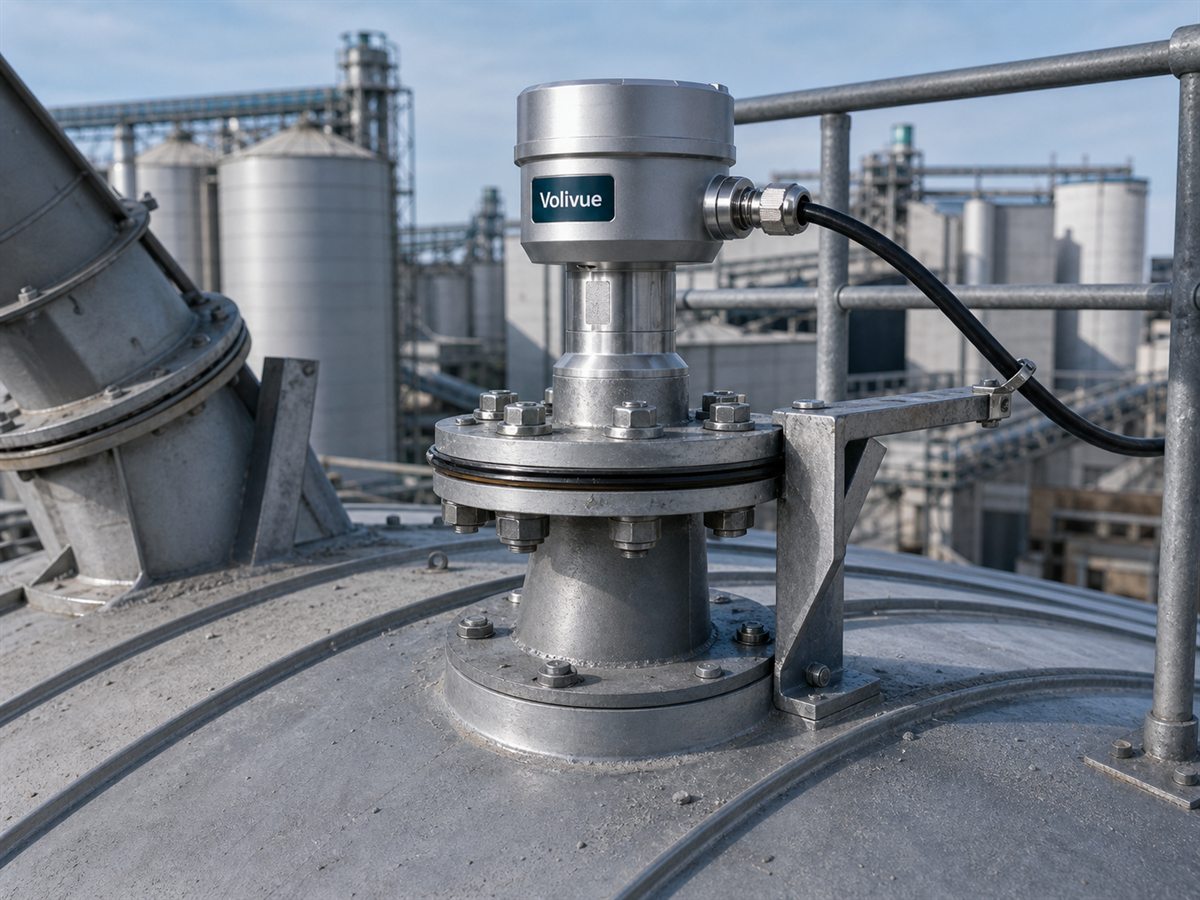
Confirme o problema do local, a abordagem da Volivue e o benefício operacional esperado antes da seleção final.
As correntes de enchimento durante o carregamento criam turbulência e poeira que dispersam os ecos do ultrassom e do radar de menor frequência, causando perdas de sinal e saltos de nível que tornam as decisões de inventário pouco confiáveis.
Use um radar FMCW de 80GHz da Volivue com ângulo de feixe estreito a partir do topo do silo, aplique supressão de ecos falsos para obstáculos fixos como as entradas de enchimento e configure a filtragem para estabilizar a saída de nível durante os ciclos de pico de enchimento e esvaziamento.
Os dados de nível permanecem contínuos e estáveis durante o enchimento ativo, dando as equipes de controle de dosagem, compras e inventário um nível de silo confiável sem verificações manuais entre os ciclos.
Fine dry powders, dense filling dust, and the 80GHz selection boundary
Cement, limestone, and blended mineral powders behave differently from coarse aggregates: every tanker blow-in fills the headspace with a dense dust cloud, the product surface stays loose and angled, and fine material gradually coats the silo walls and roof structure. A measurement principle for these silos must read a weak, moving surface through suspended dust without drifting as deposits build up around the mounting area.
An 80GHz FMCW radar with a narrow beam is the default Volivue choice when the silo has a usable roof nozzle and the plant needs a continuous level profile. Where a leg-supported cement or fly ash silo mainly needs inventory in tons for purchasing, the Volivue patch-mount weighing system is often the better fit, and some plants run both layers in parallel.
Roof-nozzle mounting and the path into the batching PLC
Mounting starts from the silo drawing: the transmitter sits on a top nozzle aligned vertically, kept clear of the filling stream and away from wall-side obstacles. During commissioning the team records a false echo map at low level so fixed reflectors such as the filling inlet are suppressed, then tunes filtering so the output stays steady through complete fill and discharge cycles.
The standard signal path is a loop-powered 4-20mA output with HART into the batching PLC, with RS485 Modbus available where several silos report over one bus. From the PLC the level feeds batching logic, SCADA trends, and inventory reports. A single silo is normally surveyed, mounted, and commissioned within one site visit when the nozzle and cabling are prepared in advance.
Four checks before ordering a cement silo radar
- Silo drawing on hand: nozzle positions, nozzle height and inner diameter, and the distance from the filling inlet to the planned mounting point.
- Material list confirmed: cement, limestone, or blended powders, with the worst-case dust intensity during tanker blow-in noted for antenna selection.
- Measuring range checked from the highest product level to the cone outlet, including the blind-zone margin below the nozzle.
- Signal route agreed: 4-20mA + HART into the batching PLC, or RS485 Modbus where several silos share one cable run.
Will the level reading drop out while a tanker is blowing cement into the silo?
Dust attenuates the echo but rarely removes it for an 80GHz narrow-beam radar; filtering bridges short weak-echo phases so the output trends smoothly instead of jumping. Commissioning should include at least one complete blow-in so the filter settings are proven on the real fill cycle.
Our only spare nozzle is close to the silo wall. Can it still be used?
A wall-side nozzle increases the risk that the beam clips wall buildup or the cone weld seam. Send the drawing for a beam-path review first; in many cases a slightly angled mounting or a recorded false echo map makes the position workable, otherwise a new center nozzle is the safer choice.
Cinco verificações que definem modelo, montagem, comissionamento e saídas.
Coletar fotos e geometria
Confirmar altura, diâmetro, acesso, bocal, ângulo, zona cega e obstáculos internos.
Revisar meio e processo
Estado líquido ou sólido, dielétrico, poeira, espuma, vapor, corrosão, turbulência, agitador, temperatura e pressão determinam o eco.
Selecionar pacote radar
Escolher alcance, antena ou lente, conexão, vedação, proteção, cabos e acessórios.
Mapear saídas úteis
Definir 4-20mA + HART, RS485/Modbus, PLC, painel, alarmes, tendência ou inventário.
Comissionar e validar
Verificar escala, ecos falsos, referências vazio/cheio, alarmes, Bluetooth e tendência com dados do local.
Entrega e suporte remoto
Confirmar documentação, treinamento do operador, peças de reposição e um canal de suporte remoto para manter escala, ecos e integração após o comissionamento.
Perguntas que evitam seleção errada e expectativas SEO incorretas.
Serve para líquidos e sólidos?
Sim, para tanques, silos, tremonhas e vasos após revisão de aplicação.
Mede peso diretamente?
Não. Mede distância ou nível; volume ou massa requer geometria e densidade.
Lida com poeira, espuma, vapor, corrosão e alta temperatura?
Essas condições podem ser revisadas; a adequação depende do meio, temperatura, pressão, conexão, eco e modelo.
Para que serve Bluetooth?
Para revisar parâmetros, eco, escala e diagnóstico durante comissionamento ou manutenção.
Conecta a PLC ou SCADA?
Sim, com 4-20mA + HART, RS485/Modbus opcional, gateway, painel ou API conforme projeto.
Áreas classificadas?
Podemos revisar requisitos, mas sem declaração ATEX, IECEx, SIL ou local sem documentos verificados.
O que enviar primeiro?
Fotos, bocal, meio, temperatura, pressão, saída esperada, método atual e desenhos.
Quais são o prazo de entrega e o suporte pós-venda típicos?
O prazo depende do modelo, antena, conexão ao processo e quantidade, e é confirmado após a revisão da aplicação. O suporte pós-venda inclui documentação, orientação de comissionamento, peças de reposição e ajuda remota.
Envie fotos, bocal, meio, temperatura e saída esperada.
Compartilhe fotos, meio, temperatura, bocal, poeira ou espuma, obstáculos, saída, país e desenhos disponíveis.