 EN
EN 中文
中文 ES
ES RU
RU FR
FR PT
PT AR
AR DE
DEPesagem adesiva para silos de alimentos, ração e grão
As instalacoes de armazenamento de ingredientes alimentares, ração animal e grão precisam de rastreamento preciso do consumo e do momento de reabastecimento sem adicionar sensores de contato dentro do material armazenado.
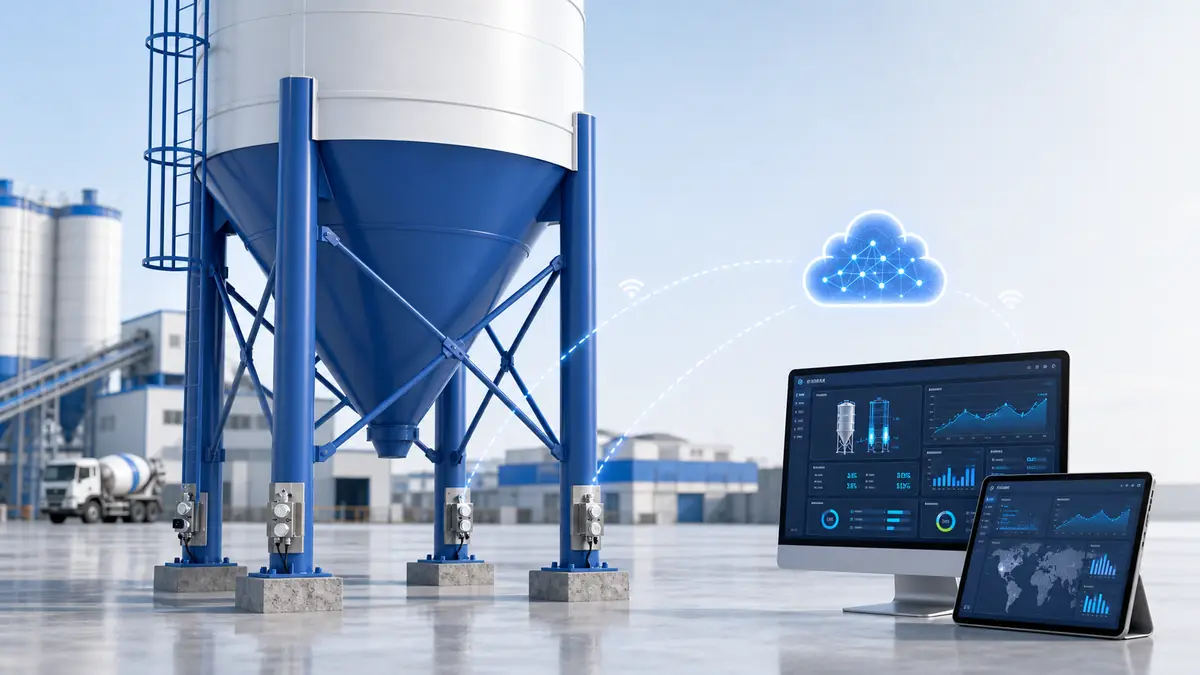
Confirme o problema do local, a abordagem da Volivue e o benefício operacional esperado antes da seleção final.
Os pontos de medição de contato interno levantam preocupacoes de contaminação, complicam os procedimentos de limpeza e são frequentemente impraticáveis para materiais orgânicos a granel ou sensíveis a higiene como grão, farinha ou pellets de ração.
Instale sensores de deformação adesivos externos nas pernas de apoio do silo para que toda a camada de detecção permaneça fora do material armazenado, e conecte software em nuvem para tendências de consumo em tempo real, alertas de baixo nível e programação de reabastecimento.
As equipes de inventário e armazém podem rastrear o consumo de material e planejar os ciclos de reabastecimento sem entrar nos silos nem adicionar hardware interno, atendendo aos requisitos de higiene e simplificando a manutenção.
Hygiene-first inventory: keeping every sensor outside the silo
Food ingredient, feed, and grain silos add a constraint most industrial silos do not have: nothing extra should touch the stored material. Internal probes complicate cleaning validation, create residue traps, and are unwelcome anywhere flour, grain, or feed pellets are handled. At the same time these sites depend on accurate consumption tracking, because a late refill stops a feed line just as surely as a breakdown.
Patch-mount weighing answers the hygiene constraint structurally: the strain sensors sit on the outside of the support legs, so the product-contact surfaces of the silo remain untouched. The boundary is the structure itself. Flat-bottom grain bins on concrete and skirt-supported silos have no legs to instrument, and there a Volivue radar level instrument on a roof nozzle is the appropriate route.
Refill alarms, mobile alerts, and a feed line that never starves
Installation happens entirely outside the silo with production running, so there is no opening, no entry permit, and no recontamination concern. Once calibrated, the cloud software tracks consumption trends per silo and per day; low-stock thresholds are set per material so the alarm arrives while a normal refill order can still be placed, not after the line is at risk.
Alerts reach the people who act on them: mobile notifications for warehouse and purchasing, a multi-silo dashboard with daily records for planning, and optional RS485 or 4-20mA into the feed mill automation where dosing or interlocks need the live figure. Roles are configured so each team sees its own silos without wading through the whole site.
Four checks for food and feed silo weighing
- Leg structure surveyed: steel support legs present and accessible, with coating and surface condition noted at sensor positions.
- Material density behaviour documented, including moisture-driven variation, to set expectations for the mass trend.
- Thresholds defined per silo: low-stock alarm point, refill target level, and who is notified on each.
- Dashboard roles planned: warehouse, purchasing, and production each mapped to the silos and alerts they own.
We wash down the silo area regularly. Will cleaning around the legs affect the sensors?
The sensor modules are built for outdoor industrial mounting, and routine washdown around the legs is part of the expected environment. The practical point comes during the site survey: cable routing and connector positions are planned away from direct hose lines, so cleaning crews never have to work around the instrumentation.
Grain and feed density changes with moisture. Does the tonnage estimate drift with it?
Weighing reacts the opposite way to level sensors here: the legs carry true mass, so a moisture-driven density change shows up as a real weight change rather than an error. There is no level-to-volume-to-mass conversion that silently drifts; what the trend shows is what the structure actually carries.
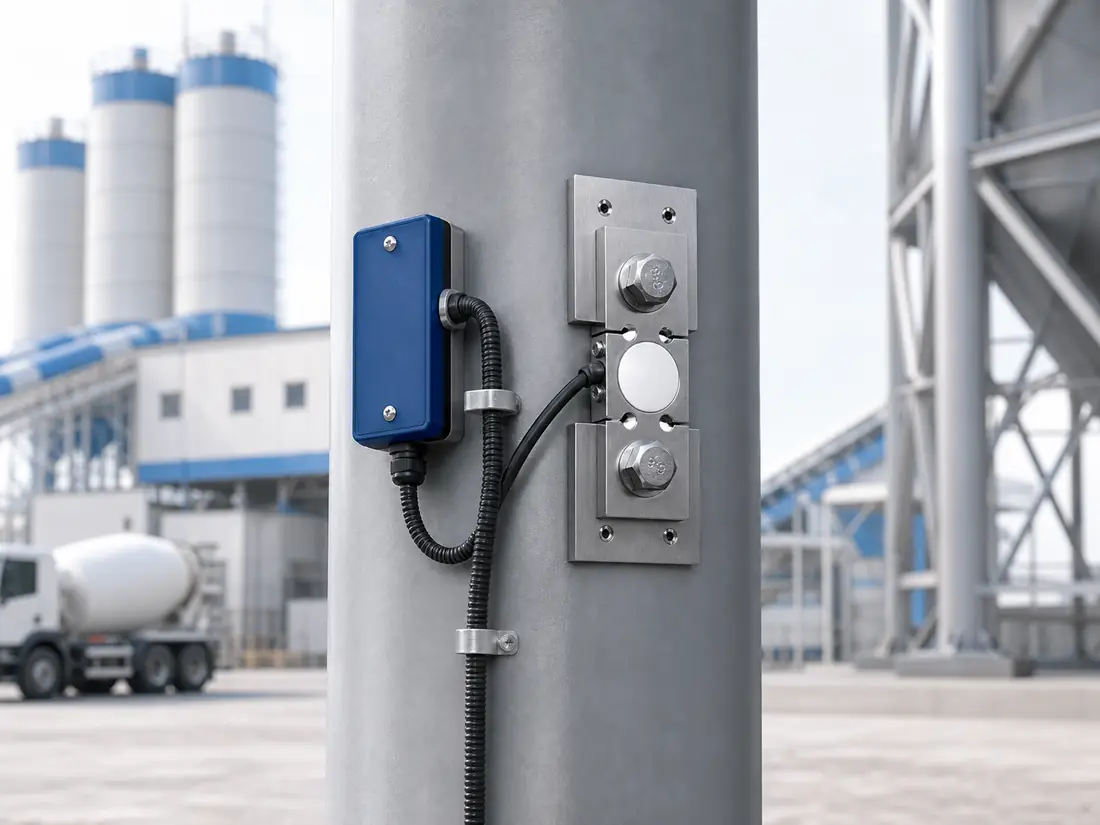
Dos desenhos ao software online
Revisão do local
Enviar desenhos, fotos das pernas, material, capacidade, rota de cabo e saídas.
Seleção e cotação
A Volivue verifica estrutura, precisão alvo, comunicação e escopo de software.
Preparação na fábrica
Sensores, controlador, ajustes de comunicação integrada, conta de software e saídas são preparados.
Instalação rápida
Um silo pronto normalmente leva 2-4 horas conforme acesso e calibração.
Calibração e partida
Dados conhecidos de carga, descarga ou referência melhoram o cálculo.
Suporte remoto
Inclui uso do software, checagem de dados, alarmes e integração.
Perguntas antes da cotação
A instalação exige parada?
Em muitos locais prontos, a instalação externa pode ocorrer sem parar produção. Acesso, cabos, permissões e calibração são revisados.
O silo precisa estar vazio?
Normalmente não. O sistema é externo e pode usar dados conhecidos para calibração.
Quantas pernas são suportadas?
A faixa de planejamento é 2-12 pernas após revisão estrutural.
Como se obtém ±0.5-3% FS?
Depende da estrutura, posição dos sensores, dados de calibração e algoritmo.
Os dados aparecem no celular e no computador?
Sim, com nível, massa estimada, tendência, alarmes e relatórios.
Conecta com PLC, ERP, MES ou software próprio?
Sim. Saídas comuns incluem 4-20mA, RS485 e API; comunicação integrada e software são confirmados na revisão.
Vamos revisar seu projeto.
Envie tipo de silo ou tanque, desenhos, material, pontos de monitoramento, país ou região e interface alvo.