 EN
EN 中文
中文 ES
ES RU
RU FR
FR PT
PT AR
AR DE
DEPesaje adhesivo para silos de alimentos, pienso y grano
Las instalaciones de almacenamiento de ingredientes alimentarios, pienso animal y grano necesitan un seguimiento preciso del consumo y del momento de reposición sin añadir sensores de contacto dentro del material almacenado.
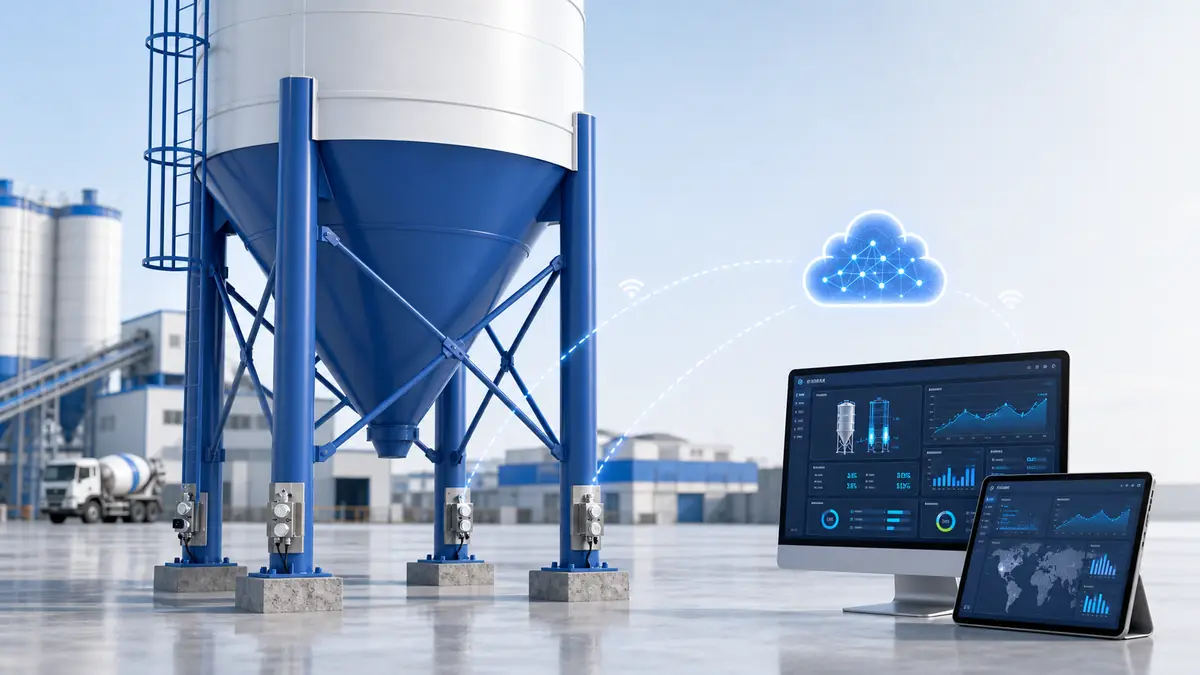
Confirme el problema del sitio, el enfoque de Volivue y el beneficio operativo esperado antes de la selección final.
Los puntos de medición de contacto interno suscitan preocupaciones de contaminacion, complican los procedimientos de limpieza y a menudo son poco practicos para materiales orgánicos a granel o sensibles a la higiene como el grano, la harina o los pellets de pienso.
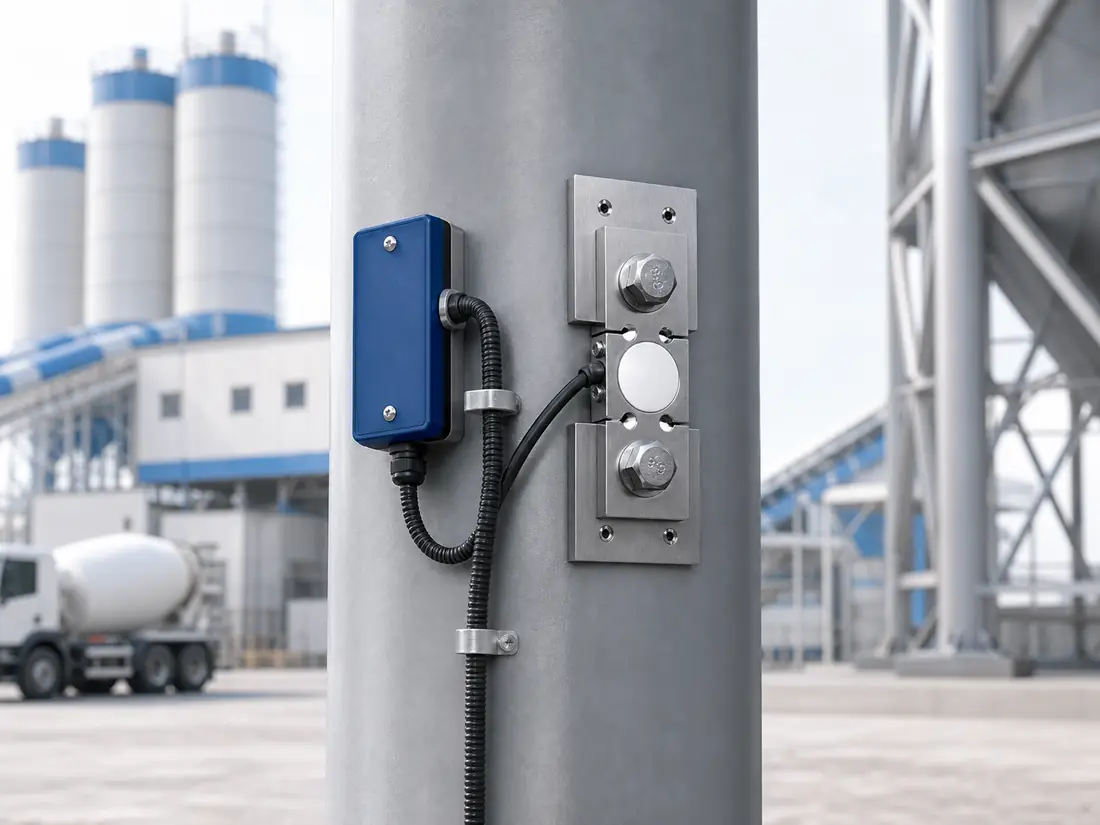
Instale sensores de deformación adhesivos externos en las patas de apoyo del silo para que toda la capa de detección permanezca fuera del material almacenado, y conecte con software en la nube para tendencias de consumo en tiempo real, alertas de bajo nivel y programación de reposición.
Los equipos de inventario y almacén pueden seguir el consumo de material y planificar los ciclos de reposición sin entrar en los silos ni añadir hardware interno, cumpliendo los requisitos de higiene y simplificando el mantenimiento.
Hygiene-first inventory: keeping every sensor outside the silo
Food ingredient, feed, and grain silos add a constraint most industrial silos do not have: nothing extra should touch the stored material. Internal probes complicate cleaning validation, create residue traps, and are unwelcome anywhere flour, grain, or feed pellets are handled. At the same time these sites depend on accurate consumption tracking, because a late refill stops a feed line just as surely as a breakdown.
Patch-mount weighing answers the hygiene constraint structurally: the strain sensors sit on the outside of the support legs, so the product-contact surfaces of the silo remain untouched. The boundary is the structure itself. Flat-bottom grain bins on concrete and skirt-supported silos have no legs to instrument, and there a Volivue radar level instrument on a roof nozzle is the appropriate route.
Refill alarms, mobile alerts, and a feed line that never starves
Installation happens entirely outside the silo with production running, so there is no opening, no entry permit, and no recontamination concern. Once calibrated, the cloud software tracks consumption trends per silo and per day; low-stock thresholds are set per material so the alarm arrives while a normal refill order can still be placed, not after the line is at risk.
Alerts reach the people who act on them: mobile notifications for warehouse and purchasing, a multi-silo dashboard with daily records for planning, and optional RS485 or 4-20mA into the feed mill automation where dosing or interlocks need the live figure. Roles are configured so each team sees its own silos without wading through the whole site.
Four checks for food and feed silo weighing
- Leg structure surveyed: steel support legs present and accessible, with coating and surface condition noted at sensor positions.
- Material density behaviour documented, including moisture-driven variation, to set expectations for the mass trend.
- Thresholds defined per silo: low-stock alarm point, refill target level, and who is notified on each.
- Dashboard roles planned: warehouse, purchasing, and production each mapped to the silos and alerts they own.
We wash down the silo area regularly. Will cleaning around the legs affect the sensors?
The sensor modules are built for outdoor industrial mounting, and routine washdown around the legs is part of the expected environment. The practical point comes during the site survey: cable routing and connector positions are planned away from direct hose lines, so cleaning crews never have to work around the instrumentation.
Grain and feed density changes with moisture. Does the tonnage estimate drift with it?
Weighing reacts the opposite way to level sensors here: the legs carry true mass, so a moisture-driven density change shows up as a real weight change rather than an error. There is no level-to-volume-to-mass conversion that silently drifts; what the trend shows is what the structure actually carries.
De planos a software en vivo
Revisión del sitio
Enviar planos, fotos de patas, material, capacidad, ruta de cable y salidas requeridas.
Selección y cotización
Volivue revisa estructura, precisión objetivo, comunicación y alcance de software.
Preparación en fábrica
Sensores, controlador, ajustes de comunicación integrada, cuenta de software y salidas son preparados.
Instalación rápida
Un silo listo suele tomar 2-4 horas según acceso, cableado y calibración.
Calibración y arranque
Datos conocidos de carga, descarga o referencia mejoran el cálculo.
Soporte remoto
Incluye uso del software, revisión de datos, alarmas e integración.
Preguntas antes de cotizar
¿La instalación requiere parada?
En muchos sitios listos puede hacerse sin detener producción. Acceso, cableado, permisos y calibración se revisan antes.
¿El silo debe estar vacío?
Normalmente no. El sistema es externo y puede calibrarse con carga, descarga o inventario conocido.
¿Cuántas patas admite?
El rango de planificación es 2-12 patas tras revisión estructural.
¿Cómo se logra ±0.5-3% FS?
Depende de estructura, posición de sensores, datos de calibración y algoritmo.
¿Se ve en móvil y computadora?
Sí. El software muestra nivel, masa estimada, tendencia, alarmas y reportes.
¿Conecta con PLC, ERP, MES o software propio?
Sí. Las salidas comunes son 4-20mA, RS485 y API; comunicación integrada e integración de software se confirman en revisión.
Revisemos su proyecto.
Envíe tipo de silo o tanque, planos, material, puntos de monitoreo, país o región e interfaz objetivo.