 EN
EN 中文
中文 ES
ES RU
RU FR
FR PT
PT AR
AR DE
DEPesage adhesif pour silos alimentaires, aliments du bétail et grain
Les installations de stockage d'ingredients alimentaires, d'aliments du bétail et de grain ont besoin d'un suivi précis de la consommation et du moment de réapprovisionnement sans ajouter de capteurs de contact dans le matériau stocké.
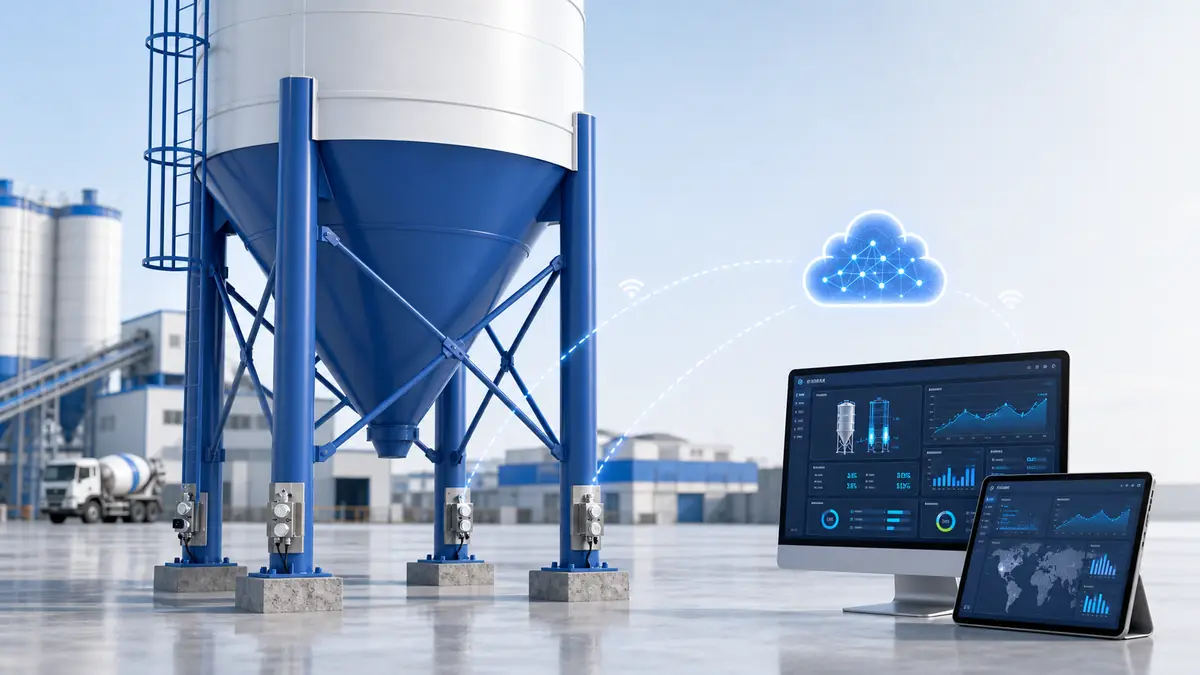
Confirmez le problème du site, l’approche Volivue et le bénéfice opérationnel attendu avant la sélection finale.
Les points de mesure de contact interne soulevent des inquietudes de contamination, compliquent les procédures de nettoyage et sont souvent peu pratiques pour les matériaux organiques en vrac ou sensibles a l'hygiène comme le grain, la farine ou les granules d'aliments.
Posez des capteurs de déformation adhesifs externes sur les pieds de support du silo afin que toute la couche de détection reste hors du matériau stocké, et connectez un logiciel cloud pour des tendances de consommation en temps reel, des alertes de stock bas et la planification du réapprovisionnement.
Les equipes d'inventaire et d'entrepôt peuvent suivre la consommation de matériau et planifier les cycles de réapprovisionnement sans entrer dans les silos ni ajouter de matériel interne, répondant aux exigences d'hygiène et simplifiant la maintenance.
Hygiene-first inventory: keeping every sensor outside the silo
Food ingredient, feed, and grain silos add a constraint most industrial silos do not have: nothing extra should touch the stored material. Internal probes complicate cleaning validation, create residue traps, and are unwelcome anywhere flour, grain, or feed pellets are handled. At the same time these sites depend on accurate consumption tracking, because a late refill stops a feed line just as surely as a breakdown.
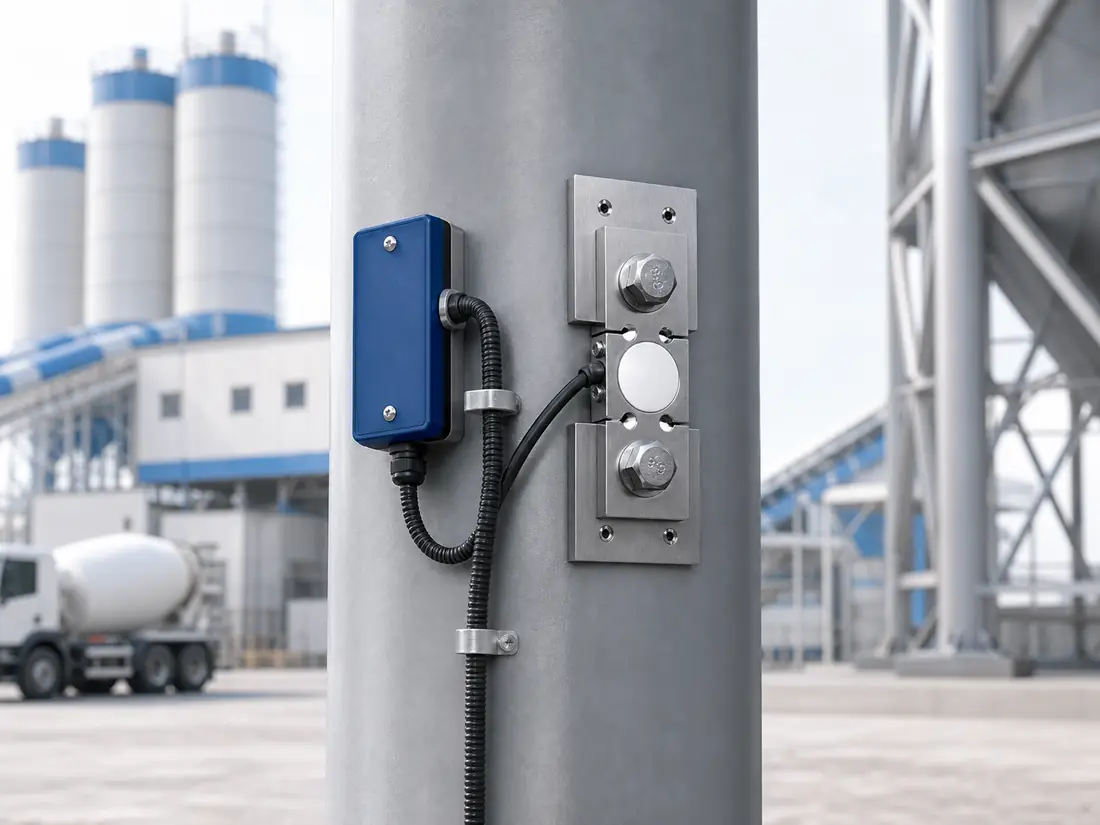
Patch-mount weighing answers the hygiene constraint structurally: the strain sensors sit on the outside of the support legs, so the product-contact surfaces of the silo remain untouched. The boundary is the structure itself. Flat-bottom grain bins on concrete and skirt-supported silos have no legs to instrument, and there a Volivue radar level instrument on a roof nozzle is the appropriate route.
Refill alarms, mobile alerts, and a feed line that never starves
Installation happens entirely outside the silo with production running, so there is no opening, no entry permit, and no recontamination concern. Once calibrated, the cloud software tracks consumption trends per silo and per day; low-stock thresholds are set per material so the alarm arrives while a normal refill order can still be placed, not after the line is at risk.
Alerts reach the people who act on them: mobile notifications for warehouse and purchasing, a multi-silo dashboard with daily records for planning, and optional RS485 or 4-20mA into the feed mill automation where dosing or interlocks need the live figure. Roles are configured so each team sees its own silos without wading through the whole site.
Four checks for food and feed silo weighing
- Leg structure surveyed: steel support legs present and accessible, with coating and surface condition noted at sensor positions.
- Material density behaviour documented, including moisture-driven variation, to set expectations for the mass trend.
- Thresholds defined per silo: low-stock alarm point, refill target level, and who is notified on each.
- Dashboard roles planned: warehouse, purchasing, and production each mapped to the silos and alerts they own.
We wash down the silo area regularly. Will cleaning around the legs affect the sensors?
The sensor modules are built for outdoor industrial mounting, and routine washdown around the legs is part of the expected environment. The practical point comes during the site survey: cable routing and connector positions are planned away from direct hose lines, so cleaning crews never have to work around the instrumentation.
Grain and feed density changes with moisture. Does the tonnage estimate drift with it?
Weighing reacts the opposite way to level sensors here: the legs carry true mass, so a moisture-driven density change shows up as a real weight change rather than an error. There is no level-to-volume-to-mass conversion that silently drifts; what the trend shows is what the structure actually carries.
Des plans au logiciel opérationnel
Revue site
Envoyer plans, photos des pieds, matière, capacité, câble et sorties.
Sélection et devis
Volivue vérifie structure, précision, communication et logiciel.
Préparation usine
Capteurs, contrôleur, réglages de communication intégrée, compte logiciel et sorties sont préparés.
Installation rapide
Un silo prêt prend souvent 2-4 heures selon accès, câblage et calibration.
Calibration et démarrage
Des données connues de remplissage, vidange ou référence améliorent le calcul.
Support à distance
Support logiciel, contrôle données, alarmes et intégration.
Questions avant devis
Faut-il arrêter la production ?
Sur beaucoup de sites prêts, l’installation externe peut se faire sans arrêt. Accès, câblage, autorisations et calibration sont vérifiés.
Le silo doit-il être vide ?
Généralement non. Le système est externe et peut utiliser des données connues.
Combien de pieds sont pris en charge ?
La plage de planification est 2-12 pieds après revue.
Comment obtenir ±0.5-3% FS ?
Cela dépend de la structure, position capteur, données de calibration et algorithme.
Visible sur mobile et ordinateur ?
Oui, avec niveau, masse estimée, tendances, alarmes et rapports.
Connexion PLC, ERP, MES ou logiciel ?
Oui. Les sorties courantes incluent 4-20mA, RS485 et API; communication intégrée et logiciel sont confirmés en revue.
Faisons la revue de votre projet.
Envoyez type de silo ou cuve, plans, matière, points de mesure, pays ou région et interface cible.