 EN
EN 中文
中文 ES
ES RU
RU FR
FR PT
PT AR
AR DE
DEPesage adhesif de rénovation pour silos sur pieds existants
Les usines avec des silos sur pieds existants doivent souvent ajouter un suivi d'inventaire sans arrêter la production, découper des ouvertures en toiture, vider le silo ou entreprendre un projet complet de pesage structurel.

Confirmez le problème du site, l’approche Volivue et le bénéfice opérationnel attendu avant la sélection finale.
Les rénovations traditionnelles par cellules de charge exigent de soulever le silo, une modification structurelle ou un arrêt de production, et les capteurs de niveau ultrasoniques ou radar exigent un piquage en toiture que beaucoup de silos existants n'ont pas sans une fabrication coûteuse.
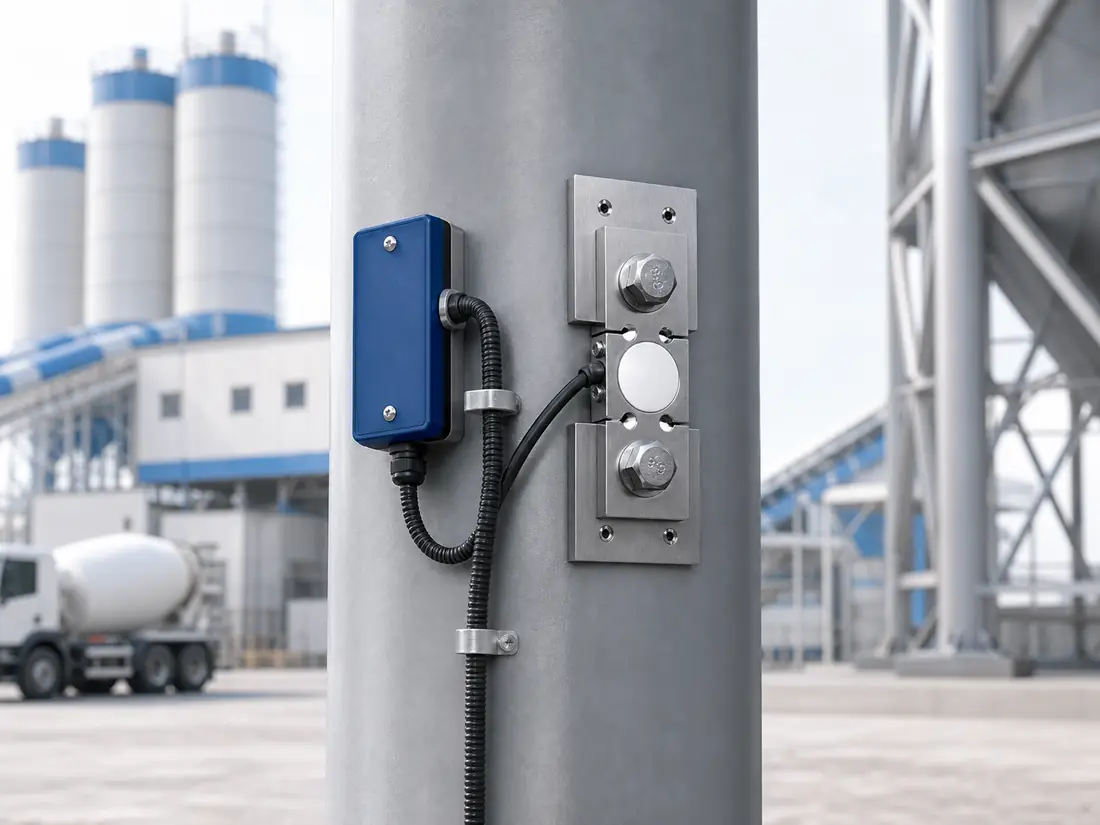
Utilisez des capteurs de déformation adhesifs sur les pieds de support existants pour rénover le suivi d'inventaire sans changement structurel, travaux en toiture ni vidage du silo, puis connectez un logiciel cloud et l'automatisation existante via 4-20mA ou RS485.
L'usine ajoute un inventaire de silo en temps reel a un silo sur pieds existant sans interruption de production, évitant le coût de modification structurelle et minimisant le temps d'arrêt d'installation a généralement 2-4 heures par silo.
Existing silos, no crane, no roof work, no shutdown
Most inventory projects on existing silos die on the same three rocks: a load-cell retrofit means lifting the silo and modifying the structure, a roof-mounted level sensor needs a nozzle that was never fabricated, and either path seems to require a production stop. The silos most worth instrumenting, the busy and full ones central to daily output, are exactly the hardest to take offline.
Patch-mount weighing was shaped around this constraint: the sensors attach to the existing support legs, so there is no structural modification, no roof opening, and no need to empty the silo. The honest boundary is leg access. Skirt-supported and concrete silos without instrumentable steel legs are not candidates, and there a roof-nozzle radar remains the fallback when an opening exists or can be added.

Survey, mount, calibrate: typically 2-4 hours per silo
A retrofit starts with a short survey: leg sections and surfaces photographed, power and cable routes checked, and the output path into existing automation agreed. On installation day the sensors go onto the legs at the planned positions, the controller is wired and powered, and the silo keeps operating throughout. Typical time on a prepared silo is 2-4 hours.
First readings use the current estimated inventory as a starting baseline, then calibration sharpens with the next known delivery or metered discharge. Outputs are chosen to match the plant: 4-20mA into an existing PLC channel, RS485 onto a bus, or the cloud API where the site prefers dashboards over wiring. Old silos end up reporting like new ones.

Four checks before booking a retrofit crew
- Every leg photographed and measured: cross-section, surface condition, and free working space at the planned sensor height.
- Power confirmed near the silo group, or a supply route planned for the controller.
- Output path agreed with the controls team: spare PLC channel, RS485 bus position, or cloud-only operation.
- Next known delivery or discharge scheduled so calibration can be refined immediately after installation.
Do we have to empty the silo, or at least run it down, before installation?
No. Installation happens at whatever load the silo carries that day. The system records the current state as its baseline and converts it into calibrated tonnage as soon as the next weighed delivery or metered discharge provides a known change. Deliberately running stock down before the crew arrives gains nothing.
Our silos were built in different decades and the leg designs vary. Does that block the retrofit?
Varying leg designs change the survey, not the feasibility: each silo is configured individually for its leg count and section, and sensor positions are set per leg during the site review. What actually disqualifies a silo is having no accessible steel legs at all, which the photo survey establishes before any crew is booked.
Des plans au logiciel opérationnel
Revue site
Envoyer plans, photos des pieds, matière, capacité, câble et sorties.
Sélection et devis
Volivue vérifie structure, précision, communication et logiciel.
Préparation usine
Capteurs, contrôleur, réglages de communication intégrée, compte logiciel et sorties sont préparés.
Installation rapide
Un silo prêt prend souvent 2-4 heures selon accès, câblage et calibration.
Calibration et démarrage
Des données connues de remplissage, vidange ou référence améliorent le calcul.
Support à distance
Support logiciel, contrôle données, alarmes et intégration.
Questions avant devis
Faut-il arrêter la production ?
Sur beaucoup de sites prêts, l’installation externe peut se faire sans arrêt. Accès, câblage, autorisations et calibration sont vérifiés.
Le silo doit-il être vide ?
Généralement non. Le système est externe et peut utiliser des données connues.
Combien de pieds sont pris en charge ?
La plage de planification est 2-12 pieds après revue.
Comment obtenir ±0.5-3% FS ?
Cela dépend de la structure, position capteur, données de calibration et algorithme.
Visible sur mobile et ordinateur ?
Oui, avec niveau, masse estimée, tendances, alarmes et rapports.
Connexion PLC, ERP, MES ou logiciel ?
Oui. Les sorties courantes incluent 4-20mA, RS485 et API; communication intégrée et logiciel sont confirmés en revue.
Faisons la revue de votre projet.
Envoyez type de silo ou cuve, plans, matière, points de mesure, pays ou région et interface cible.