 EN
EN 中文
中文 ES
ES RU
RU FR
FR PT
PT AR
AR DE
DEAufklebe-Wiegung für Lebensmittel-, Futter- und Getreidesilos
Lager für Lebensmittelzutaten, Tierfutter und Getreide benötigen eine genaue Verbrauchsverfolgung und Nachfüllzeitpunkte, ohne Kontaktsensoren im gelagerten Material hinzuzufügen.
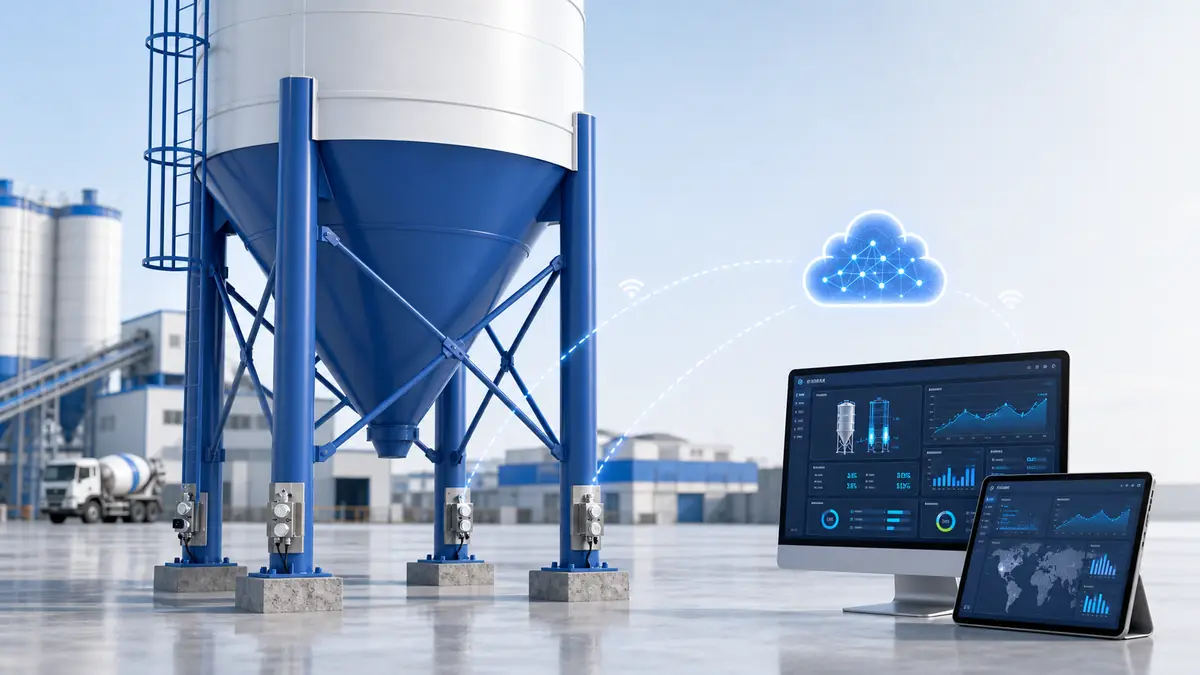
Prüfen Sie Standortproblem, Volivue-Ansatz und erwarteten betrieblichen Nutzen vor der finalen Auswahl.
Interne Kontaktmesspunkte werfen Kontaminationsbedenken auf, erschweren Reinigungsverfahren und sind oft unpraktisch für hygienesensible oder organische Schüttgüter wie Getreide, Mehl oder Futterpellets.
Bringen Sie externe Aufklebe-Dehnungssensoren an den Stützbeinen des Silos an, sodass die gesamte Sensorschicht außerhalb des gelagerten Materials bleibt, und verbinden Sie Cloud-Software für Echtzeit-Verbrauchstrends, Niedrigbestandsalarme und Nachfüllplanung.
Bestands- und Lagerteams können den Materialverbrauch verfolgen und Nachfüllzyklen planen, ohne Silos zu betreten oder interne Hardware hinzuzufügen, was Hygieneanforderungen erfüllt und die Wartung vereinfacht.
Hygiene-first inventory: keeping every sensor outside the silo
Food ingredient, feed, and grain silos add a constraint most industrial silos do not have: nothing extra should touch the stored material. Internal probes complicate cleaning validation, create residue traps, and are unwelcome anywhere flour, grain, or feed pellets are handled. At the same time these sites depend on accurate consumption tracking, because a late refill stops a feed line just as surely as a breakdown.
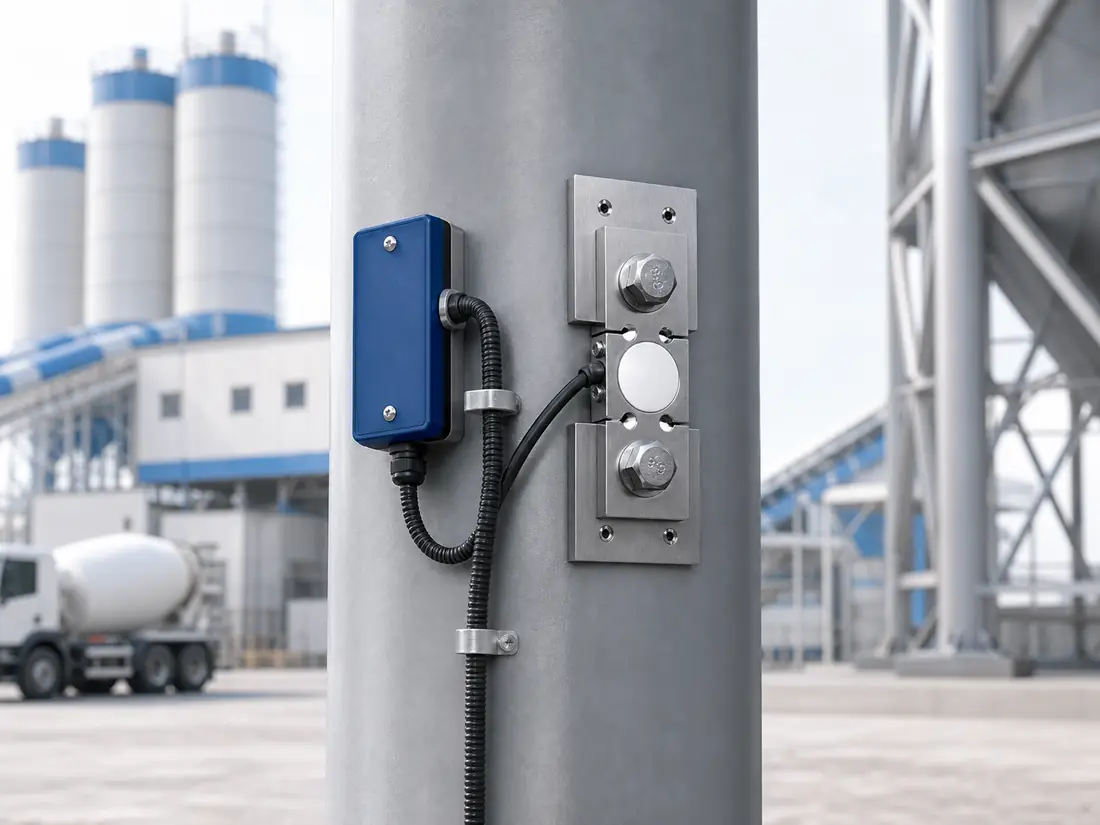
Patch-mount weighing answers the hygiene constraint structurally: the strain sensors sit on the outside of the support legs, so the product-contact surfaces of the silo remain untouched. The boundary is the structure itself. Flat-bottom grain bins on concrete and skirt-supported silos have no legs to instrument, and there a Volivue radar level instrument on a roof nozzle is the appropriate route.
Refill alarms, mobile alerts, and a feed line that never starves
Installation happens entirely outside the silo with production running, so there is no opening, no entry permit, and no recontamination concern. Once calibrated, the cloud software tracks consumption trends per silo and per day; low-stock thresholds are set per material so the alarm arrives while a normal refill order can still be placed, not after the line is at risk.
Alerts reach the people who act on them: mobile notifications for warehouse and purchasing, a multi-silo dashboard with daily records for planning, and optional RS485 or 4-20mA into the feed mill automation where dosing or interlocks need the live figure. Roles are configured so each team sees its own silos without wading through the whole site.
Four checks for food and feed silo weighing
- Leg structure surveyed: steel support legs present and accessible, with coating and surface condition noted at sensor positions.
- Material density behaviour documented, including moisture-driven variation, to set expectations for the mass trend.
- Thresholds defined per silo: low-stock alarm point, refill target level, and who is notified on each.
- Dashboard roles planned: warehouse, purchasing, and production each mapped to the silos and alerts they own.
We wash down the silo area regularly. Will cleaning around the legs affect the sensors?
The sensor modules are built for outdoor industrial mounting, and routine washdown around the legs is part of the expected environment. The practical point comes during the site survey: cable routing and connector positions are planned away from direct hose lines, so cleaning crews never have to work around the instrumentation.
Grain and feed density changes with moisture. Does the tonnage estimate drift with it?
Weighing reacts the opposite way to level sensors here: the legs carry true mass, so a moisture-driven density change shows up as a real weight change rather than an error. There is no level-to-volume-to-mass conversion that silently drifts; what the trend shows is what the structure actually carries.
Von Zeichnungen zur Live-Software
Standortprüfung
Zeichnungen, Fotos der Stützen, Material, Kapazität, Kabelweg und Ausgänge senden.
Auswahl und Angebot
Volivue prüft Struktur, Zielgenauigkeit, Kommunikation und Softwareumfang.
Werksvorbereitung
Sensoren, Controller, integrierte Kommunikationseinstellungen, Softwarekonto und Ausgänge werden vorbereitet.
Schnelle Installation
Ein bereites Silo dauert meist 2-4 Stunden je nach Zugang und Kalibrierung.
Kalibrierung und Start
Bekannte Füll-, Entnahme- oder Referenzdaten verbessern die Berechnung.
Remote-Support
Support für Software, Datenprüfung, Alarme und Integration.
Fragen vor dem Angebot
Erfordert die Installation Stillstand?
Bei vielen bereiten Standorten ist externe Installation ohne Produktionsstopp möglich. Zugang, Kabel, Freigaben und Kalibrierung werden geprüft.
Muss das Silo leer sein?
Normalerweise nicht. Das System ist extern und kann bekannte Daten zur Kalibrierung nutzen.
Wie viele Stützen werden unterstützt?
Der Planungsbereich liegt bei 2-12 Stützen nach Strukturprüfung.
Wie wird ±0.5-3% FS erreicht?
Das hängt von Struktur, Sensorposition, Kalibrierdaten und Algorithmus ab.
Sind Daten auf Mobilgerät und PC sichtbar?
Ja, mit Füllstand, geschätzter Masse, Trend, Alarmen und Berichten.
Verbindung zu PLC, ERP, MES oder eigener Software?
Ja. Übliche Ausgänge sind 4-20mA, RS485 und API; integrierte Kommunikation und Softwareumfang werden im Projekt geprüft.
Wir prüfen Ihr Projekt.
Senden Sie Silo- oder Tanktyp, Zeichnungen, Material, Messpunkte, Land oder Region und Ziel-Schnittstelle.