 EN
EN 中文
中文 ES
ES RU
RU FR
FR PT
PT AR
AR DE
DEAufklebe-Nachrüstwiegung für bestehende auf Beinen stehende Silos
Anlagen mit bestehenden auf Beinen stehenden Silos müssen oft eine Bestandsüberwachung hinzufuegen, ohne die Produktion zu stoppen, Dachöffnungen zu schneiden, das Silo zu entleeren oder ein vollständiges strukturelles Wiegeprojekt zu übernehmen.
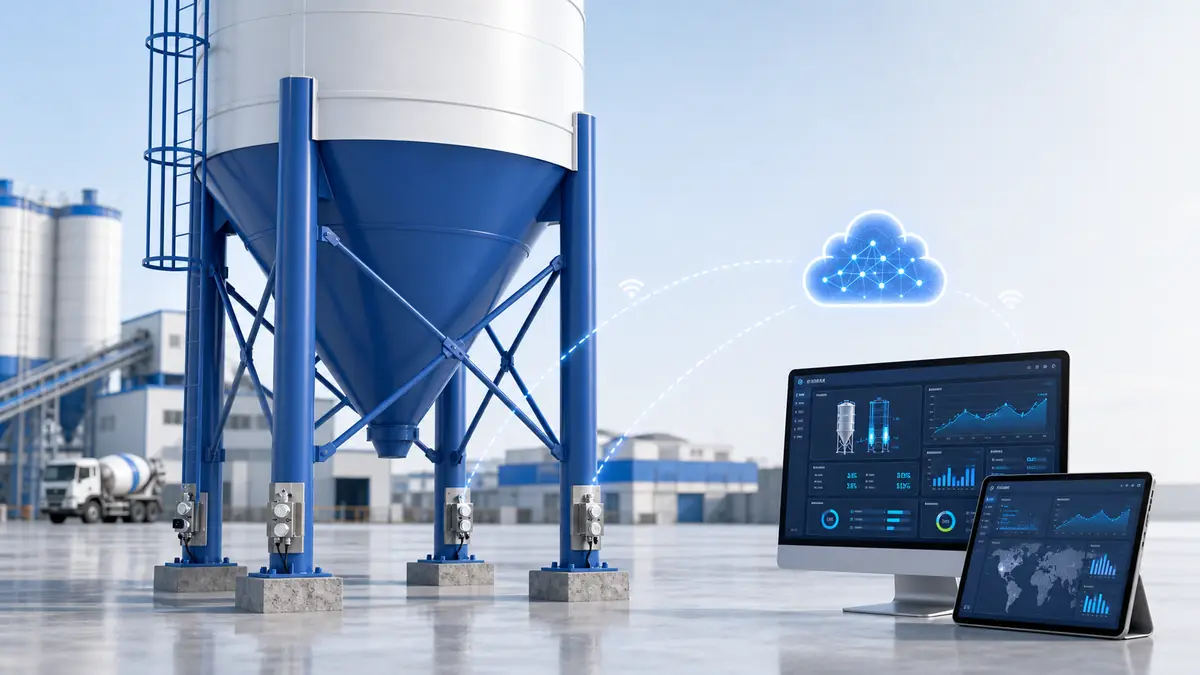
Prüfen Sie Standortproblem, Volivue-Ansatz und erwarteten betrieblichen Nutzen vor der finalen Auswahl.
Traditionelle Wiegezellen-Nachrüstungen erfordern das Anheben des Silos, strukturelle Änderungen oder einen Produktionsstopp, und Ultraschall- oder Radar-Füllstandsensoren benötigen einen Dachstutzen, den viele bestehende Silos ohne kostspielige Fertigung nicht haben.
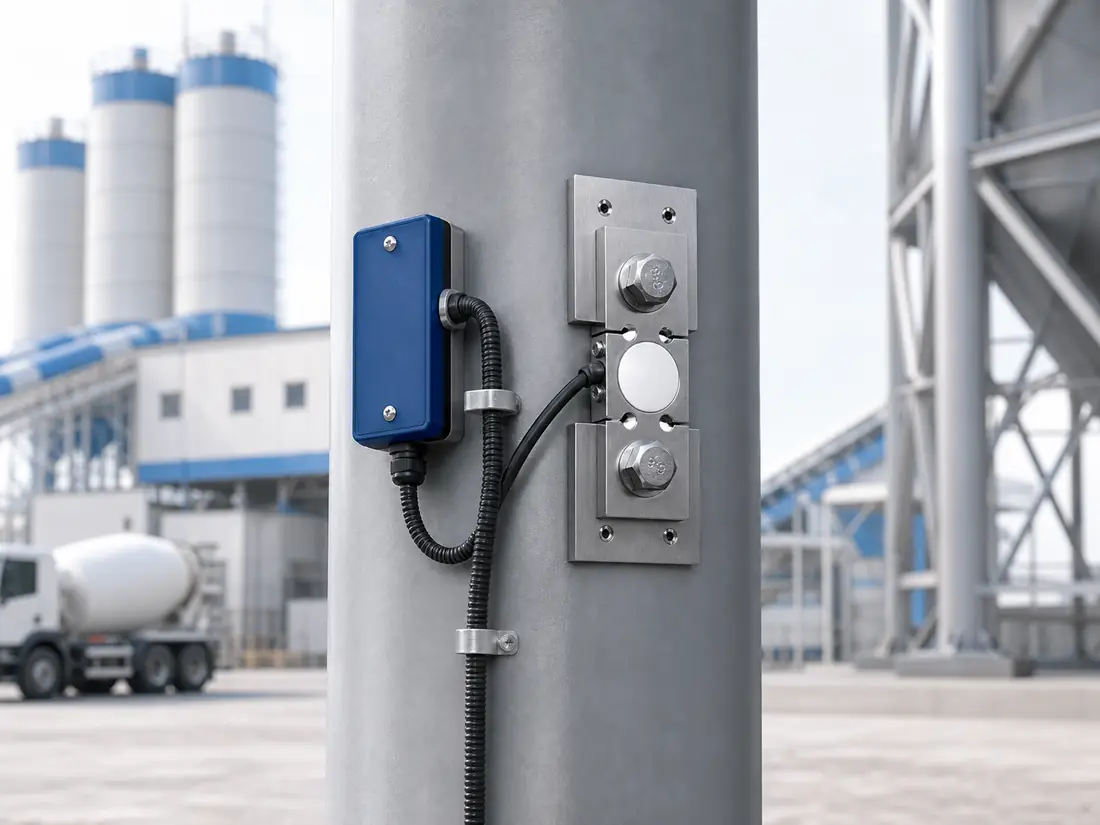
Verwenden Sie Aufklebe-Dehnungssensoren an den bestehenden Stützbeinen, um die Bestandsüberwachung ohne strukturelle Änderung, Dacharbeiten oder Siloentleerung nachzurüsten, und verbinden Sie dann Cloud-Software und die bestehende Automatisierung über 4-20mA oder RS485.
Die Anlage ergänzt ein bestehendes auf Beinen stehendes Silo um einen Echtzeit-Silobestand ohne Produktionsunterbrechung, vermeidet Kosten für strukturelle Änderungen und minimiert die Installationsausfallzeit auf typischerweise 2-4 Stunden pro Silo.
Existing silos, no crane, no roof work, no shutdown
Most inventory projects on existing silos die on the same three rocks: a load-cell retrofit means lifting the silo and modifying the structure, a roof-mounted level sensor needs a nozzle that was never fabricated, and either path seems to require a production stop. The silos most worth instrumenting, the busy and full ones central to daily output, are exactly the hardest to take offline.
Patch-mount weighing was shaped around this constraint: the sensors attach to the existing support legs, so there is no structural modification, no roof opening, and no need to empty the silo. The honest boundary is leg access. Skirt-supported and concrete silos without instrumentable steel legs are not candidates, and there a roof-nozzle radar remains the fallback when an opening exists or can be added.
Survey, mount, calibrate: typically 2-4 hours per silo
A retrofit starts with a short survey: leg sections and surfaces photographed, power and cable routes checked, and the output path into existing automation agreed. On installation day the sensors go onto the legs at the planned positions, the controller is wired and powered, and the silo keeps operating throughout. Typical time on a prepared silo is 2-4 hours.
First readings use the current estimated inventory as a starting baseline, then calibration sharpens with the next known delivery or metered discharge. Outputs are chosen to match the plant: 4-20mA into an existing PLC channel, RS485 onto a bus, or the cloud API where the site prefers dashboards over wiring. Old silos end up reporting like new ones.
Four checks before booking a retrofit crew
- Every leg photographed and measured: cross-section, surface condition, and free working space at the planned sensor height.
- Power confirmed near the silo group, or a supply route planned for the controller.
- Output path agreed with the controls team: spare PLC channel, RS485 bus position, or cloud-only operation.
- Next known delivery or discharge scheduled so calibration can be refined immediately after installation.
Do we have to empty the silo, or at least run it down, before installation?
No. Installation happens at whatever load the silo carries that day. The system records the current state as its baseline and converts it into calibrated tonnage as soon as the next weighed delivery or metered discharge provides a known change. Deliberately running stock down before the crew arrives gains nothing.
Our silos were built in different decades and the leg designs vary. Does that block the retrofit?
Varying leg designs change the survey, not the feasibility: each silo is configured individually for its leg count and section, and sensor positions are set per leg during the site review. What actually disqualifies a silo is having no accessible steel legs at all, which the photo survey establishes before any crew is booked.
Von Zeichnungen zur Live-Software
Standortprüfung
Zeichnungen, Fotos der Stützen, Material, Kapazität, Kabelweg und Ausgänge senden.
Auswahl und Angebot
Volivue prüft Struktur, Zielgenauigkeit, Kommunikation und Softwareumfang.
Werksvorbereitung
Sensoren, Controller, integrierte Kommunikationseinstellungen, Softwarekonto und Ausgänge werden vorbereitet.
Schnelle Installation
Ein bereites Silo dauert meist 2-4 Stunden je nach Zugang und Kalibrierung.
Kalibrierung und Start
Bekannte Füll-, Entnahme- oder Referenzdaten verbessern die Berechnung.
Remote-Support
Support für Software, Datenprüfung, Alarme und Integration.
Fragen vor dem Angebot
Erfordert die Installation Stillstand?
Bei vielen bereiten Standorten ist externe Installation ohne Produktionsstopp möglich. Zugang, Kabel, Freigaben und Kalibrierung werden geprüft.
Muss das Silo leer sein?
Normalerweise nicht. Das System ist extern und kann bekannte Daten zur Kalibrierung nutzen.
Wie viele Stützen werden unterstützt?
Der Planungsbereich liegt bei 2-12 Stützen nach Strukturprüfung.
Wie wird ±0.5-3% FS erreicht?
Das hängt von Struktur, Sensorposition, Kalibrierdaten und Algorithmus ab.
Sind Daten auf Mobilgerät und PC sichtbar?
Ja, mit Füllstand, geschätzter Masse, Trend, Alarmen und Berichten.
Verbindung zu PLC, ERP, MES oder eigener Software?
Ja. Übliche Ausgänge sind 4-20mA, RS485 und API; integrierte Kommunikation und Softwareumfang werden im Projekt geprüft.
Wir prüfen Ihr Projekt.
Senden Sie Silo- oder Tanktyp, Zeichnungen, Material, Messpunkte, Land oder Region und Ziel-Schnittstelle.