 EN
EN 中文
中文 ES
ES RU
RU FR
FR PT
PT AR
AR DE
DEPesagem adesiva de retrofit para silos sobre pernas existentes
As plantas com silos sobre pernas existentes frequentemente precisam adicionar monitoramento de inventário sem parar a produção, cortar aberturas no teto, esvaziar o silo nem empreender um projeto completo de pesagem estrutural.

Confirme o problema do local, a abordagem da Volivue e o benefício operacional esperado antes da seleção final.
Os retrofits tradicionais com células de carga exigem levantar o silo, modificacao estrutural ou parada de produção, e os sensores de nível ultrassônicos ou por radar precisam de um bocal no teto que muitos silos existentes não tem sem uma fabricacao custosa.
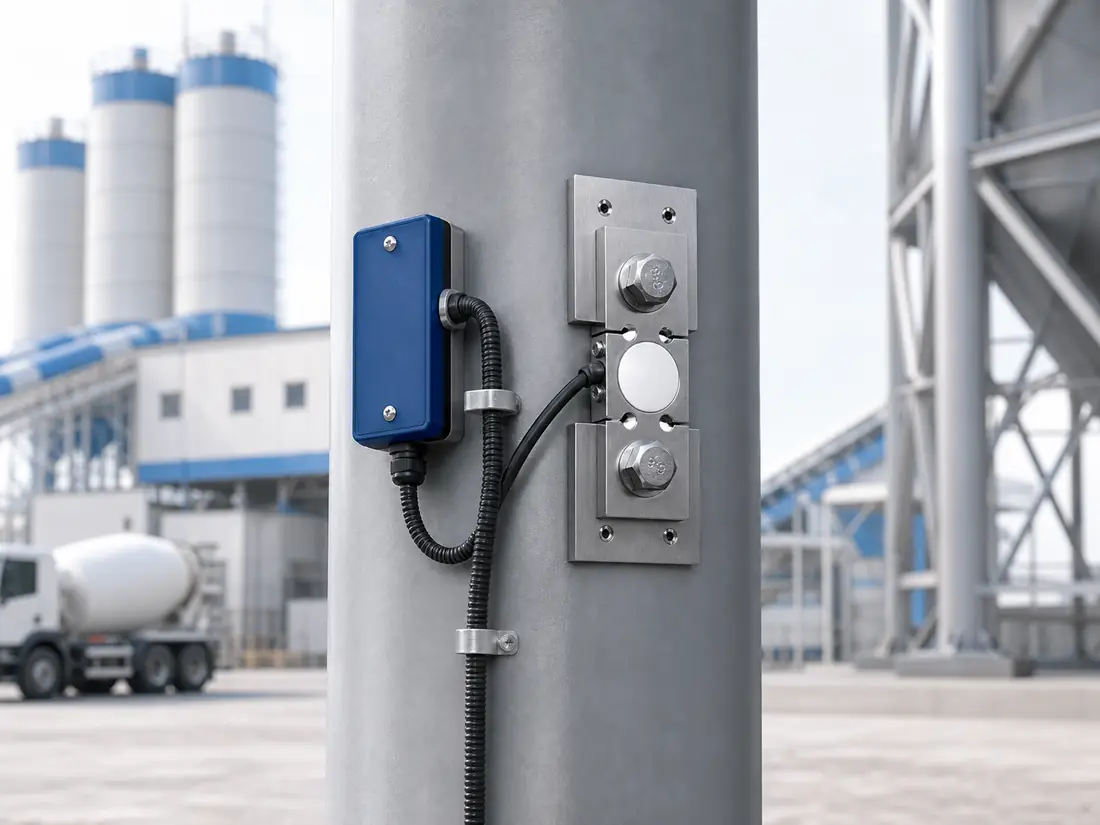
Use sensores de deformação adesivos nas pernas de apoio existentes para fazer retrofit do monitoramento de inventário sem mudanca estrutural, trabalho no teto nem esvaziamento do silo, e depois conecte software em nuvem e a automação existente via 4-20mA ou RS485.
A planta adiciona inventário de silo em tempo real a um silo sobre pernas existente sem interrupção da produção, evitando o custo de modificacao estrutural e minimizando o tempo de inatividade de instalacao para normalmente 2-4 horas por silo.
Existing silos, no crane, no roof work, no shutdown
Most inventory projects on existing silos die on the same three rocks: a load-cell retrofit means lifting the silo and modifying the structure, a roof-mounted level sensor needs a nozzle that was never fabricated, and either path seems to require a production stop. The silos most worth instrumenting, the busy and full ones central to daily output, are exactly the hardest to take offline.
Patch-mount weighing was shaped around this constraint: the sensors attach to the existing support legs, so there is no structural modification, no roof opening, and no need to empty the silo. The honest boundary is leg access. Skirt-supported and concrete silos without instrumentable steel legs are not candidates, and there a roof-nozzle radar remains the fallback when an opening exists or can be added.
Survey, mount, calibrate: typically 2-4 hours per silo
A retrofit starts with a short survey: leg sections and surfaces photographed, power and cable routes checked, and the output path into existing automation agreed. On installation day the sensors go onto the legs at the planned positions, the controller is wired and powered, and the silo keeps operating throughout. Typical time on a prepared silo is 2-4 hours.
First readings use the current estimated inventory as a starting baseline, then calibration sharpens with the next known delivery or metered discharge. Outputs are chosen to match the plant: 4-20mA into an existing PLC channel, RS485 onto a bus, or the cloud API where the site prefers dashboards over wiring. Old silos end up reporting like new ones.

Four checks before booking a retrofit crew
- Every leg photographed and measured: cross-section, surface condition, and free working space at the planned sensor height.
- Power confirmed near the silo group, or a supply route planned for the controller.
- Output path agreed with the controls team: spare PLC channel, RS485 bus position, or cloud-only operation.
- Next known delivery or discharge scheduled so calibration can be refined immediately after installation.
Do we have to empty the silo, or at least run it down, before installation?
No. Installation happens at whatever load the silo carries that day. The system records the current state as its baseline and converts it into calibrated tonnage as soon as the next weighed delivery or metered discharge provides a known change. Deliberately running stock down before the crew arrives gains nothing.
Our silos were built in different decades and the leg designs vary. Does that block the retrofit?
Varying leg designs change the survey, not the feasibility: each silo is configured individually for its leg count and section, and sensor positions are set per leg during the site review. What actually disqualifies a silo is having no accessible steel legs at all, which the photo survey establishes before any crew is booked.
Dos desenhos ao software online
Revisão do local
Enviar desenhos, fotos das pernas, material, capacidade, rota de cabo e saídas.
Seleção e cotação
A Volivue verifica estrutura, precisão alvo, comunicação e escopo de software.
Preparação na fábrica
Sensores, controlador, ajustes de comunicação integrada, conta de software e saídas são preparados.
Instalação rápida
Um silo pronto normalmente leva 2-4 horas conforme acesso e calibração.
Calibração e partida
Dados conhecidos de carga, descarga ou referência melhoram o cálculo.
Suporte remoto
Inclui uso do software, checagem de dados, alarmes e integração.
Perguntas antes da cotação
A instalação exige parada?
Em muitos locais prontos, a instalação externa pode ocorrer sem parar produção. Acesso, cabos, permissões e calibração são revisados.
O silo precisa estar vazio?
Normalmente não. O sistema é externo e pode usar dados conhecidos para calibração.
Quantas pernas são suportadas?
A faixa de planejamento é 2-12 pernas após revisão estrutural.
Como se obtém ±0.5-3% FS?
Depende da estrutura, posição dos sensores, dados de calibração e algoritmo.
Os dados aparecem no celular e no computador?
Sim, com nível, massa estimada, tendência, alarmes e relatórios.
Conecta com PLC, ERP, MES ou software próprio?
Sim. Saídas comuns incluem 4-20mA, RS485 e API; comunicação integrada e software são confirmados na revisão.
Vamos revisar seu projeto.
Envie tipo de silo ou tanque, desenhos, material, pontos de monitoramento, país ou região e interface alvo.