 EN
EN 中文
中文 ES
ES RU
RU FR
FR PT
PT AR
AR DE
DE80GHz-Radar-Füllstand für Zement- und Trockenpulversilos
Zement, Kalkstein, Mineralpulver und ähnliche feine trockene Schüttgüter erzeugen Befüllstroeme, dichte Staubwolken und Materialanhaftungen an den Silowänden, die Standard-Füllstandsensoren ohne Kontakt vor Herausforderungen stellen.
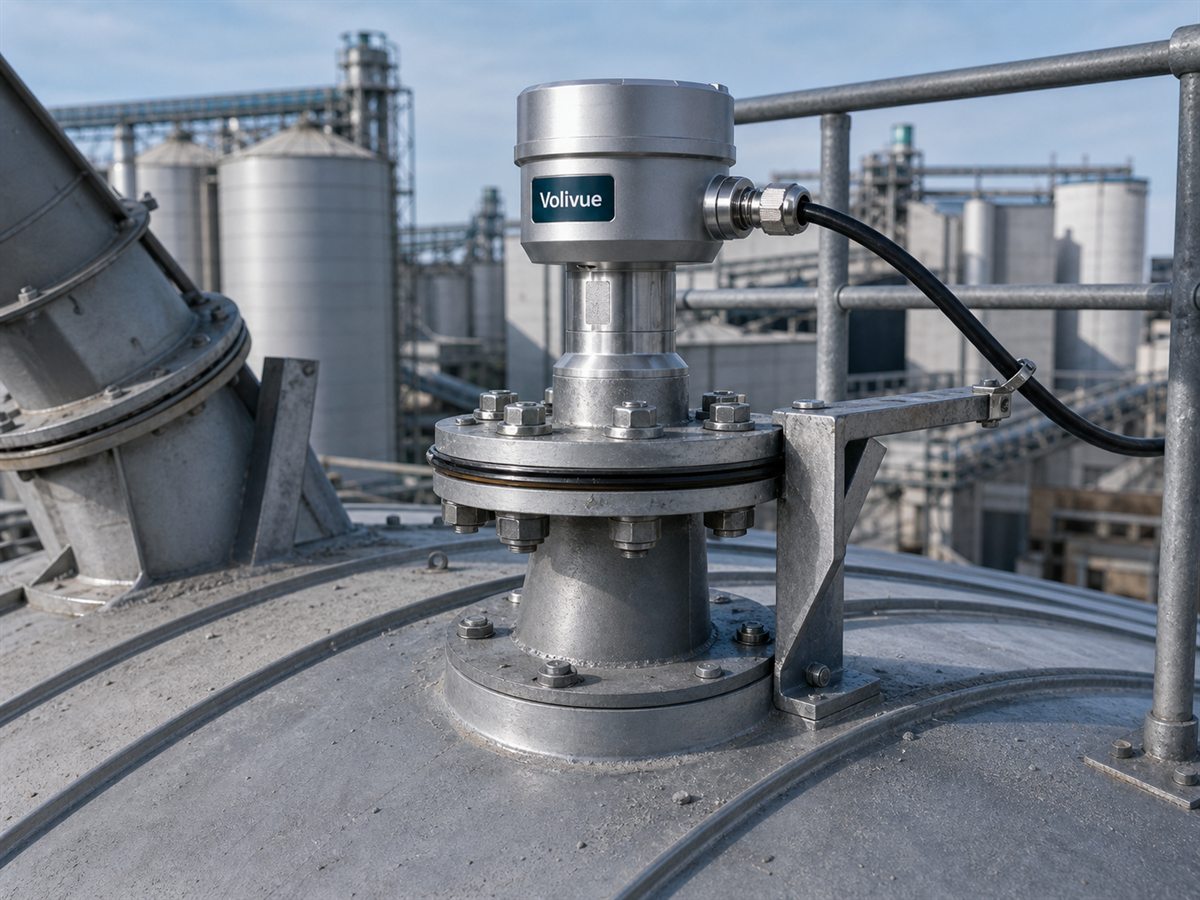
Prüfen Sie Standortproblem, Volivue-Ansatz und erwarteten betrieblichen Nutzen vor der finalen Auswahl.
Befüllstroeme beim Beladen erzeugen Turbulenzen und Staub, die Echos von Ultraschall und niederfrequentem Radar streuen und so Signalausfaelle und Füllstandspruenge verursachen, die Bestandsentscheidungen unzuverlässig machen.
Verwenden Sie ein Volivue-80GHz-FMCW-Radar mit schmalem Strahlwinkel von der Silooberseite, wenden Sie Störechounterdrückung für feste Hindernisse wie Befülleinlässe an und konfigurieren Sie die Filterung, um die Füllstandausgabe während der Spitzenzyklen von Befüllung und Entleerung zu stabilisieren.
Die Füllstanddaten bleiben während der aktiven Befüllung kontinuierlich und stabil und liefern den Teams für Dosiersteuerung, Einkauf und Bestand einen zuverlässigen Silofüllstand ohne manuelle Prüfungen zwischen den Zyklen.
Fine dry powders, dense filling dust, and the 80GHz selection boundary
Cement, limestone, and blended mineral powders behave differently from coarse aggregates: every tanker blow-in fills the headspace with a dense dust cloud, the product surface stays loose and angled, and fine material gradually coats the silo walls and roof structure. A measurement principle for these silos must read a weak, moving surface through suspended dust without drifting as deposits build up around the mounting area.
An 80GHz FMCW radar with a narrow beam is the default Volivue choice when the silo has a usable roof nozzle and the plant needs a continuous level profile. Where a leg-supported cement or fly ash silo mainly needs inventory in tons for purchasing, the Volivue patch-mount weighing system is often the better fit, and some plants run both layers in parallel.
Roof-nozzle mounting and the path into the batching PLC
Mounting starts from the silo drawing: the transmitter sits on a top nozzle aligned vertically, kept clear of the filling stream and away from wall-side obstacles. During commissioning the team records a false echo map at low level so fixed reflectors such as the filling inlet are suppressed, then tunes filtering so the output stays steady through complete fill and discharge cycles.
The standard signal path is a loop-powered 4-20mA output with HART into the batching PLC, with RS485 Modbus available where several silos report over one bus. From the PLC the level feeds batching logic, SCADA trends, and inventory reports. A single silo is normally surveyed, mounted, and commissioned within one site visit when the nozzle and cabling are prepared in advance.
Four checks before ordering a cement silo radar
- Silo drawing on hand: nozzle positions, nozzle height and inner diameter, and the distance from the filling inlet to the planned mounting point.
- Material list confirmed: cement, limestone, or blended powders, with the worst-case dust intensity during tanker blow-in noted for antenna selection.
- Measuring range checked from the highest product level to the cone outlet, including the blind-zone margin below the nozzle.
- Signal route agreed: 4-20mA + HART into the batching PLC, or RS485 Modbus where several silos share one cable run.
Will the level reading drop out while a tanker is blowing cement into the silo?
Dust attenuates the echo but rarely removes it for an 80GHz narrow-beam radar; filtering bridges short weak-echo phases so the output trends smoothly instead of jumping. Commissioning should include at least one complete blow-in so the filter settings are proven on the real fill cycle.
Our only spare nozzle is close to the silo wall. Can it still be used?
A wall-side nozzle increases the risk that the beam clips wall buildup or the cone weld seam. Send the drawing for a beam-path review first; in many cases a slightly angled mounting or a recorded false echo map makes the position workable, otherwise a new center nozzle is the safer choice.
Fünf Prüfungen bestimmen Modell, Montage, Inbetriebnahme und Ausgänge.
Fotos und Geometrie sammeln
Höhe, Durchmesser, Zugang, Stutzen, Winkel, Totzone und interne Hindernisse bestätigen.
Medium und Prozess prüfen
Flüssig/fest, Dielektrikum, Staub, Schaum, Dampf, Korrosion, Turbulenz, Rührwerk, Temperatur und Druck bestimmen das Echo.
Radar-Paket wählen
Messbereich, Antenne oder Linse, Anschluss, Dichtung, Schutzart, Kabel und Zubehör wählen.
Nutzbare Ausgänge abbilden
4-20mA + HART, RS485/Modbus, PLC, Dashboard, Alarme, Trend oder Bestand definieren.
Inbetriebnehmen und validieren
Skalierung, Störechos, Leer-/Vollreferenzen, Alarme, Bluetooth und Trend mit Standortdaten prüfen.
Übergabe und Remote-Support
Dokumentation, Bedienerschulung, Ersatzteile und einen Remote-Support-Weg bestätigen, um Skalierung, Echo-Einstellungen und Integration nach der Inbetriebnahme zu pflegen.
Fragen gegen falsche Auswahl und falsche SEO-Erwartungen.
Geeignet für Flüssigkeiten und Schüttgüter?
Ja, für Tanks, Silos, Trichter und Behälter nach Anwendungsprüfung.
Misst es Gewicht direkt?
Nein. Es misst Distanz oder Füllstand; Volumen oder Masse benötigen Geometrie und Dichte.
Staub, Schaum, Dampf, Korrosion und hohe Temperatur?
Diese Bedingungen können geprüft werden; Eignung hängt von Medium, Temperatur, Druck, Anschluss, Echo und Modell ab.
Wozu Bluetooth?
Zur Prüfung von Parametern, Echo, Skalierung und Diagnose bei Inbetriebnahme oder Wartung.
PLC oder SCADA?
Ja, mit 4-20mA + HART, optional RS485/Modbus, Gateway, Dashboard oder API je nach Projekt.
Ex-Bereiche?
Anforderungen können geprüft werden, aber keine ATEX-, IECEx-, SIL- oder lokale Zusage ohne Dokumente.
Was zuerst senden?
Fotos, Stutzen, Medium, Temperatur, Druck, gewünschter Ausgang, aktuelle Methode und Zeichnungen.
Wie sind typische Lieferzeit und After-Sales-Support?
Die Lieferzeit hängt von Modell, Antenne, Prozessanschluss und Menge ab und wird nach der Anwendungsprüfung bestätigt. Der After-Sales-Support umfasst Dokumentation, Inbetriebnahmehilfe, Ersatzteile und Remote-Unterstützung.
Senden Sie Fotos, Stutzen, Medium, Temperatur und Zielausgang.
Teilen Sie Fotos, Medium, Temperatur, Stutzen, Staub oder Schaum, Hindernisse, Ausgang, Land und Zeichnungen.