 EN
EN 中文
中文 ES
ES RU
RU FR
FR PT
PT AR
AR DE
DEНакладное взвешивание для силосов цемента и золы-уноса
Дозировочные установки и заводы стройматериалов часто управляют несколькими силосами цемента или золы-уноса, где ежедневная точность учета запасов напрямую влияет на закупочные решения и планирование производства.
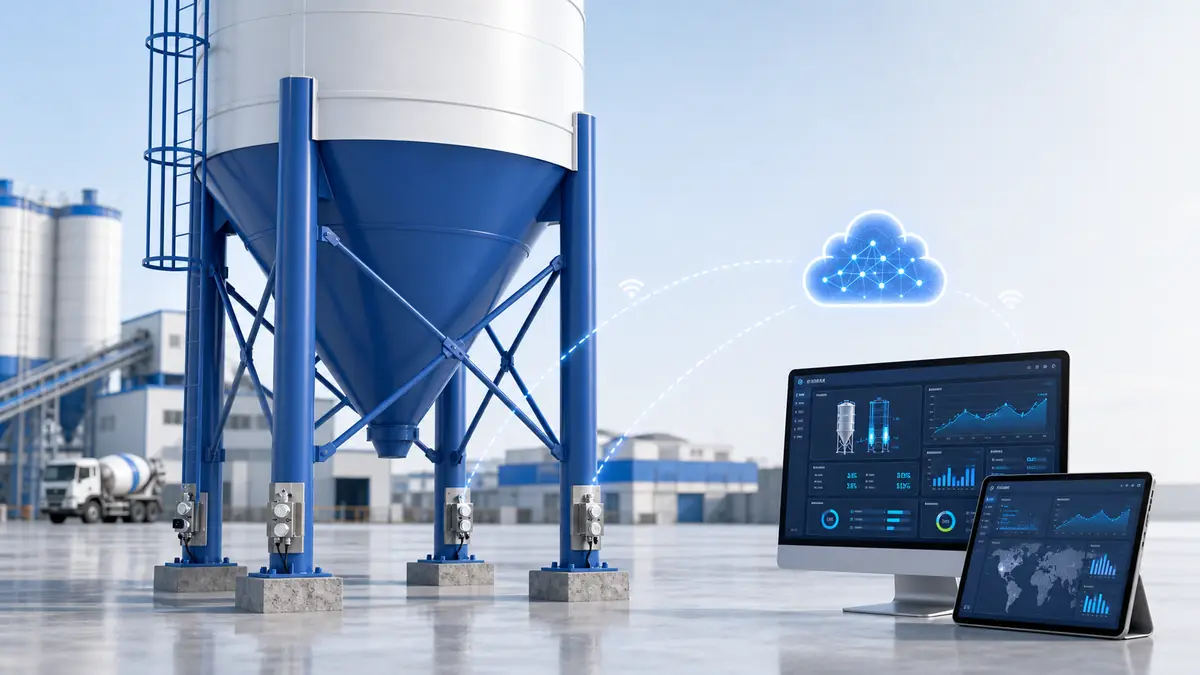
Перед окончательным выбором подтвердите проблему площадки, подход Volivue и ожидаемый операционный эффект.
Ручная проверка уровня в высоких силосах цемента или золы-уноса требует подъема, дает лишь грубую оценку и оставляет отделы закупок работать с устаревшими данными, что может вызвать незапланированную нехватку материала.
Установите внешние накладные тензодатчики на опорные ноги силоса, подключите контроллер со встроенным 4G или WiFi и выведите тренды веса в реальном времени и расчетную массу на мобильную и настольную панель для нескольких силосов.
Отделы закупок работают на основе актуальных трендов запасов вместо ручных проверок, снижая число экстренных пополнений и повышая точность планирования партий по всему заводу.
Batching plants, leg-supported silos, and tons that drive purchasing
At batching plants and building material factories, cement and fly ash silos are bought, billed, and planned in tons, yet most sites still estimate stock from hammer taps or climbing checks. The silos themselves are almost always steel structures on support legs, and the dust, buildup, and low-dielectric behaviour that complicate in-silo sensors are irrelevant to a sensing layer that lives entirely outside on the legs.
Patch-mount weighing fits when the silo stands on accessible steel legs and the daily question is remaining tonnage per silo. Where a silo is skirt-supported or sits directly on a foundation with no legs to instrument, a Volivue 80GHz radar on a roof nozzle is the right alternative; plants that need both tonnage and a level profile sometimes deploy the two layers together.

Leg-by-leg sensing into the 4G cloud and the batching PLC
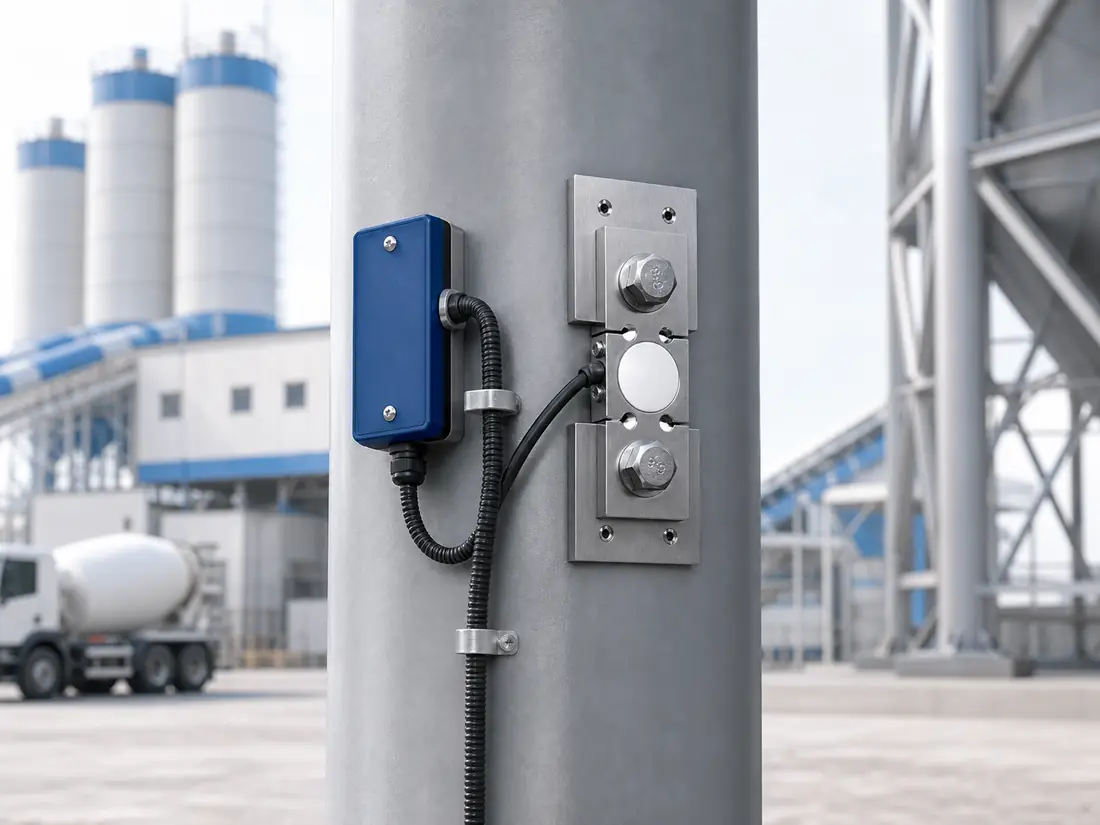
Installation places one strain sensor on each support leg so the controller sees the full load path regardless of leg count, then sums and converts the readings into an estimated silo mass. Calibration uses known events, such as a weighed cement delivery or a metered discharge, and is refined over the first cycles instead of requiring the silo to be emptied.
The controller carries built-in 4G or WiFi, so trends, estimated tonnage, and alarms reach the multi-silo cloud dashboard and mobile app without plant IT work. For automation, 4-20mA or RS485 feeds the batching system directly. A prepared silo is typically instrumented in 2-4 hours, which keeps multi-silo rollouts inside normal maintenance windows.

Four checks before a cement silo weighing rollout
- Leg inventory per silo: count, cross-section, material, and clear access at sensor height, taken from drawings or site photos.
- Capacity confirmed within the 5-3000 ton per silo working range, with the heaviest realistic fill noted.
- Connectivity decided: 4G signal strength at the silo group, or plant WiFi coverage, checked before hardware ships.
- Integration path agreed: cloud dashboard only, or 4-20mA / RS485 into the batching PLC alongside it.
Our silo group mixes three-leg and four-leg silos. How does that affect the layout?
It only changes the sensor count, not the principle: every leg of a silo gets a sensor and the controller is configured per silo, so a three-leg and a four-leg silo can sit side by side on the same dashboard. What matters is that all legs of one silo are instrumented, since a missing leg distorts the load picture.
Will sun on one side of the legs or day-night temperature swings disturb the tonnage trend?
Thermal effects on the legs are part of normal commissioning: sensor placement is symmetric, calibration is verified against known deliveries at different times of day, and the trend view is designed to make real consumption visible above short-term variation. A silo with strong one-sided heating is flagged during the site review rather than discovered later.
От чертежей до рабочего ПО
Проверка площадки
Отправьте чертежи, фото опор, материал, емкость, кабельный маршрут и выходы.
Подбор и расчет
Volivue проверяет конструкцию, точность, связь и объем ПО.
Подготовка на заводе
Готовятся датчики, контроллер, встроенные настройки связи, учетная запись ПО и выходы.
Быстрый монтаж
Готовый силос обычно занимает 2-4 часа в зависимости от доступа и калибровки.
Калибровка и запуск
Известные данные загрузки, выгрузки или остатка улучшают расчет.
Удаленная поддержка
ПО, проверка данных, тревоги и координация интеграции.
Вопросы перед расчетом
Нужна ли остановка производства?
На многих готовых объектах внешний монтаж возможен без остановки. Доступ, кабели, разрешения и калибровка проверяются заранее.
Силос должен быть пустым?
Обычно нет. Система внешняя и может калиброваться по известным данным.
Сколько опор поддерживается?
Плановый диапазон 2-12 опор после проверки конструкции.
Как достигается ±0.5-3% FS?
Это зависит от конструкции, положения датчиков, данных калибровки и алгоритма.
Данные видны на телефоне и ПК?
Да, доступны уровень, оценочная масса, тренды, тревоги и отчеты.
Есть подключение к PLC, ERP, MES или своему ПО?
Да. Обычные выходы включают 4-20mA, RS485 и API; встроенная связь и интеграция ПО подтверждаются при проверке проекта.
Проверим ваш проект.
Отправьте тип силоса или резервуара, чертежи, материал, точки контроля, страну или регион и целевой интерфейс.