 EN
EN 中文
中文 ES
ES RU
RU FR
FR PT
PT AR
AR DE
DENivel por radar de 80GHz para silos de cenizas volantes y polvo intenso
Las cenizas volantes y otros polvos ultrafinos producidos por la combustion o por procesos industriales son extremadamente ligeros, tienen constantes dieléctricas bajas y generan densas nubes de polvo durante el llenado neumatico que saturan muchos tipos de sensores.
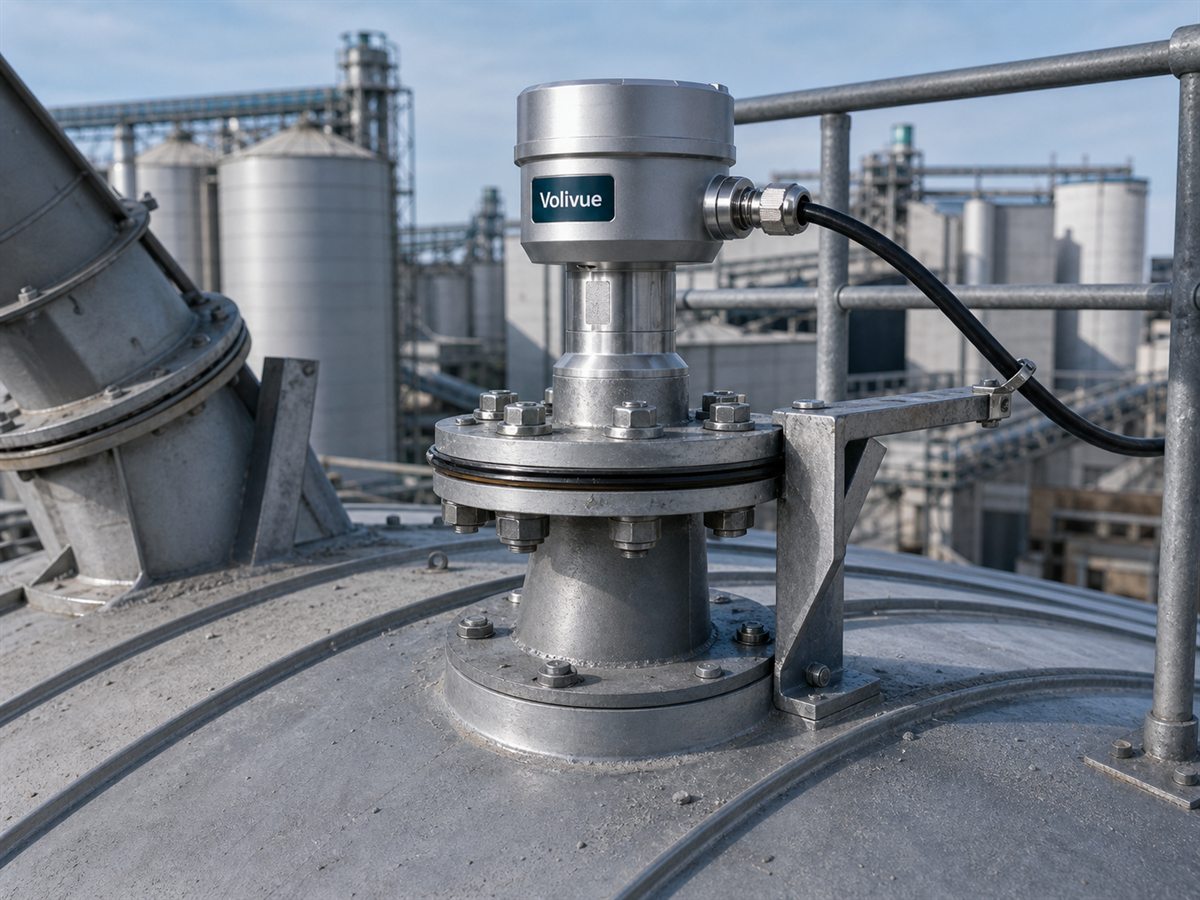
Confirme el problema del sitio, el enfoque de Volivue y el beneficio operativo esperado antes de la selección final.
Las cenizas volantes tienen una constante dieléctrica baja y un tamaño de particula ultrafino, por lo que los sensores de contacto, los ultrasónicos y los radares de menor frecuencia suelen producir ecos debiles e intermitentes o lecturas de nivel falsas frecuentes en silos de cenizas activos.
Aplique un transmisor de radar FMCW de 80GHz de Volivue con una antena de lente grande, fije una distancia de tubuladura adecuada para librar la peor zona de polvo, configure la supresión de eco de vacío y revise el ángulo de haz y la sensibilidad para la densidad de cenizas y el ciclo de llenado especificos.
Se mantienen lecturas de nivel fiables incluso durante y despues del llenado neumatico, lo que permite a la planta controlar el inventario del silo sin inspeccion manual ni recalibracion frecuente.
Low-dielectric fly ash and the worst dust an instrument will meet
Fly ash combines nearly every difficulty a non-contact sensor can face: ultra-fine particles, very low bulk density, a low dielectric constant that returns weak echoes, and pneumatic filling that turns the whole headspace into a dust cloud for minutes at a time. Ultrasonic devices and lower-frequency radars frequently lose track in these silos, which is why fly ash is treated as its own selection case.
The Volivue answer is an 80GHz transmitter with a large lens antenna and enough nozzle standoff to clear the densest dust zone above the fill point. If the fly ash silo stands on steel support legs and the commercial question is tons on hand rather than a level profile, the Volivue patch-mount weighing system is worth comparing before a roof nozzle is fabricated.
Standoff, suppression, and proving the loop on a real fill
Deployment hinges on placement: the nozzle should sit away from the pneumatic inlet so the beam does not stare into the incoming jet, and the standoff is set so the antenna face stays above the worst dust band. Empty-silo echo suppression is recorded before first filling, and sensitivity is reviewed against the actual ash density rather than catalogue defaults.
On the signal side the transmitter offers 4-20mA with HART for a direct loop into the plant DCS or PLC, with Modbus as the multi-silo option. Commissioning should deliberately span one full pneumatic fill so filter behaviour, alarm thresholds, and the recovery time after the dust peak are all verified on record before the loop is handed to operations.
Four checks for a fly ash silo level project
- Fill path documented: pneumatic line entry point, fill rate, and the spacing between the inlet and every candidate mounting nozzle.
- Material data gathered: ash source, bulk density range, and any known tendency to bridge or compact in the cone.
- Commissioning window planned to include at least one complete pneumatic fill and the settling period that follows it.
- Interface and cable route fixed: 4-20mA + HART or Modbus, gland sizes, and the distance to the nearest marshalling cabinet.
The echo is already weak when the silo is nearly empty. Is that normal for fly ash?
Yes. A long measuring distance plus a low dielectric constant gives the weakest echo of the whole cycle at low level. The large lens antenna and empty echo suppression exist exactly for this point; if low-level readings stay unstable after tuning, the nozzle position and standoff should be reviewed rather than the gain pushed further.
Does ash coating on the antenna mean we need a scheduled cleaning routine?
The lens geometry sheds most loose dust, and a correct standoff keeps the antenna face out of the densest zone, so many sites only inspect the antenna during routine silo checks. If a site does see hard coating, that is usually a placement signal: review the nozzle position and fill-jet direction before adding cleaning hardware.
Cinco revisiones que definen modelo, montaje, puesta en marcha y salidas.
Recopilar fotos y geometría
Confirmar altura, diámetro, acceso, boquilla, ángulo, zona ciega y obstáculos internos.
Revisar medio y proceso
Estado líquido o sólido, dieléctrico, polvo, espuma, vapor, corrosión, turbulencia, agitador, temperatura y presión determinan el eco.
Seleccionar paquete radar
Elegir rango, antena o lente, conexión, sello, protección, cableado y accesorios.
Mapear salidas útiles
Definir 4-20mA + HART, RS485/Modbus opcional, PLC, panel, alarmas, tendencia o inventario.
Comisionar y validar
Verificar escalado, ecos falsos, referencias vacío/lleno, alarmas, Bluetooth y tendencia con datos del sitio.
Entrega y soporte remoto
Confirmar documentación, capacitación del operador, repuestos y una vía de soporte remoto para mantener escalado, ecos e integración tras la puesta en marcha.
Preguntas que evitan mala selección y expectativas SEO incorrectas.
¿Sirve para líquidos y sólidos?
Sí. La página está posicionada para nivel en líquidos y sólidos, incluidos tanques, silos, tolvas y recipientes tras revisión.
¿Mide peso directamente?
No. Mide distancia o nivel. Volumen o masa se calcula solo con geometría y densidad disponibles.
¿Maneja polvo, espuma, vapor, corrosión y alta temperatura?
Puede revisarse para esas condiciones. Depende del medio, temperatura, presión, conexión, eco y modelo.
¿Qué resuelve Bluetooth?
Ayuda a revisar parámetros, eco, escalado y diagnóstico durante puesta en marcha o mantenimiento.
¿Conecta a PLC o SCADA?
Sí, el alcance puede incluir 4-20mA + HART, RS485/Modbus opcional, pasarela, panel o API.
¿Soporta áreas clasificadas?
Podemos revisar requisitos, pero no se declara ATEX, IECEx, SIL u otra certificación sin documentación verificada.
¿Qué información enviar primero?
Fotos del sitio, boquilla, medio, temperatura, presión, salida requerida, método actual y planos.
¿Cuáles son el plazo de entrega y el soporte posventa típicos?
El plazo depende del modelo, la antena, la conexión a proceso y la cantidad, y se confirma tras la revisión de aplicación. El soporte posventa incluye documentación, guía de puesta en marcha, repuestos y ayuda remota.
Envíe fotos, boquilla, medio, temperatura y salida requerida.
Comparta fotos, medio, temperatura, boquilla, polvo o espuma, obstáculos, salida, país y planos disponibles.