 EN
EN 中文
中文 ES
ES RU
RU FR
FR PT
PT AR
AR DE
DEقياس المستوى بالرادار 80GHz لصوامع الرماد المتطاير والغبار الكثيف
الرماد المتطاير وغيره من المساحيق فائقة النعومة الناتجة عن الاحتراق او العمليات الصناعية خفيف للغاية وذو ثوابت عازلة منخفضة وينتج سحب غبار كثيفة اثناء التعبئة الهوائية تربك انواعا كثيرة من المستشعرات.
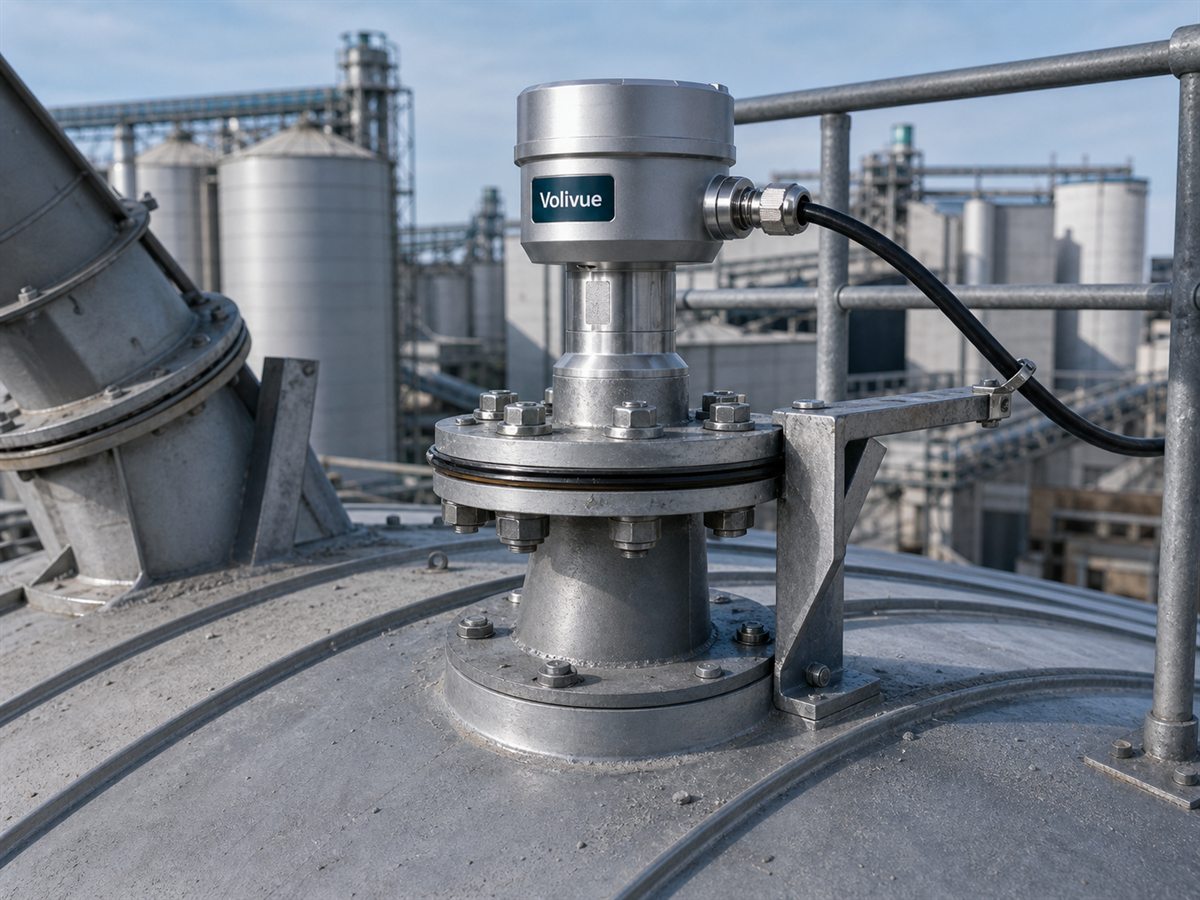
أكد مشكلة الموقع ونهج Volivue والعائد التشغيلي المتوقع قبل الاختيار النهائي.
للرماد المتطاير ثابت عازل منخفض وحجم جسيمات فائق النعومة، لذا غالبا ما تنتج مستشعرات التلامس والموجات فوق الصوتية واجهزة الرادار منخفضة التردد اصداء ضعيفة ومتقطعة او قراءات مستوى كاذبة متكررة في صوامع الرماد النشطة.
طبق مرسل رادار FMCW بتردد 80GHz من Volivue بهوائي عدسي كبير، واضبط امتداد فوهة مناسبا لتجاوز اسوا منطقة غبار، واضبط قمع صدى الفراغ، وراجع زاوية الشعاع والحساسية لكثافة الرماد ودورة التعبئة المحددة.
يتم الحفاظ على قراءات مستوى موثوقة حتى اثناء التعبئة الهوائية وبعدها، مما يمكن المصنع من تتبع مخزون الصومعة دون فحص يدوي او اعادة معايرة متكررة.
Low-dielectric fly ash and the worst dust an instrument will meet
Fly ash combines nearly every difficulty a non-contact sensor can face: ultra-fine particles, very low bulk density, a low dielectric constant that returns weak echoes, and pneumatic filling that turns the whole headspace into a dust cloud for minutes at a time. Ultrasonic devices and lower-frequency radars frequently lose track in these silos, which is why fly ash is treated as its own selection case.
The Volivue answer is an 80GHz transmitter with a large lens antenna and enough nozzle standoff to clear the densest dust zone above the fill point. If the fly ash silo stands on steel support legs and the commercial question is tons on hand rather than a level profile, the Volivue patch-mount weighing system is worth comparing before a roof nozzle is fabricated.
Standoff, suppression, and proving the loop on a real fill
Deployment hinges on placement: the nozzle should sit away from the pneumatic inlet so the beam does not stare into the incoming jet, and the standoff is set so the antenna face stays above the worst dust band. Empty-silo echo suppression is recorded before first filling, and sensitivity is reviewed against the actual ash density rather than catalogue defaults.
On the signal side the transmitter offers 4-20mA with HART for a direct loop into the plant DCS or PLC, with Modbus as the multi-silo option. Commissioning should deliberately span one full pneumatic fill so filter behaviour, alarm thresholds, and the recovery time after the dust peak are all verified on record before the loop is handed to operations.
Four checks for a fly ash silo level project
- Fill path documented: pneumatic line entry point, fill rate, and the spacing between the inlet and every candidate mounting nozzle.
- Material data gathered: ash source, bulk density range, and any known tendency to bridge or compact in the cone.
- Commissioning window planned to include at least one complete pneumatic fill and the settling period that follows it.
- Interface and cable route fixed: 4-20mA + HART or Modbus, gland sizes, and the distance to the nearest marshalling cabinet.
The echo is already weak when the silo is nearly empty. Is that normal for fly ash?
Yes. A long measuring distance plus a low dielectric constant gives the weakest echo of the whole cycle at low level. The large lens antenna and empty echo suppression exist exactly for this point; if low-level readings stay unstable after tuning, the nozzle position and standoff should be reviewed rather than the gain pushed further.
Does ash coating on the antenna mean we need a scheduled cleaning routine?
The lens geometry sheds most loose dust, and a correct standoff keeps the antenna face out of the densest zone, so many sites only inspect the antenna during routine silo checks. If a site does see hard coating, that is usually a placement signal: review the nozzle position and fill-jet direction before adding cleaning hardware.
خمس مراجعات تحدد الطراز والتركيب والإعداد والمخارج.
جمع الصور والهندسة
تأكيد الارتفاع والقطر والوصول والفوهة والزاوية والمنطقة العمياء والعوائق الداخلية.
مراجعة الوسط والعملية
الحالة السائلة أو الصلبة والعزل والغبار والرغوة والبخار والتآكل والاضطراب والخلاط والحرارة والضغط تحدد جودة الصدى.
اختيار حزمة الرادار
اختيار المدى والهوائي أو العدسة والوصلة والختم والحماية والكابلات والملحقات.
تحديد المخارج المفيدة
تحديد 4-20mA + HART وRS485/Modbus وPLC واللوحة والتنبيهات والاتجاه أو المخزون.
الإعداد والتحقق
فحص التدرج والصدى الكاذب ومراجع الفارغ/الممتلئ والتنبيهات وBluetooth والاتجاه ببيانات الموقع.
التسليم والدعم عن بعد
تأكيد الوثائق وتدريب المشغل وقطع الغيار وقناة دعم عن بعد للحفاظ على التدرج وإعدادات الصدى والتكامل بعد التشغيل.
أسئلة تمنع اختيارا خاطئا وتوقعات SEO غير صحيحة.
هل يناسب السوائل والمواد الصلبة؟
نعم، للخزانات والصوامع والقواديس والأوعية بعد مراجعة التطبيق.
هل يقيس الوزن مباشرة؟
لا. يقيس المسافة أو المستوى؛ الحجم أو الكتلة يحتاجان إلى الهندسة والكثافة.
هل يتعامل مع الغبار والرغوة والبخار والتآكل والحرارة العالية؟
يمكن مراجعة هذه الظروف؛ الملاءمة تعتمد على الوسط والحرارة والضغط والوصلة والصدى والطراز.
ما فائدة Bluetooth؟
فحص المعلمات والصدى والتدرج والتشخيص أثناء الإعداد أو الصيانة.
هل يتصل ب PLC أو SCADA؟
نعم، عبر 4-20mA + HART أو RS485/Modbus اختياري أو بوابة أو لوحة أو API حسب المشروع.
هل يدعم المناطق الخطرة؟
يمكن مراجعة المتطلبات، لكن لا يتم ادعاء ATEX أو IECEx أو SIL أو شهادة محلية دون وثائق.
ما المطلوب أولا؟
صور الموقع والفوهة والوسط والحرارة والضغط والخرج المطلوب والطريقة الحالية والرسومات.
ما مدة التسليم والدعم بعد البيع المعتادة؟
تعتمد مدة التسليم على الطراز والهوائي ووصلة العملية والكمية، وتؤكد بعد مراجعة التطبيق. ويشمل الدعم بعد البيع الوثائق وإرشاد التشغيل وقطع الغيار والمساعدة عن بعد.
أرسل صور الموقع والفوهة والوسط والحرارة والخرج المطلوب.
شارك الصور والوسط والحرارة والفوهة والغبار أو الرغوة والعوائق والخرج والبلد والرسومات المتاحة.