 EN
EN 中文
中文 ES
ES RU
RU FR
FR PT
PT AR
AR DE
DEقياس المستوى بالرادار 80GHz لصوامع الاسمنت والمسحوق الجاف
ينتج الاسمنت والحجر الجيري والمسحوق المعدني والمواد الصلبة الجافة الناعمة المماثلة تيارات تعبئة وسحب غبار كثيفة وتراكم مادة على جدران الصومعة تشكل تحديا لمستشعرات المستوى اللاتلامسية القياسية.
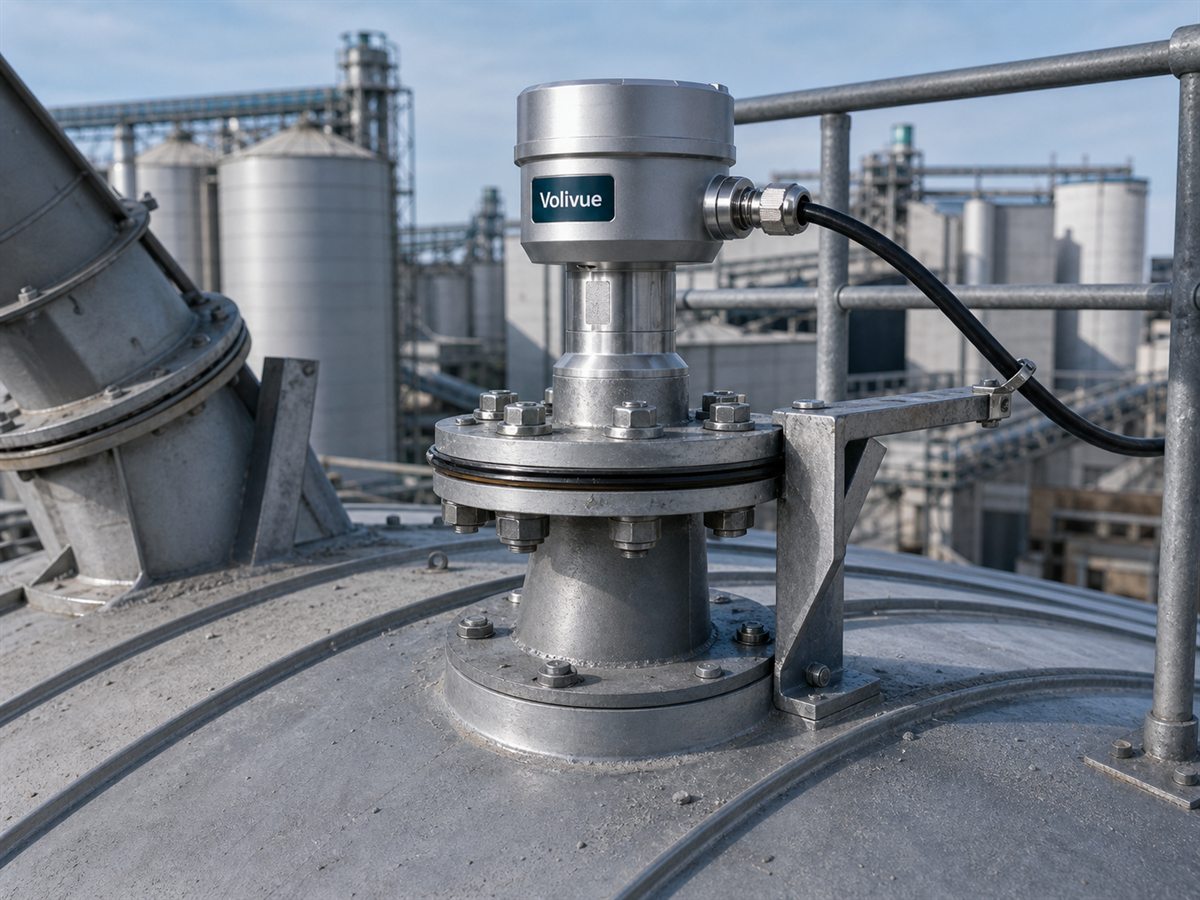
أكد مشكلة الموقع ونهج Volivue والعائد التشغيلي المتوقع قبل الاختيار النهائي.
تخلق تيارات التعبئة اثناء التحميل اضطرابا وغبارا يبدد اصداء الموجات فوق الصوتية والرادار منخفض التردد، مما يسبب انقطاعا في الاشارة وقفزات في المستوى تجعل قرارات المخزون غير موثوقة.
استخدم رادار FMCW بتردد 80GHz من Volivue بزاوية شعاع ضيقة من اعلى الصومعة، وطبق قمع الاصداء الكاذبة للعوائق الثابتة مثل مداخل التعبئة، واضبط الترشيح لتثبيت خرج المستوى خلال دورات الذروة للتعبئة والتفريغ.
تبقى بيانات المستوى مستمرة ومستقرة خلال التعبئة النشطة، مما يمنح فرق التحكم في الخلط والشراء والمخزون مستوى صومعة موثوقا دون فحوصات يدوية بين الدورات.
Fine dry powders, dense filling dust, and the 80GHz selection boundary
Cement, limestone, and blended mineral powders behave differently from coarse aggregates: every tanker blow-in fills the headspace with a dense dust cloud, the product surface stays loose and angled, and fine material gradually coats the silo walls and roof structure. A measurement principle for these silos must read a weak, moving surface through suspended dust without drifting as deposits build up around the mounting area.
An 80GHz FMCW radar with a narrow beam is the default Volivue choice when the silo has a usable roof nozzle and the plant needs a continuous level profile. Where a leg-supported cement or fly ash silo mainly needs inventory in tons for purchasing, the Volivue patch-mount weighing system is often the better fit, and some plants run both layers in parallel.
Roof-nozzle mounting and the path into the batching PLC
Mounting starts from the silo drawing: the transmitter sits on a top nozzle aligned vertically, kept clear of the filling stream and away from wall-side obstacles. During commissioning the team records a false echo map at low level so fixed reflectors such as the filling inlet are suppressed, then tunes filtering so the output stays steady through complete fill and discharge cycles.
The standard signal path is a loop-powered 4-20mA output with HART into the batching PLC, with RS485 Modbus available where several silos report over one bus. From the PLC the level feeds batching logic, SCADA trends, and inventory reports. A single silo is normally surveyed, mounted, and commissioned within one site visit when the nozzle and cabling are prepared in advance.
Four checks before ordering a cement silo radar
- Silo drawing on hand: nozzle positions, nozzle height and inner diameter, and the distance from the filling inlet to the planned mounting point.
- Material list confirmed: cement, limestone, or blended powders, with the worst-case dust intensity during tanker blow-in noted for antenna selection.
- Measuring range checked from the highest product level to the cone outlet, including the blind-zone margin below the nozzle.
- Signal route agreed: 4-20mA + HART into the batching PLC, or RS485 Modbus where several silos share one cable run.
Will the level reading drop out while a tanker is blowing cement into the silo?
Dust attenuates the echo but rarely removes it for an 80GHz narrow-beam radar; filtering bridges short weak-echo phases so the output trends smoothly instead of jumping. Commissioning should include at least one complete blow-in so the filter settings are proven on the real fill cycle.
Our only spare nozzle is close to the silo wall. Can it still be used?
A wall-side nozzle increases the risk that the beam clips wall buildup or the cone weld seam. Send the drawing for a beam-path review first; in many cases a slightly angled mounting or a recorded false echo map makes the position workable, otherwise a new center nozzle is the safer choice.
خمس مراجعات تحدد الطراز والتركيب والإعداد والمخارج.
جمع الصور والهندسة
تأكيد الارتفاع والقطر والوصول والفوهة والزاوية والمنطقة العمياء والعوائق الداخلية.
مراجعة الوسط والعملية
الحالة السائلة أو الصلبة والعزل والغبار والرغوة والبخار والتآكل والاضطراب والخلاط والحرارة والضغط تحدد جودة الصدى.
اختيار حزمة الرادار
اختيار المدى والهوائي أو العدسة والوصلة والختم والحماية والكابلات والملحقات.
تحديد المخارج المفيدة
تحديد 4-20mA + HART وRS485/Modbus وPLC واللوحة والتنبيهات والاتجاه أو المخزون.
الإعداد والتحقق
فحص التدرج والصدى الكاذب ومراجع الفارغ/الممتلئ والتنبيهات وBluetooth والاتجاه ببيانات الموقع.
التسليم والدعم عن بعد
تأكيد الوثائق وتدريب المشغل وقطع الغيار وقناة دعم عن بعد للحفاظ على التدرج وإعدادات الصدى والتكامل بعد التشغيل.
أسئلة تمنع اختيارا خاطئا وتوقعات SEO غير صحيحة.
هل يناسب السوائل والمواد الصلبة؟
نعم، للخزانات والصوامع والقواديس والأوعية بعد مراجعة التطبيق.
هل يقيس الوزن مباشرة؟
لا. يقيس المسافة أو المستوى؛ الحجم أو الكتلة يحتاجان إلى الهندسة والكثافة.
هل يتعامل مع الغبار والرغوة والبخار والتآكل والحرارة العالية؟
يمكن مراجعة هذه الظروف؛ الملاءمة تعتمد على الوسط والحرارة والضغط والوصلة والصدى والطراز.
ما فائدة Bluetooth؟
فحص المعلمات والصدى والتدرج والتشخيص أثناء الإعداد أو الصيانة.
هل يتصل ب PLC أو SCADA؟
نعم، عبر 4-20mA + HART أو RS485/Modbus اختياري أو بوابة أو لوحة أو API حسب المشروع.
هل يدعم المناطق الخطرة؟
يمكن مراجعة المتطلبات، لكن لا يتم ادعاء ATEX أو IECEx أو SIL أو شهادة محلية دون وثائق.
ما المطلوب أولا؟
صور الموقع والفوهة والوسط والحرارة والضغط والخرج المطلوب والطريقة الحالية والرسومات.
ما مدة التسليم والدعم بعد البيع المعتادة؟
تعتمد مدة التسليم على الطراز والهوائي ووصلة العملية والكمية، وتؤكد بعد مراجعة التطبيق. ويشمل الدعم بعد البيع الوثائق وإرشاد التشغيل وقطع الغيار والمساعدة عن بعد.
أرسل صور الموقع والفوهة والوسط والحرارة والخرج المطلوب.
شارك الصور والوسط والحرارة والفوهة والغبار أو الرغوة والعوائق والخرج والبلد والرسومات المتاحة.